
 English
 Continue with Google
 Continue with Apple

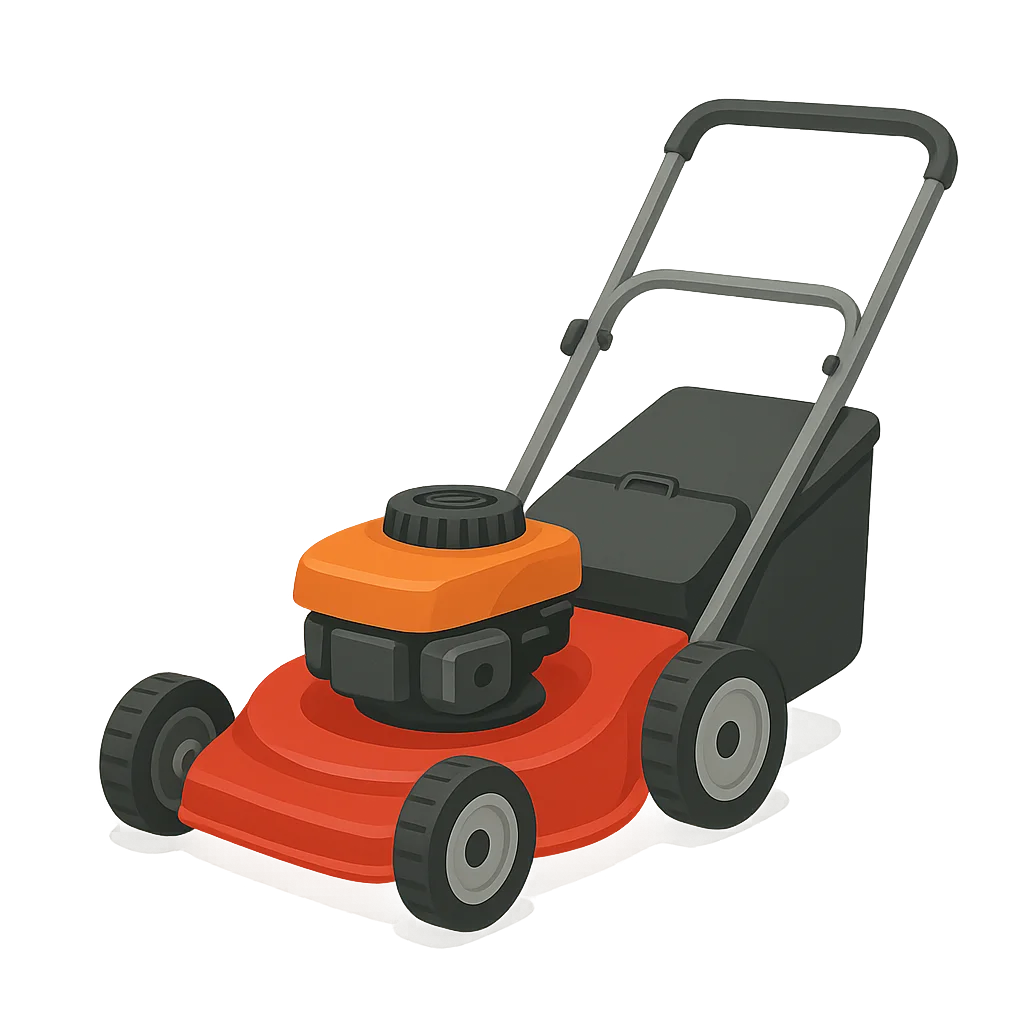
I Am the Lawn Mower
Before I existed, the world was a much shaggier place. My name is the Lawn Mower, and my story begins in 19th-century England, a time when a perfect, carpet-like lawn was the ultimate symbol of status and beauty. Imagine vast green expanses surrounding grand estates, or the carefully tended grounds used for the beloved games of cricket and lawn bowls. Achieving this look was a monumental task. The only tools available were scythes, long, curved blades that required immense skill and strength to wield without leaving ugly, chopped-up patches. A single person could spend an entire day swinging a scythe, drenched in sweat, just to trim a modest area. The other option was to let sheep or other livestock graze, but they were hardly neat, leaving behind uneven tufts and unwanted droppings. A problem was clear: society longed for pristine green spaces, but lacked an efficient way to create them. The world was waiting for a new idea, a machine that could tame the wild growth and bring order to the landscape.
My story truly begins with an observant engineer named Edwin Budding. He worked in a textile mill in a town called Stroud, a place humming with the sounds of industrial innovation. Day after day, he watched a fascinating machine at work. It had a cutting cylinder, a roller fitted with sharp blades, that spun with precision to trim the fuzzy, uneven nap from woolen cloth, leaving it perfectly smooth. One day, a brilliant thought sparked in his mind. He looked at the machine shearing fabric and envisioned it shearing grass. If a machine could give cloth such a neat, uniform finish, why couldn't a similar device do the same for a lawn? This was no small idea; it was a leap of imagination that connected two entirely different worlds. He began to tinker, sketching designs and forging parts. My first form was born from this vision: I was a heavy, noisy contraption made of cast iron, with a wide roller at the back for stability and a cylinder of blades at the front. When pushed, the roller turned gears that spun the cutting cylinder, neatly snipping the blades of grass against a fixed plate. It was a simple, yet revolutionary, concept. After perfecting his design with the help of a local foundry owner named John Ferrabee, Edwin Budding secured a patent for me on August 31st, 1830. I was officially born, ready to change the world, even if I was a bit clunky and loud.
My first years were spent in the service of the wealthy. I was an expensive, specialized piece of equipment, and only the owners of grand estates and exclusive sports clubs could afford me. I was tested in the gardens of the zoological society in London and on the prestigious college grounds of Oxford and Cambridge. But inventors saw my potential and began to improve upon my design. By the 1840s, versions of me were being built that could be pulled by a pony, making it possible to manicure enormous playing fields and parks. My big transformation, however, came with new sources of power. In the 1890s, giant, steam-powered versions of me were created, hissing and chugging across cricket pitches, but they were far too large and complex for an ordinary person. The true revolution arrived with the gasoline engine. In 1902, a company called Ransomes produced the first commercially successful gas-powered mower. Suddenly, I was no longer a massive beast of a machine. I became smaller, lighter, and eventually, more affordable. As the 20th century progressed and suburbs grew, families began moving into homes with their own plots of land. I was right there with them, no longer a luxury for the elite, but a dependable helper for anyone who dreamed of having their own green yard.
My impact has been greater than just cutting grass. I helped create the very idea of the modern suburban yard—a private, green oasis for family barbecues, children's games, and quiet relaxation. Before me, that patch of land was often just functional space. I gave people the ability to shape their environment, to cultivate a small piece of personal paradise right outside their door. Today, my descendants are more varied and clever than Edwin Budding could have ever imagined. There are quiet electric mowers that hum softly, powerful riding mowers that make quick work of huge lawns, and even smart robotic mowers that dutifully trim the grass all on their own. My journey from a noisy iron machine in an English mill to a silent robot gliding across a lawn is a testament to human ingenuity. I am more than just a tool; I am a symbol of how a simple idea can grow to help people everywhere connect with nature and take pride in their own little corner of the world.
Reading Comprehension Questions
Click to see answer