

 English

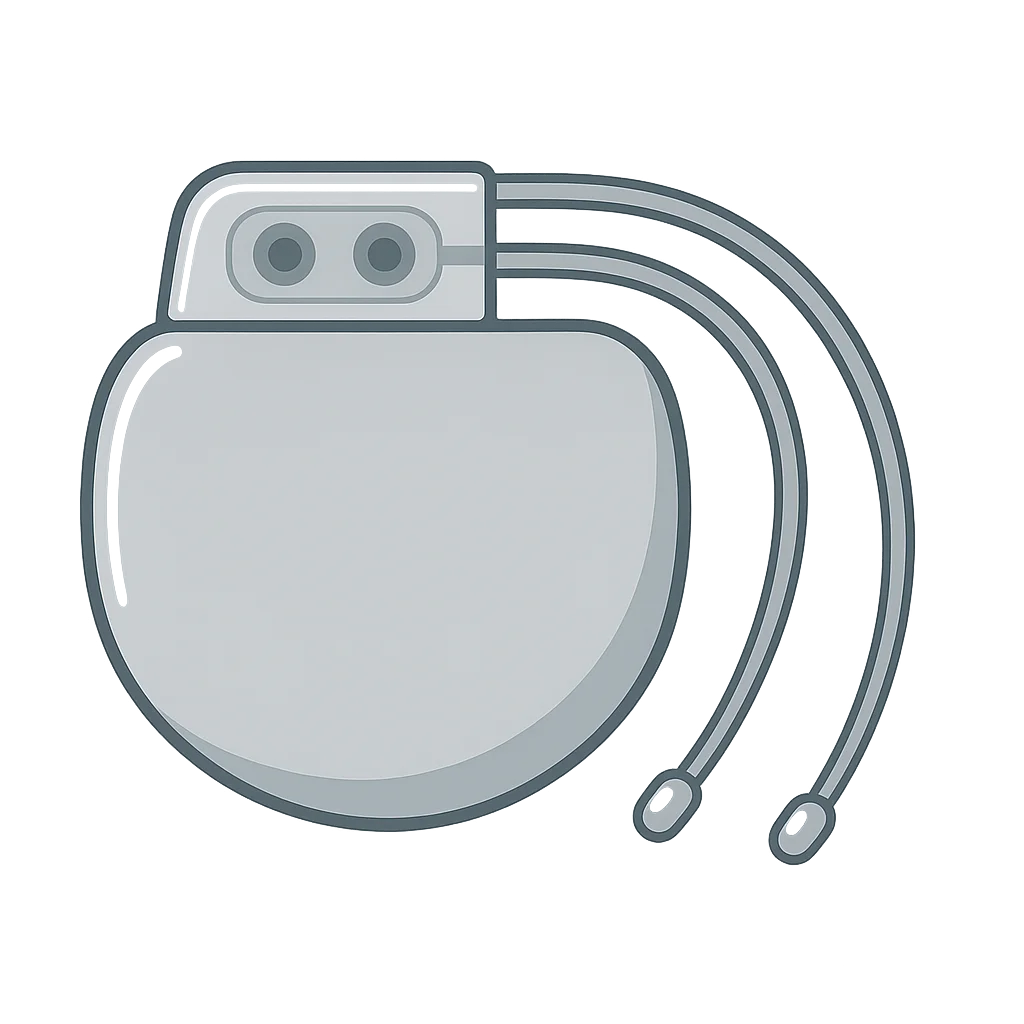
The Pacemaker: A Story of a Steady Heart
Have you ever thought about the rhythm of your own heart. It’s like a tiny, powerful drum inside your chest, beating a steady, life-giving tempo, day and night. But what happens when that drummer gets tired or loses its rhythm. My name is the Pacemaker, and I am the little drummer who steps in when the heart’s natural beat falters. Before I existed, a heart that beat too slowly, a condition called bradycardia, was a serious problem. People with this condition felt constantly tired, dizzy, and weak, as if their bodies were always running out of energy. Their internal drummer was struggling, and there was no one to help keep the beat. The world needed a reliable, tireless musician to sit inside the body and make sure the beautiful music of life never faded away. I was born from that need, a tiny spark of electricity ready to become the heart’s most faithful companion.
My creation wasn't planned in a grand laboratory with scientists in white coats shouting “Eureka.”. Instead, I was born from a fortunate mistake in 1958. An American engineer named Wilson Greatbatch was working in his barn workshop in Buffalo, New York. He was building a small device to record the fast, fluttery sounds of a heartbeat. He reached into his box of electronic parts for a specific component, a 10,000-ohm resistor, to complete his circuit. But his fingers picked up the wrong one. He grabbed a 1-megaohm resistor, which is one hundred times more powerful. When he soldered it into place and turned on the power, something magical happened. Instead of just listening for a sound, the circuit began to produce one. It emitted a tiny, precise electrical pulse every 1.8 milliseconds, followed by a one-second pause. It was a perfect, rhythmic beat, almost exactly like a healthy human heart. Wilson Greatbatch stared in amazement. He hadn’t built a heart recorder; he had accidentally created an artificial heart pacer. That tiny, unexpected pulse was my very first beat, the moment my potential to help millions of people was realized.
Of course, that first spark of an idea was a long way from the small, sophisticated device I am today. My earliest ancestors in the 1950s were not quiet companions living inside the body. They were large, external machines, some as big as a small television, that had to be plugged into a wall outlet or wheeled around on a cart. Wires passed from these bulky boxes through a person’s skin to their heart. Imagine being tethered to a machine just to keep your heart beating steadily. It was a life-saving solution, but it was clumsy and restrictive. The great challenge for engineers was figuring out how to make me small enough, safe enough, and self-sufficient enough to live inside a human being. They had to solve complex problems, like creating a battery that could last for years without being replaced and encasing me in a material, like titanium, that the human body would accept without any issues. It took incredible ingenuity to transform me from a big, clunky box into a small, implantable wonder ready to become a part of someone.
My first true test, my first chance to become a real friend to a human, came on October 8th, 1958, in Sweden. A man named Arne Larsson was very ill because his heart could not beat properly. His surgeon, Dr. Åke Senning, believed an implantable device was his only hope. Working with an engineer named Rune Elmqvist, they had created a very early version of me. As I was placed inside Mr. Larsson’s chest, I felt a sense of purpose. I was no longer just a circuit in a workshop; I was part of a person, with a vital job to do. However, invention is rarely perfect on the first try. That first version of me stopped working after only three hours. It was a setback, but my creators didn't give up. The next day, Dr. Senning implanted a second, backup version of me into Mr. Larsson. This time, I held the rhythm. That day marked the beginning of a new era for medicine and for Arne Larsson. He lived a full and active life until he passed away in 2001 at the age of 86. Over his lifetime, he received 26 different versions of me, each one smaller, smarter, and more reliable than the last. He even outlived both the surgeon and the engineer who gave him his first chance with me.
Arne Larsson’s long life is a testament to how quickly I grew and improved. The pacemaker of the 1960s was about the size of a thick hockey puck and its batteries needed to be replaced every couple of years. But with each passing decade, I became more refined. By the 1970s, the development of lithium-iodide batteries meant I could keep the beat for ten years or more. I also shrank, becoming as thin and small as a silver dollar. But the biggest change was that I became intelligent. Early versions of me sent out electrical pulses at a constant, fixed rate. The newer versions, however, could listen to the heart. This is called “demand pacing.” I learned to sense the heart's own natural rhythm and stay quiet, saving my energy. I only step in and provide a pulse when I detect that the heart has missed a beat or is going too slow. More recently, I’ve learned to communicate. I can send data about the heart's performance wirelessly to a doctor's computer, allowing them to monitor a person’s health and even adjust my settings without any surgery.
From a tiny, accidental pulse in a barn workshop, I have become a quiet guardian for millions of people around the world. I live silently within them, a small piece of technology working in perfect harmony with the human body. My story is a reminder that some of the greatest discoveries come from unexpected moments, but they are only brought to life through years of hard work, perseverance, and the refusal to give up after a failure. I am more than just wires and a battery; I am a promise. A promise that with a little bit of human ingenuity, we can solve incredible challenges and ensure that the beautiful, life-giving rhythm of the heart goes on. The beat truly does go on, stronger and steadier than ever before.
Activities
Take a Quiz
Test what you learned with a fun quiz!
Get creative with colors!
Print a coloring book page of this topic.














 Free for Educators