

 English

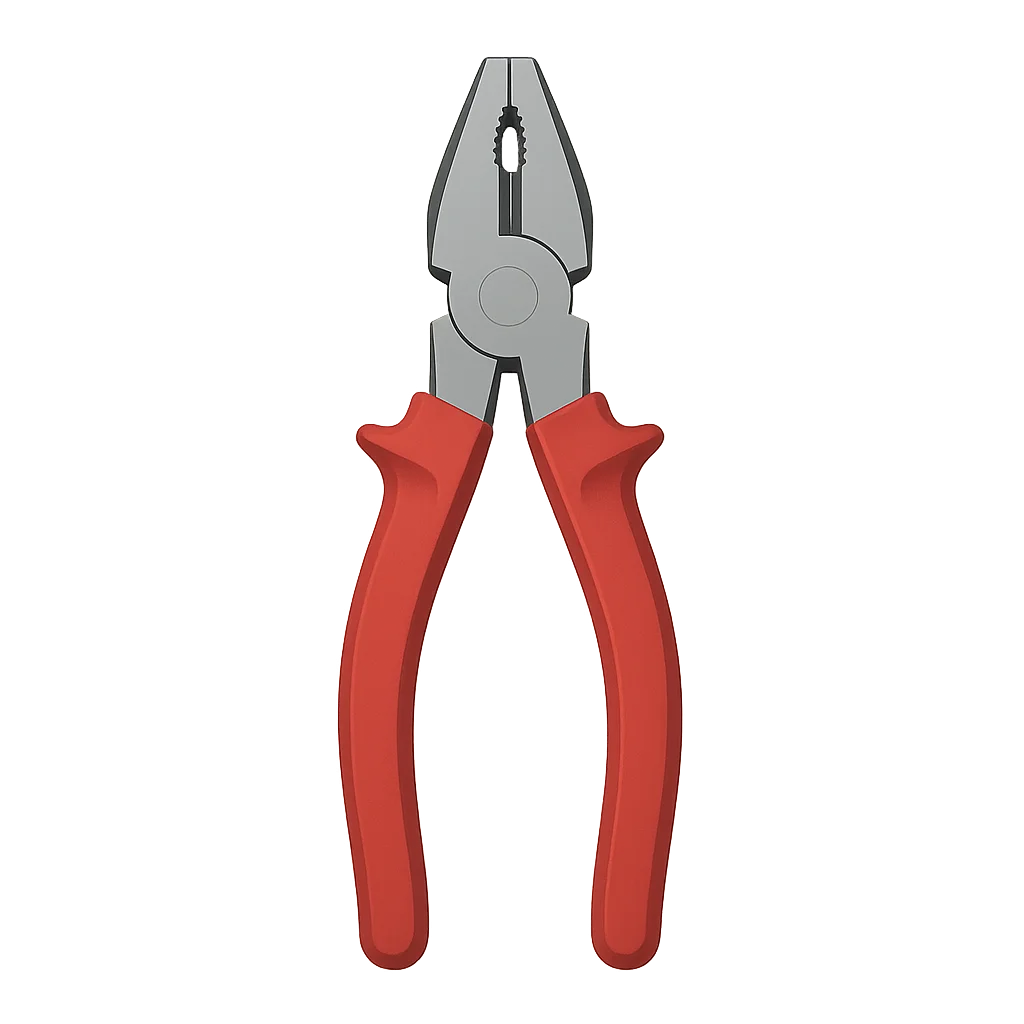
The Pliers: A Story of Grip and Grit
My story doesn't begin in a sterile laboratory or on a neat blueprint. It begins in fire, smoke, and sweat, thousands of years ago in the Bronze Age. I am the Pliers, but back then, I was just an idea, a desperate need in the heart of a blacksmith. Imagine the scene: a forge roaring with heat that could melt stone, the air thick with the smell of burning coal and hot metal. The smith, a strong and skillful creator, pulled a piece of bronze from the fire. It glowed like a captured piece of the sun, beautiful but impossibly hot. He needed to hold it, to hammer it, to shape it into a sword or a tool, but his bare hands were useless against such blistering heat. He tried tongs made of wood, but they would scorch and break. He needed something stronger, something that could become an extension of his own hand, unafraid of the fire. That is when I was born. Two strong arms of metal, connected by a simple pin, a pivot point that gave them power. I was not fancy, but I was strong. The blacksmith could now grip the glowing metal with my jaws, holding it steady on the anvil as his hammer rained down blows. I became his trusted partner, the bridge between his creative will and the stubborn, fiery material he worked with. I allowed him to shape the world, one hot piece of metal at a time, and in doing so, I found my purpose.
As centuries passed, humanity's needs grew more complex, and I evolved right alongside them. I was no longer a single tool but the head of a large and diverse family, each member designed for a specific task. In ancient Rome, you would have found me in the hands of engineers building the mighty aqueducts and chariots. My stronger, tougher cousins were used to bend thick iron bands, while more precise versions helped legionaries repair their armor. By the Middle Ages, I had specialized even further. On a medieval armorer’s bench, a slender, sharp version of me, called a nipper, meticulously snipped and bent thousands of tiny metal rings to weave into protective coats of chainmail. Each snip and twist was a testament to my growing precision. Later, during the Age of Exploration, you would have seen me in the bustling shipyards. My heavy-duty relatives were essential for twisting thick steel cables and securing the rigging on the massive wooden ships that sailed to the far corners of the world. I held the very ropes that harnessed the power of the wind. I was no longer just a tool for holding hot metal. I was a cutter, a bender, a twister, and a builder. From crafting the delicate filigree on a queen’s jewelry with my needle-nosed descendants to pulling a stubborn nail on a farmer's fence, my family was everywhere. We were the silent partners in progress, helping to build civilizations, create timeless art, and push the boundaries of the known world, one firm grip at a time.
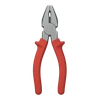
Then came the Industrial Revolution, a whirlwind of steam, steel, and machinery that changed the world forever. Suddenly, cities were crisscrossed with pipes for water and gas, and factories hummed with machines held together by countless nuts and bolts. This new world presented a new challenge. There were so many different sizes of pipes, nuts, and bolts. A plumber or a mechanic would have to carry a whole bag full of my fixed-size relatives just to be prepared for a single job. I was useful, but I wasn't efficient enough for this fast-paced new era. I needed to adapt, to become more versatile. My big moment, my grand reinvention, arrived on August 22nd, 1933. A brilliant engineer from DeWitt, Nebraska, named Howard Manning, was working for the Channellock company when he had a revolutionary idea. He gave me what felt like a superpower: adjustability. He designed a clever tongue-and-groove system for my joint. From my perspective, it was like being given the ability to stretch. With a simple slide, I could change the entire geometry of my grip. My jaws could open wide enough to clamp onto a thick, heavy pipe, and then, in the next instant, I could slide my joint to a different groove and narrow my grip to tighten a small, delicate bolt. I was no longer one tool. I was many tools in one. This innovation, which became known as the tongue-and-groove plier, made me indispensable. I was the ultimate problem-solver for a new age of mechanics, plumbing, and engineering.
My journey has been a long one, from the fiery heart of that first ancient forge to the quiet, organized space of your family's toolbox. Today, I am more than just one tool; I am an idea that has taken countless forms. A version of me is likely in a drawer in your kitchen, another in your garage, and a highly specialized, non-sparking cousin is even floating in the microgravity of the International Space Station, helping astronauts make critical repairs. My fundamental design remains beautifully simple: a pair of levers joined at a pivot to multiply the force of a human hand. That’s my secret. I don't do the work for you; I give your hands the strength and precision to do the work yourself. I am a reminder that sometimes the most powerful and enduring inventions are not the most complicated ones. They are the simple tools that empower us, that extend our reach, and that allow us to build, fix, and shape the world around us. So the next time you see me, remember the thousands of years of history I hold in my metal jaws, and know that you hold the power to create something amazing in your own hands.
Activities
Take a Quiz
Test what you learned with a fun quiz!
Get creative with colors!
Print a coloring book page of this topic.










 Free for Educators