

 English

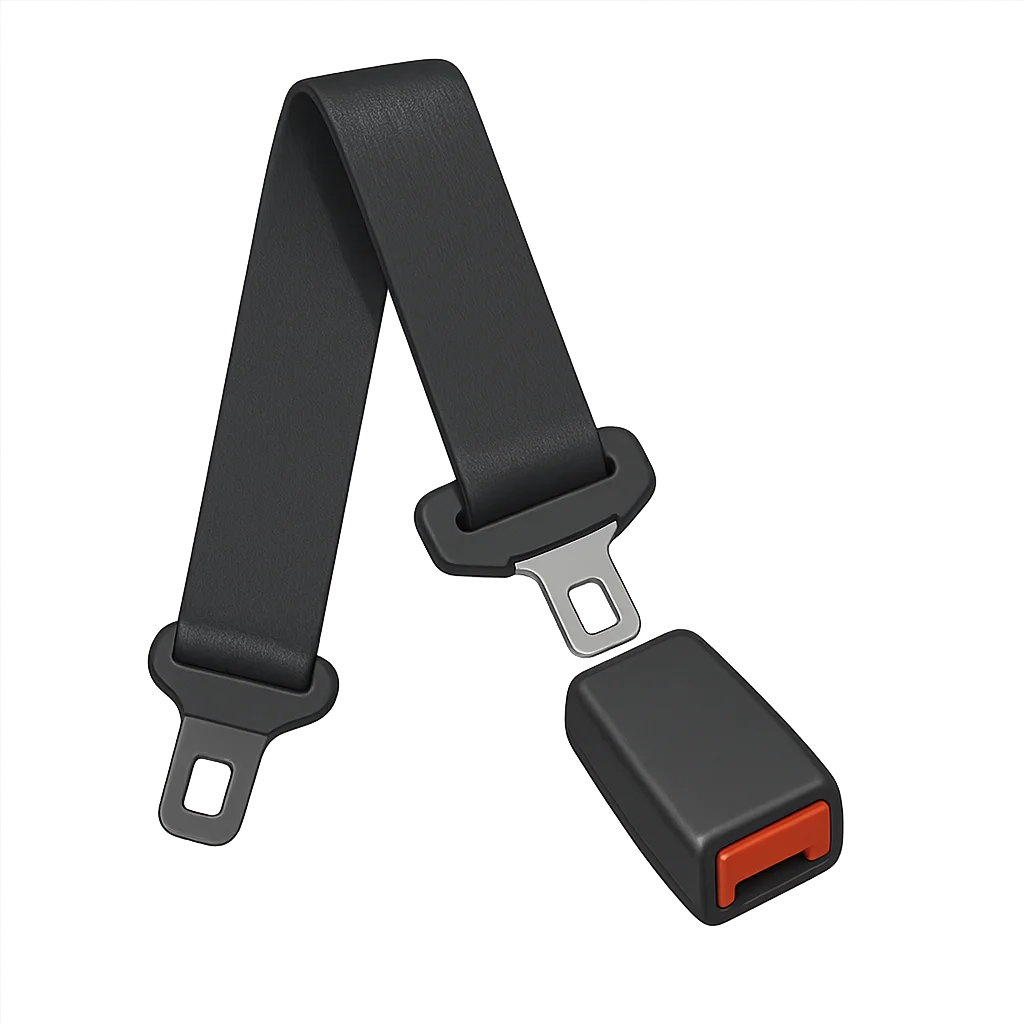
The Guardian in the Click
You probably don't think about me much, but I am with you on almost every journey. I am the quiet guardian that rests across your shoulder and your lap. I am the Seat Belt, and before I existed, the world of travel was a very different, and much more dangerous, place. In the early days, automobiles were a thrilling new invention. They were loud, rattling machines that promised freedom and adventure, kicking up dust on roads that had only ever known horses. People were mesmerized by the speed, the feeling of the wind whipping past their faces as the world blurred by. But this new freedom came with a hidden cost. Cars were powerful, but they weren't very safe. A sudden stop, a sharp turn, or a collision could be catastrophic. There was nothing to hold passengers in place, and the same forces that made the car move could send a person tumbling inside the cabin. It was a serious problem, and a few forward-thinking people started to notice. They looked to the sky, where pilots of early gliders were strapped into their cockpits to keep them secure during loops and dives. If a pilot needed to be held in place, they reasoned, why not a passenger in a car? The idea of me was born from this simple question: how can we keep people safe while they chase the horizon?
My journey from a simple idea to the companion you know today was a long one. My earliest ancestor was born on February 10th, 1885. An inventor named Edward J. Claghorn created a simple strap for tourists riding in New York City taxis. It was a basic design, just a hook and some webbing to keep passengers from sliding off their seats on bumpy cobblestone streets. It was a start, but I was far from perfect. Decades passed, and as the 20th century progressed, cars became faster and far more common. By the 1950s, sleek, powerful automobiles with gleaming chrome and mighty engines filled the highways. The need for a better me became urgent. This is when my true hero appeared. His name was Nils Bohlin, a brilliant and compassionate engineer working for a Swedish car company called Volvo. Before working with cars, Nils had designed ejection seats for fighter jets. He spent his days figuring out how to protect pilots from the incredible forces of being launched from a plane at high speed. He understood the human body and how it reacted to sudden, violent motion better than almost anyone. In 1958, he brought this knowledge to Volvo, and I became his most important project. He knew the simple lap belts being used at the time weren't enough; in a crash, they could cause serious internal injuries. Then, in 1959, he had his breakthrough. He realized the solution was to work with the body, not against it. He designed a single, continuous strap that formed a loop. One part went across the strong, sturdy bones of the hips, while the other crossed the chest and shoulder, anchoring the upper body. It was a 'three-point' system, and it was revolutionary. I was no longer just a strap; I was an intelligent, life-saving hug designed to distribute the immense forces of a crash across the strongest points of the human skeleton.
My new three-point design was a triumph of engineering, but what happened next was a triumph of humanity. After Nils Bohlin perfected me, his company, Volvo, made a decision that would change the world forever. On August 13th, 1959, they could have kept my design a secret, a special feature that would make their cars the safest and most desirable on the market. They could have charged other companies fortunes to use my patent, making safety an expensive luxury. But they didn't. Instead, Volvo gave my design away. They released the patent, making my blueprints available to every car manufacturer in the world, completely for free. It was an act of incredible generosity. They believed that my purpose was too important to be owned by just one company. They understood that every life was valuable, no matter what kind of car a person drove. This single decision ensured that I could protect millions more people. It transformed me from a clever invention into a universal gift, a declaration that safety is not a privilege, but a fundamental right for everyone who travels on the road. My potential to save lives was unlocked for the entire world.
Today, I am your trusted travel companion. That simple 'click' you hear when you buckle up is more than just the sound of metal and plastic meeting. It is the sound of a promise being kept—a promise of safety, a whisper that says, 'you are cared for.' Over the decades, I have been credited with saving well over a million lives, and I am still considered the single most effective safety feature in any vehicle. I have watched generations grow up, taking them to their first day of school, to family vacations, and on countless adventures. My story is a reminder that the most profound changes often come from simple, elegant ideas, and that the greatest innovations are those shared with everyone. So the next time you get in a car, remember the journey I took to get to you. Remember the clever minds and the generous hearts that made me who I am. And as you pull me across your body and hear that familiar click, know that I am here, ready and waiting to keep you safe on whatever road you travel next.
Activities
Take a Quiz
Test what you learned with a fun quiz!
Get creative with colors!
Print a coloring book page of this topic.










 Free for Educators