

 English

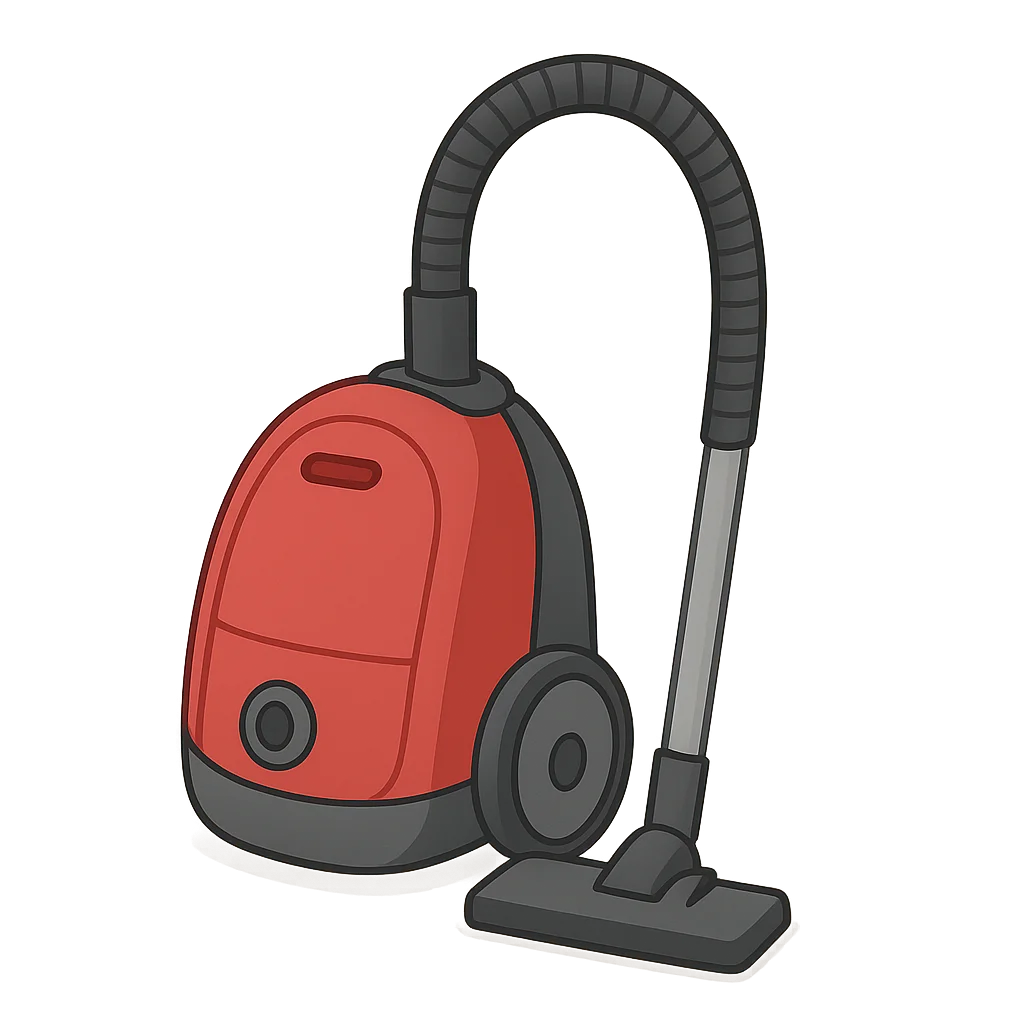
The Story of the Vacuum Cleaner
Hello there. You probably know me well. I’m the sleek, modern vacuum cleaner that lives in your closet, waiting to whir to life and gobble up crumbs and dust bunnies. But before I became the quiet and efficient helper you know today, the world was a very different, and much dustier, place. Imagine a time without me. The only way to clean a rug was to haul it outside, hang it over a clothesline, and beat it with a special paddle. Clouds of dust would erupt into the air, making you cough and sneeze, only to settle back down on everything else. Inside, brooms just pushed dirt from one corner to another, and feather dusters sent tiny particles dancing in the sunbeams, ready to land on another surface. Homes were never truly clean, and for people with allergies, every day was a struggle against an invisible enemy. The world was desperately waiting for a better way to fight the dust, a problem I was born to solve.
My story doesn't begin in a neat little box, but as a giant, roaring beast. My earliest ancestor was born from the mind of an English engineer named Hubert Cecil Booth. On August 30th, 1901, he was watching a demonstration of a machine designed to clean railway carriages by blowing compressed air at the seats. It just made a bigger mess. Mr. Booth had a brilliant thought: what if, instead of blowing the dust away, you sucked it up? He tested his idea by placing a handkerchief on a dusty restaurant chair and sucking air through it with his mouth. It worked. Soon after, he patented his invention, a colossal machine nicknamed 'Puffing Billy'. I was a bright red, horse-drawn carriage powered by a loud engine that had to stay parked on the street. Long, flexible hoses, sometimes hundreds of feet long, would snake through the windows of a building, and my operators, dressed in special uniforms, would guide the nozzles over carpets and furniture. I was so impressive that I was hired to clean Westminster Abbey before the coronation of King Edward VII. I was clumsy, expensive, and incredibly noisy, but for the first time, I was pulling dust out of people’s homes for good. I was the first big step in a cleaning revolution.
While my giant relative was cleaning the homes of the wealthy in England, my true, portable self was taking shape across the ocean because of a man with a persistent cough. My creator was James Murray Spangler, a janitor at a department store in Canton, Ohio. Mr. Spangler suffered from asthma, and his job was a nightmare. Every day, he used a carpet sweeper that kicked up enormous amounts of dust, leaving him wheezing and struggling to breathe. He knew there had to be a better way. Out of pure necessity, in 1907, he began to tinker. He gathered an unlikely collection of items: an old soap box for the body, an electric fan motor from a sewing machine to create suction, a silk pillowcase to act as a dust-collecting bag, and a simple broom handle to push me around. This strange contraption was me in my earliest form—the first practical, portable electric vacuum cleaner. It wasn't pretty, but it was a marvel of ingenuity. As Mr. Spangler pushed me across the store’s dusty floors, I didn’t just move the dirt around; I inhaled it, trapping it safely in the pillowcase. For the first time, he could clean without making himself sick. His personal struggle had sparked an invention that would change everything.
Mr. Spangler knew he had created something special, but he didn't have the money or the resources to manufacture and sell me on a large scale. He built a few models by hand and gave one to his cousin, Susan Hoover. She was amazed by how well I worked and showed me to her husband, a businessman named William Henry Hoover who manufactured leather goods. Mr. Hoover was a man who recognized a brilliant opportunity when he saw one. He was so impressed with my ability to lift dirt from deep within a carpet that he bought the patent from Mr. Spangler on June 2nd, 1908. He made a few crucial improvements, encasing my wooden body in a sturdy steel shell and refining my design. Then, he founded the Hoover Company. But his real genius was in showing people what I could do. He placed an advertisement in the newspaper offering a free ten-day home trial. Armies of salesmen went door-to-door, demonstrating my power on people's own rugs. Seeing was believing, and soon, homes all across America wanted me. I was no longer just a janitor's clever contraption; I was on my way to becoming a household name.
From those humble beginnings, I have continued to grow and change. Today, you can find me in all sorts of shapes and sizes. I can be a powerful upright model, a lightweight cordless stick that zips around furniture, or even a small, clever robot that maps your home and cleans all by itself while you’re away. My journey has been long, from a loud, horse-drawn machine to a quiet, intelligent assistant. But my purpose has always remained the same. I do more than just clean floors; I make homes healthier and more comfortable, especially for people with allergies and asthma, just like my creator, Mr. Spangler. My story is a reminder that sometimes the most impactful inventions don’t come from a fancy laboratory but from an ordinary person trying to solve a personal problem. One janitor's clever idea, born from a need to breathe easier, grew to make life a little cleaner and healthier for millions of people all over the world.
Activities
Take a Quiz
Test what you learned with a fun quiz!
Get creative with colors!
Print a coloring book page of this topic.







 Free for Educators