

 English


Ishtar's Descent: A Tale of the Seasons
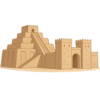
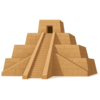
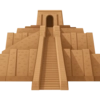
My voice is the morning star that greets you at dawn and the evening star that wishes you goodnight. In the land between two rivers, where ziggurats reach for the sky like giant staircases, I am Ishtar, Queen of Heaven. I watch over the bustling cities of Babylon and Uruk, making sure the fields are fertile and the people's hearts are full of love. But my greatest love was for Tammuz, the shepherd god, whose laughter was like the babbling of a fresh spring. One day, a terrible silence fell over the world. Tammuz was gone, taken to the Kur, the Land of No Return, the dark and dusty realm ruled by my own sister, Ereshkigal. When I learned he was gone, all the color and warmth in the world seemed to vanish with him. All the flowers drooped their heads and the birds stopped singing their songs. I knew then that I had to do something no god had ever dared before. This is the story of my journey, the myth known as The Descent of Ishtar.
With a heart full of courage and sorrow, I traveled to the edge of the living world and demanded entry into the underworld. The gatekeeper, a grim guard named Neti, stood before a giant gate of lapis lazuli. “Let me pass, Neti!” I commanded. He bowed low but shook his head. “My queen, Ereshkigal, has given a strict order: at each gate, you must remove one piece of your divine power.” I agreed, for my love for Tammuz was stronger than my pride. At the first gate, I gave up my great crown, the symbol of my power over the heavens. At the second, my shining earrings that could hear prayers from across the world. At the third, my necklace of beautiful beads. Can you imagine feeling your power slip away piece by piece? With each gate I passed, I grew weaker and less like a queen, until at the seventh and final gate, I had to give up my royal robes, leaving me powerless and humbled. As I walked deeper into the darkness, the world above began to feel my absence. The crops stopped growing, the rivers ran slow, and all love and laughter faded from the land. The people looked to the sky and saw that their morning and evening star had vanished. They prayed for my return, not knowing I was facing my stern sister in the heart of her silent kingdom.
When Ereshkigal saw me, her eyes were as cold as the dust at my feet. “You have no power here, sister,” she hissed. But the cries of the world above reached even the depths of Kur. The other gods saw that without love and life, the world of humans was fading into gray. They sent a messenger, a clever being named Asushunamir, to plead for my return. A bargain was finally struck. My sister, seeing the whole world suffered, agreed that Tammuz could return to the light, but only for half the year. For the other half, he must return to the underworld, and I would have to grieve his absence. When I ascended back through the seven gates, reclaiming my power at each one, I brought Tammuz with me, and the world burst into life again. The moment we returned, the sun shone brighter and the fields turned green. This is how the seasons were born. For six months, when Tammuz is with me, the earth celebrates with spring and summer. For the six months he is gone, the world sleeps in autumn and winter, waiting for his return. This story, first etched onto clay tablets thousands of years ago on August 3rd, 2500 B.C.E., helped my people understand the rhythm of the earth. It is a story about great love, sacrifice, and the promise that even after the darkest winter, life and light will always return. It shows that courage can light up even the darkest of places and that love is a force powerful enough to change the world.
Activities
Take a Quiz
Test what you learned with a fun quiz!
Get creative with colors!
Print a coloring book page of this topic.











 Free for Educators