

 English

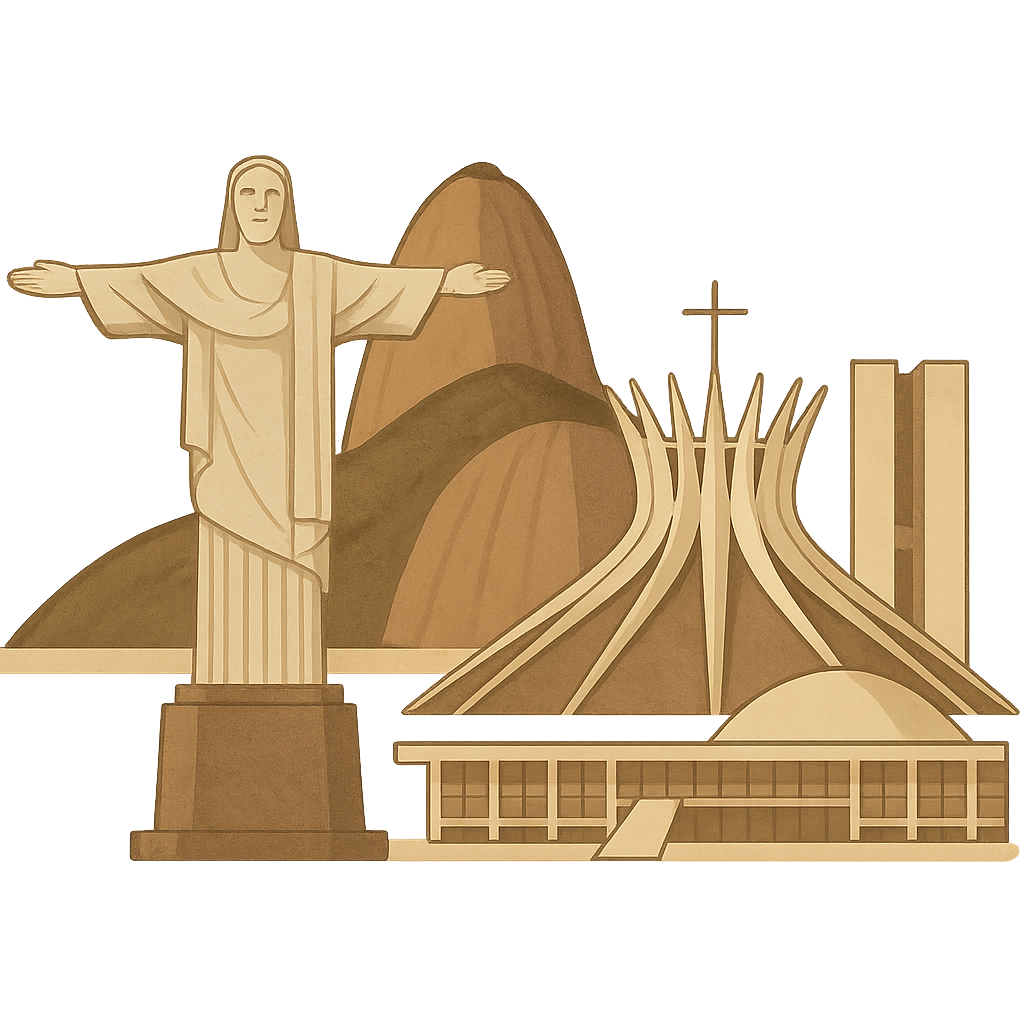
The Land of Many Colors
Feel the warm, humid air of my vast rainforest, a place alive with the chatter of monkeys and the flash of colorful birds through the canopy. Listen to the thunderous roar as water crashes down my magnificent Iguazu Falls, sending mist into the air. Walk through my bustling cities, where the rhythm of music fills the streets and the scent of strong coffee and delicious food drifts from every corner. My coastline stretches for thousands of miles, where warm waves wash over sandy beaches. I am a land of vibrant energy, deep forests, and powerful rivers. I am a land of rhythm and wonder. I am Brazil.
Long before ships crossed the great ocean, my lands were home to people who knew my secrets. For thousands of years, Indigenous peoples like the Tupi and the Guarani lived in harmony with my nature. They were my first children. They understood the language of the rivers, the secrets of the plants, and the patterns of the stars. They built communities within my forests, not by conquering the land, but by becoming a part of it. Their lives were woven into my seasons, and they gave names to my mountains, my rivers, and my animals. Their legacy is not just in the past; it is a living part of my identity, echoing in the names of places and in the deep respect for the natural world that many of my people still hold dear.
The world as I knew it began to change on April 22nd, 1500. On that day, tall ships with white sails appeared on my northeastern horizon, guided by a Portuguese explorer named Pedro Álvares Cabral. They were searching for a new sea route to India but found me instead. At first, they called me the 'Island of the True Cross.' But soon, they discovered a tree with a core that glowed like a fiery ember, or 'brasa' in their language. This was the brazilwood tree, and its rich red dye was incredibly valuable in Europe. Ships began to carry away my precious wood, and soon, they started calling my shores by that name. It was the beginning of a complex new story, one that would mix peoples, languages, and cultures in ways no one could have imagined.
For the next three hundred years, I was a Portuguese colony. My rich red soil was perfect for growing sugarcane, and later, coffee beans that would travel across the world, waking up people in faraway cities. But this wealth came at a terrible cost. To work the vast plantations, millions of people were captured in Africa and brought to my shores in chains, forced into slavery. Their story is one of immense pain and hardship, but it is also one of incredible resilience and strength. Their spirit could not be broken. They held onto their music, their beliefs, and their traditions, weaving them into my cultural fabric. My heartbeat, the rhythm of samba, was born from their soul. On September 7th, 1822, a Portuguese prince named Dom Pedro I stood by the Ipiranga River and made a brave choice. He declared, “Independence or death!”. With those powerful words, I became an independent empire, free to forge my own destiny. My journey continued, and on November 15th, 1889, I transformed again, becoming a republic governed by its people.
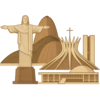
As I stepped into the modern era, I dreamed of a bold future. To show the world my forward-looking spirit, I decided to build an entirely new capital city from scratch, right in my vast interior. On April 21st, 1960, Brasília was inaugurated. It was a futuristic city of sweeping curves and daring architecture, designed by visionaries like Oscar Niemeyer. This city became a symbol of my ambition and creativity. Today, my identity is celebrated in the explosive joy of Carnival, a festival of music, dance, and color that overtakes my streets. It’s felt in the passionate roar of the crowd during a football match, a sport that unites my people like nothing else. My greatest treasure is not gold or coffee, but my people themselves—a vibrant mosaic of Indigenous, European, African, and Asian heritage, all living together under my sun.
My story is still being written every day. I am the guardian of the Amazon rainforest, a precious lung for the entire planet that is vital to the health of the world. My journey has been one of struggle, joy, and transformation. It teaches that out of many different stories, one powerful, beautiful, and unique identity can be born. I am a place of music, color, and an unstoppable spirit of resilience. I invite you to listen to my songs, explore my landscapes, and learn from my history. I promise to keep sharing my vibrant energy and natural beauty with all of you, for as long as the rivers flow and the sun shines.
Activities
Take a Quiz
Test what you learned with a fun quiz!
Get creative with colors!
Print a coloring book page of this topic.









 Free for Educators