English

Ellis Island
A former United States immigration station in New York Harbor that processed over 12 million immigrants from…
Reads at Grades 3–5 Listens at Grades 1–5
Print & create
Answer keys·No prep·Free with an account
28 worksheets · answer keys · full story · quiz · Ages 8-10 · CEFR B1
Plus adds 102,000+ more stories in 27 languages, audio for every one, and printables for all of them.
Just want Ellis Island?
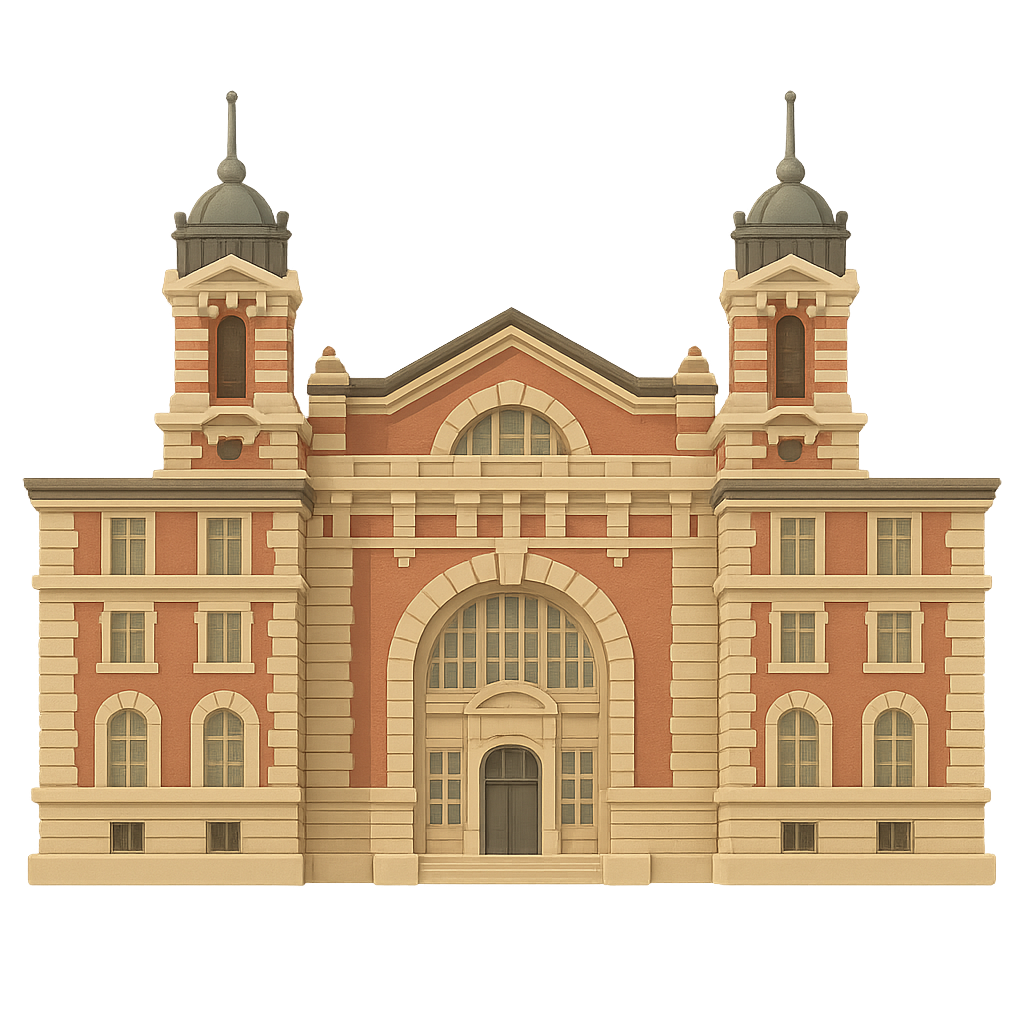
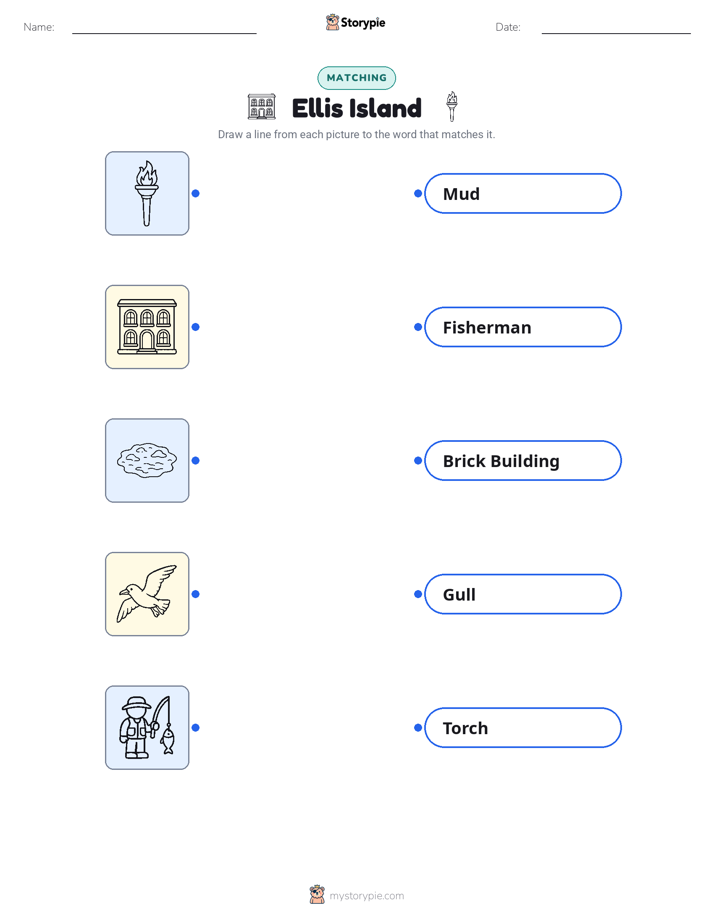
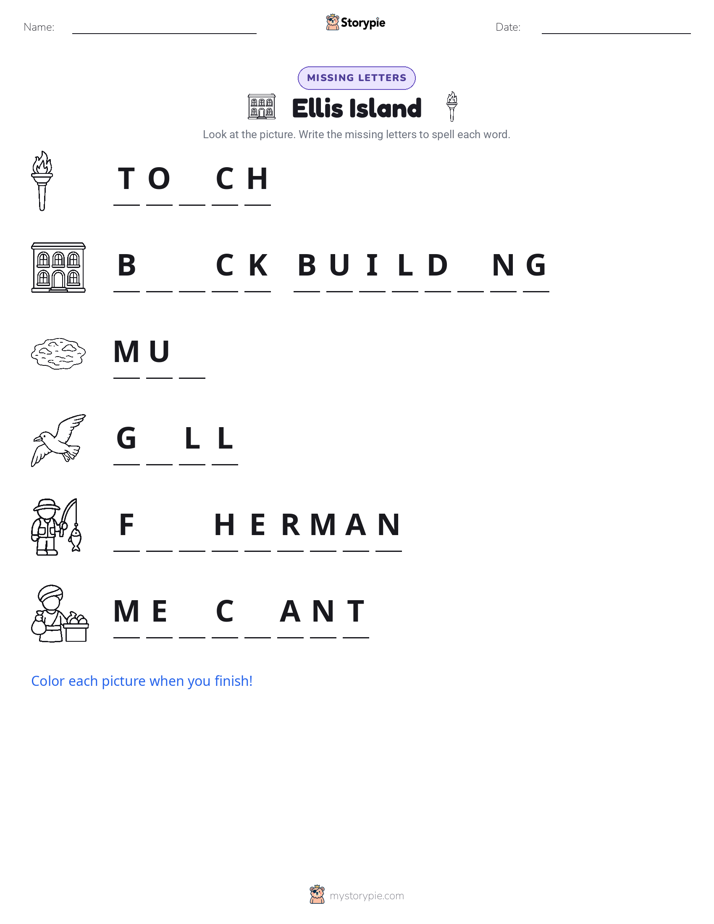
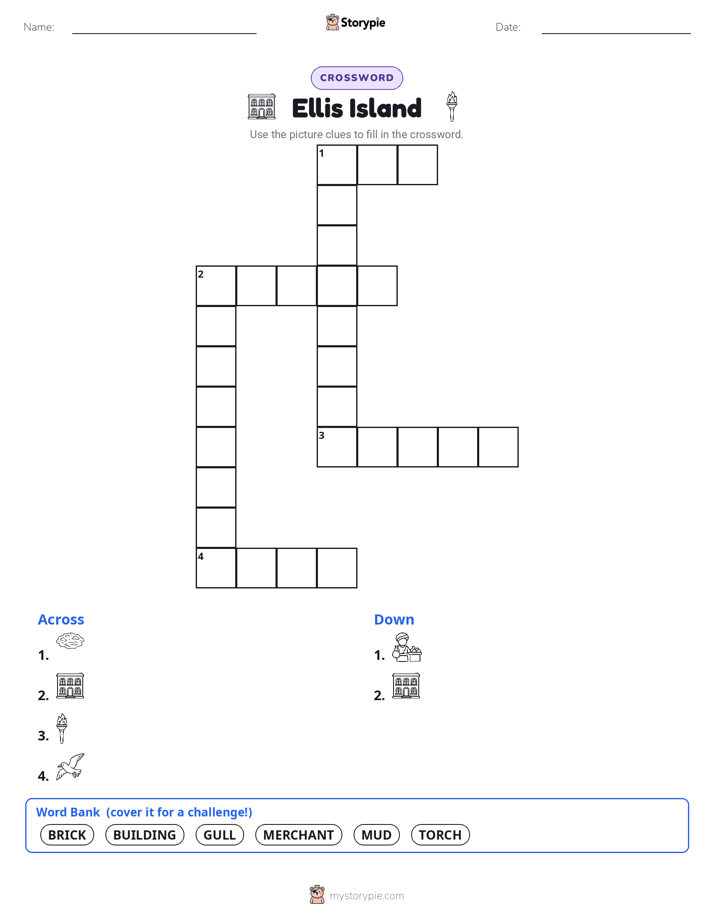
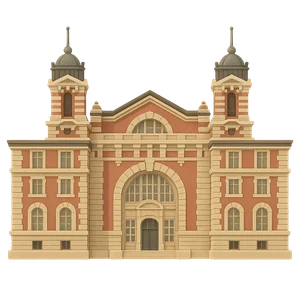
The cool water of New York Harbor laps gently at my shores, a constant rhythm I’ve felt for over a century. From here, I have the best view of my famous neighbor, the Statue of Liberty, as she holds her bright torch high in the sky. If you were to sail toward me, you would see my grand, red-brick buildings with their green-tiled roofs and big, arched windows, standing proud and important. For many years, I was the first piece of America that millions of people ever touched. Their hopeful, tired, and excited faces are etched into my memory, a sea of expressions from every corner of the world. They came seeking a new beginning, and their journey brought them to me. I am Ellis Island.
For a long time, I was just a small piece of land, but big plans were made for me. America needed a front door, a special place to welcome newcomers, and I was chosen. On January 1st, 1892, I officially opened. It was a day filled with excitement and nervousness. The very first person to step into my halls was a teenager from Ireland named Annie Moore. She was given a ten-dollar gold piece for being the first, a symbol of the new life she was starting. But my early years had a great challenge. On June 15th, 1897, a terrible fire broke out. My wooden buildings burned to the ground. Thankfully, everyone on the island was brought to safety, but all the immigration records were lost. It was a devastating setback, but it taught us an important lesson. I knew I had to be rebuilt stronger and safer than ever before, ready to welcome the world once more.
The Island of Hope: A Story of Ellis Island
The cool water of New York Harbor laps gently at my shores, a constant rhythm I’ve felt for over a century. From here, I have the best view of my famous neighbor, the Statue of Liberty, as she holds her bright torch high in the sky. If you were to sail toward me, you would see my grand, red-brick buildings with their green-tiled roofs and big, arched windows, standing proud and important. For many years, I was the first piece of America that millions of people ever touched. Their hopeful, tired, and excited faces are etched into my memory, a sea of expressions from every corner of the world. They came seeking a new beginning, and their journey brought them to me. I am Ellis Island.
For a long time, I was just a small piece of land, but big plans were made for me. America needed a front door, a special place to welcome newcomers, and I was chosen. On January 1st, 1892, I officially opened. It was a day filled with excitement and nervousness. The very first person to step into my halls was a teenager from Ireland named Annie Moore. She was given a ten-dollar gold piece for being the first, a symbol of the new life she was starting. But my early years had a great challenge. On June 15th, 1897, a terrible fire broke out. My wooden buildings burned to the ground. Thankfully, everyone on the island was brought to safety, but all the immigration records were lost. It was a devastating setback, but it taught us an important lesson. I knew I had to be rebuilt stronger and safer than ever before, ready to welcome the world once more.
And I was. On December 17th, 1900, I reopened with magnificent new buildings made of brick and stone so they would be fireproof. The heart of my new self was the Registry Room, a vast space people called the Great Hall. Its enormous, arched ceiling was covered in beautiful tiles, and it echoed with dozens of languages all at once—Italian, Polish, German, Russian, and so many more. When families arrived by ferry, they would carry their few belongings up my main staircase. Inside the Great Hall, doctors would quickly check to see if they were healthy, and inspectors would ask them questions like, “What is your name?” and “Where are you going?” It was a busy, confusing, but hopeful process. My busiest year ever was 1907, when over a million people arrived. On a single day that year, April 17th, nearly twelve thousand people passed through my halls. I was the busiest doorway in the world.
But as time went on, the world changed, and so did my purpose. New laws were passed, like the Immigration Act of 1924, which set limits on how many people could come to America from certain countries. This meant that far fewer ships were sailing into the harbor with hopeful families. My bustling halls grew quieter, and the echoes of countless languages began to fade. During times of war, I took on other duties. I served as a hospital for wounded soldiers and sometimes as a place where people were held if they couldn't stay in the country. Finally, the day came when my main job was done. On November 12th, 1954, I officially closed as an immigration station. For many years, I was silent and lonely, my grand halls empty, waiting for someone to remember my story and give me a new purpose.
That new purpose finally came. After many years of quiet waiting, people remembered the important role I played. They carefully repaired my beautiful buildings and polished my tiled floors. On September 10th, 1990, I was given a new life when I reopened as the Ellis Island National Museum of Immigration. My job now is to be a keeper of stories, protecting the memory of the 12 million people who walked my halls. Visitors can now walk in their ancestors’ footsteps and search for their family names on the American Immigrant Wall of Honor. I am a proud reminder that America is a nation built on the dreams and courage of people from all over the world, and my halls will forever echo with their stories of hope.
Wow facts
About
A former United States immigration station in New York Harbor that processed over 12 million immigrants from 1892 to 1954, now serving as a national museum of immigration.
Take a Quiz
Question 1 of 5
Why was it so important for the new Ellis Island buildings to be 'fireproof' after the fire of 1897?
Explore next






Want to do even more?
Go beyond exploring. Unlock tools that turn every story into real learning.

Storypie Plus for families
Full stories, quizzes, and printables. Nights and car rides, sorted.
- Unlimited audio stories
- Create Mode: your child stars in the story
- Offline downloads
- Printable worksheets & coloring pages

Why Storypie for Schools
Students engaged. Prep in seconds. Evenings back to you.
- Worksheets & Quizzes
- Classroom Management
- Formative Assessment
- Custom Curriculum & Lesson Plans
- 27 Languages

Why Storypie for Homeschool
Curriculum done. They'll ask for more. Hours back in your day.
- Worksheet Generator
- First-Person Audio Stories
- Built-in Comprehension Quizzes
- Custom Curriculum & Lesson Plans
- Print & Go Activities