

 English

The Islands That Changed the World
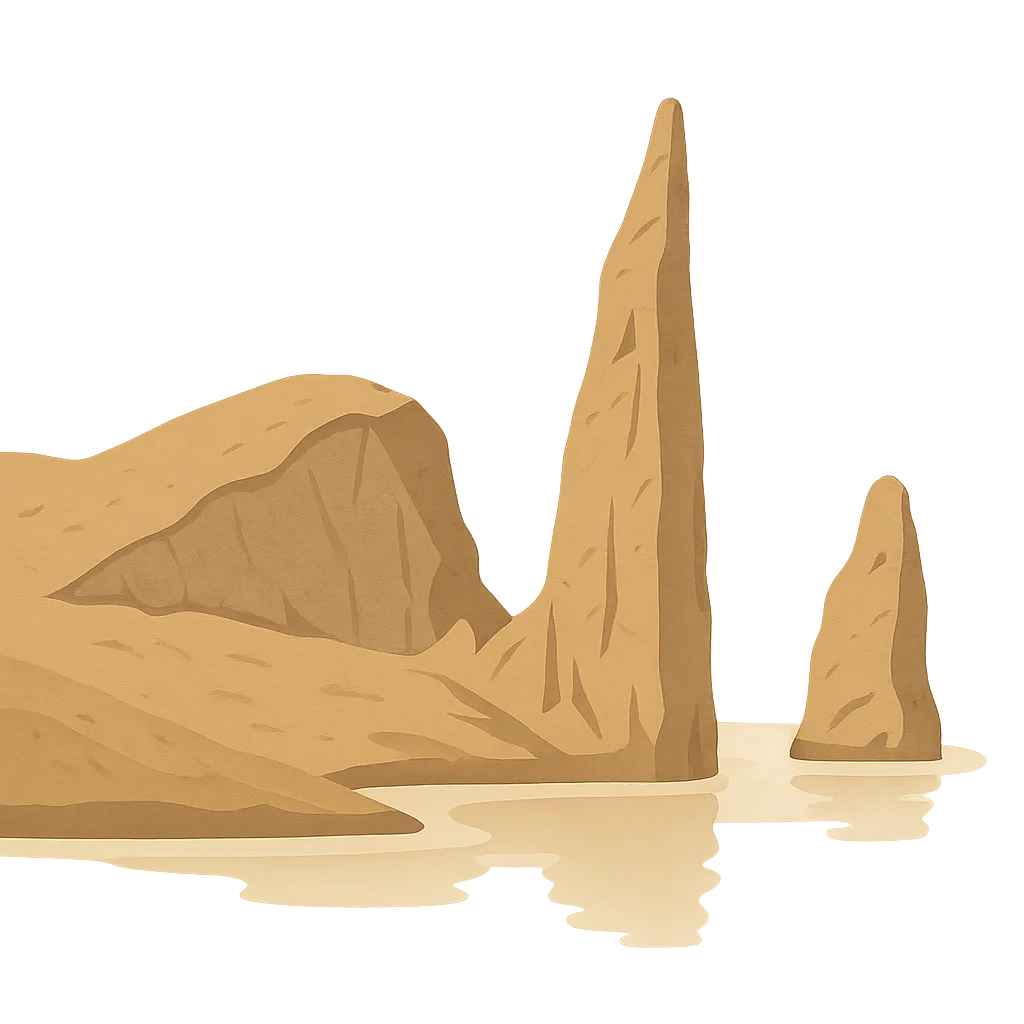
Can you imagine a place born of fire, hidden in the middle of a great blue ocean? Listen closely, and you can hear the Pacific waves crash against my black volcanic shores. The sun warms my rocky skin, and strange and wonderful animals call me home. Giant tortoises, as old as your great-grandparents, move slowly through my forests. Blue-footed birds perform silly dances to find a partner, and playful sea lions nap on my beaches without a single worry. For a very long time, these creatures were my only friends, and they never learned to be afraid. They live in a secret world, far from everything else, created by volcanoes that pushed up from the deep. I am the Galápagos Islands, a family of islands unlike any other in the world.
My story began millions of years ago, a fiery birth from deep within the Earth. One by one, volcanoes erupted from the ocean floor, and with each eruption, I grew. At first, I was just bare, dark rock. But life is adventurous. Seeds floated on the wind and landed on my shores. Tiny insects clung to driftwood that washed up on my beaches. Birds, blown off course during long journeys, found me and decided to stay. For ages, I was a world just for plants and animals, a quiet kingdom of nature. Then, one day, something new appeared on the horizon. On March 10th, 1535, a big wooden ship sailed into view. It belonged to a Spanish bishop named Fray Tomás de Berlanga. He hadn’t meant to find me. Strong ocean currents had pushed his ship far off its path, and he discovered me completely by accident. He and his crew were amazed by what they saw, especially my giant tortoises. He wrote that their shells were so big and curved that they looked like Spanish riding saddles, which are called ‘galápagos.’ And that is how I got my famous name.
Nearly three hundred years later, in 1835, another ship arrived, and this one would change everything. It was called the HMS Beagle, and aboard was a very curious young scientist named Charles Darwin. He was only twenty-six years old, and his mind was buzzing with questions. He was fascinated by my unique animals. He noticed that on one island, the tortoises had dome-shaped shells, perfect for eating low-growing plants. But on another island, he saw tortoises with shells that arched up in the front, like a saddle, which allowed them to stretch their long necks to reach taller cactus leaves. He also studied my little birds, the finches. He saw that they had beaks of all different shapes and sizes. Some had strong, thick beaks for cracking open hard seeds on the ground. Others had thin, pointy beaks, perfect for pulling insects out of tree bark. Darwin wondered, why were they all so different, yet so perfectly suited for their own island home? He spent five weeks exploring me, collecting samples, and thinking. The clues I gave him helped him form a world-changing idea: that living things slowly change, or adapt, over many, many years to perfectly fit their homes. This powerful idea is called evolution by natural selection, and it explained how life could be so diverse.
Charles Darwin’s visit made me famous. People all over the world learned about my special creatures and realized I was a treasure. My animals and plants are like a living library of nature’s best ideas, showing how life can find a way to thrive in even the toughest places. To protect my fragile world, the country of Ecuador, which I am a part of, made me its very first national park in 1959. This means my wildlife and my landscapes are protected so they can be studied and admired for many years to come. Today, scientists still come here to learn from me, just like Darwin did. Visitors travel from all over the world to see my wonders for themselves. I am a living laboratory and a beautiful reminder of how amazing and connected life is. Looking back, I see that I have stood through time to remind people of the power of observation and the importance of protecting our planet’s incredible family of life. I hope my story inspires you to look closely at the world around you, to ask big questions, and to always stay curious.
Activities
Take a Quiz
Test what you learned with a fun quiz!
Get creative with colors!
Print a coloring book page of this topic.








 Free for Educators