English

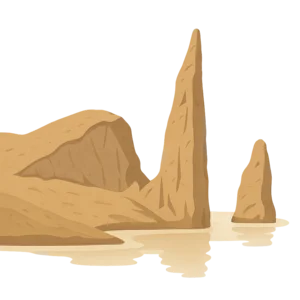
Galápagos Islands
A volcanic archipelago in the Pacific Ocean, part of Ecuador…
Reads at Grades 6–8 Listens at Grades 4–8
Print & create
Answer keys·No prep·Free with an account
28 worksheets · answer keys · full story · quiz · Ages 10-12 · CEFR B2
Plus adds 279,000+ more stories in 27 languages, audio for every one, and printables for all of them.
Just want Galápagos Islands?
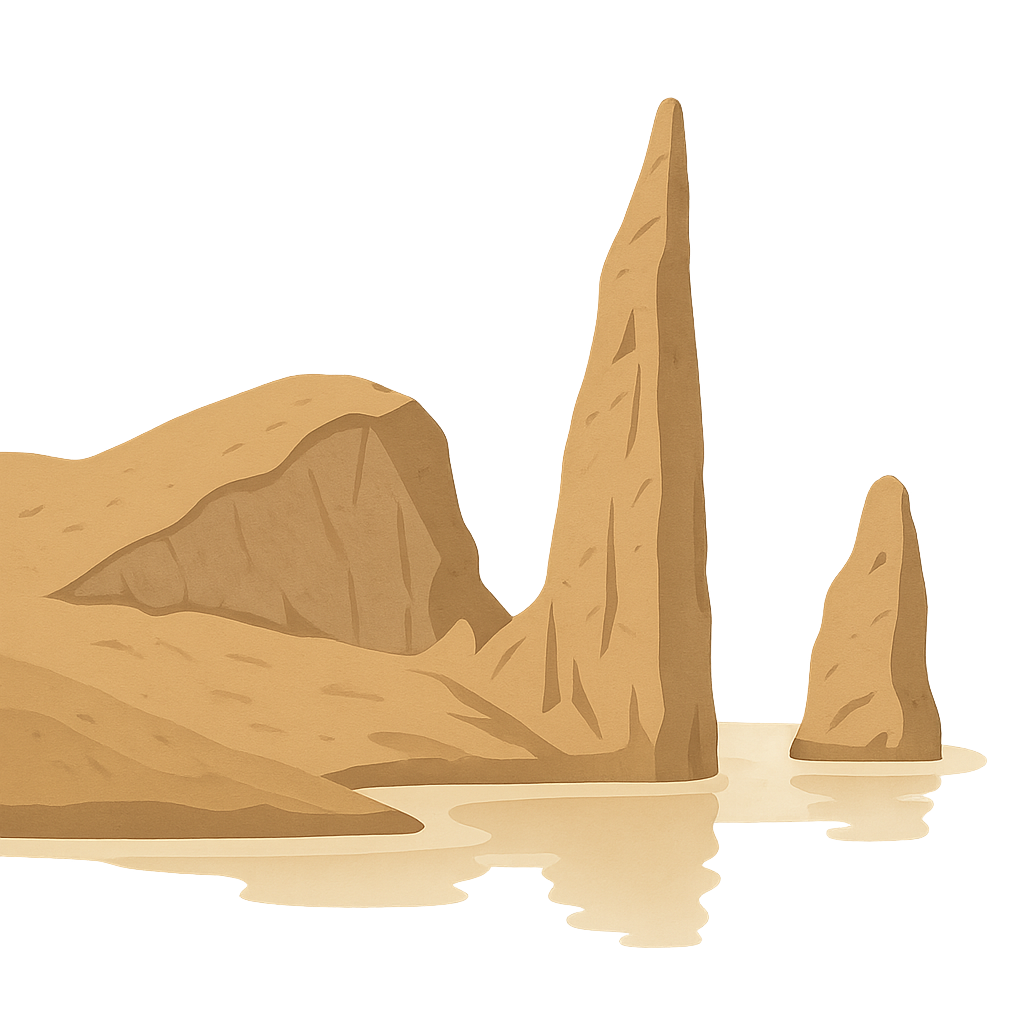
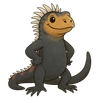
Imagine a place born of fire, where the sea crashes against shores of black, hardened lava. I am a sprinkle of islands, flung far out into the vast blue of the Pacific Ocean, a secret world built by volcanoes that pushed their way up from the ocean floor. For millions of years, my only music was the hiss of lava meeting water, the cry of seabirds, and the slow, steady footsteps of giants. My air is warm and salty, and my waters are a brilliant turquoise, teeming with life. Here, sea lions play without fear, strange lizards swim in the ocean to eat seaweed, and enormous tortoises wander like ancient, living stones. I am a world apart, a place where life took its own unique path. I am the Galápagos Islands, a living laboratory born from the Earth's heart, and I have a story to tell you.
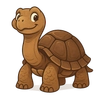
For most of my long life, I was a lonely kingdom of animals. I existed in peaceful isolation, a cluster of volcanic peaks unknown to the world of humans. That all changed on March 10th, 1535. A ship carrying a man named Fray Tomás de Berlanga, a bishop from Panama, was caught in a powerful ocean current that pushed it far off its course. When his crew was desperate for water, they spotted my dark shores. Imagine their astonishment. They saw a land they thought was enchanted, with creatures from a storybook. Most wondrous of all were the giant tortoises, with their great, domed shells. They were so numerous that the sailors named me after them, calling me 'Insulae de los Galápagos'—the Islands of the Tortoises. But this discovery brought hardship. In the centuries that followed, my quiet coves became hideouts for pirates and whalers. They saw my fearless animals not as wonders, but as food and resources. They hunted the tortoises and seals, and their ships brought unwelcome visitors like rats and goats, which threatened my delicate balance of life. It was a difficult and sorrowful time for my native inhabitants.
The Islands That Whispered a Secret to the World
Imagine a place born of fire, where the sea crashes against shores of black, hardened lava. I am a sprinkle of islands, flung far out into the vast blue of the Pacific Ocean, a secret world built by volcanoes that pushed their way up from the ocean floor. For millions of years, my only music was the hiss of lava meeting water, the cry of seabirds, and the slow, steady footsteps of giants. My air is warm and salty, and my waters are a brilliant turquoise, teeming with life. Here, sea lions play without fear, strange lizards swim in the ocean to eat seaweed, and enormous tortoises wander like ancient, living stones. I am a world apart, a place where life took its own unique path. I am the Galápagos Islands, a living laboratory born from the Earth's heart, and I have a story to tell you.
For most of my long life, I was a lonely kingdom of animals. I existed in peaceful isolation, a cluster of volcanic peaks unknown to the world of humans. That all changed on March 10th, 1535. A ship carrying a man named Fray Tomás de Berlanga, a bishop from Panama, was caught in a powerful ocean current that pushed it far off its course. When his crew was desperate for water, they spotted my dark shores. Imagine their astonishment. They saw a land they thought was enchanted, with creatures from a storybook. Most wondrous of all were the giant tortoises, with their great, domed shells. They were so numerous that the sailors named me after them, calling me 'Insulae de los Galápagos'—the Islands of the Tortoises. But this discovery brought hardship. In the centuries that followed, my quiet coves became hideouts for pirates and whalers. They saw my fearless animals not as wonders, but as food and resources. They hunted the tortoises and seals, and their ships brought unwelcome visitors like rats and goats, which threatened my delicate balance of life. It was a difficult and sorrowful time for my native inhabitants.
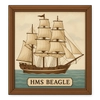
Then, on September 15th, 1835, another ship arrived, one that would change not only my future, but how humans understood life itself. It was the HMS Beagle, and aboard was a young, brilliant, and deeply curious naturalist named Charles Darwin. He was only twenty-six years old, and his mind was wide open to the world's wonders. For five weeks, he explored my different islands, and he noticed things no one had properly seen before. He saw that the little birds, the finches, had differently shaped beaks on each island—some were thick and strong for cracking tough seeds, while others were delicate and thin for picking insects. He observed that the giant tortoises had shells of varying shapes depending on which island they called home. On islands with tall plants, the tortoises had shells that curved upwards at the front, allowing them to stretch their long necks to reach food. It was like I was showing him a puzzle. He collected specimens and filled his notebooks, asking questions about everything he saw. Why were the creatures here so similar, yet so perfectly suited to their own small island world? The clues I gave him sparked a revolutionary idea. He realized that my creatures had not been created exactly as they were. Instead, over countless generations, they had slowly changed, or adapted, to survive in their unique environments. This powerful idea became his theory of evolution by natural selection, which he finally published in his world-changing book, 'On the Origin of Species', on November 24th, 1859. A secret I had held for millions of years was finally shared with the world.
Today, the world understands the secret I shared with Darwin. Humans now see me not as a place to take from, but as a treasure to protect. In 1959, the country of Ecuador declared me its first national park, a sanctuary for the unique life I hold. Later, I was named one of the first UNESCO World Heritage sites, a place considered so special that my protection is important for all of humanity. Scientists and conservationists now walk the same shores as Darwin, but they are here to help me heal and thrive. They work tirelessly to protect my animals, remove the invasive species brought here long ago, and study the delicate web of life that makes me so unique. My story is one of survival, of change, and of the incredible power of nature. I am a living reminder that our planet is full of wonders worth protecting. I hope my story inspires you to stay curious, to ask questions about the world around you, and to help care for the wild and beautiful places on Earth. My story is still unfolding, and you are now a part of it.
Wow facts
About
A volcanic archipelago in the Pacific Ocean, part of Ecuador, renowned for its unique and fearless wildlife which inspired Charles Darwin's theory of evolution by natural selection.
Take a Quiz
Question 1 of 5
Retell the story of how the Galápagos Islands were first discovered by humans and what happened in the years that followed.
Explore next


Want to do even more?
Go beyond exploring. Unlock tools that turn every story into real learning.

Storypie Plus for families
Full stories, quizzes, and printables. Nights and car rides, sorted.
- Unlimited audio stories
- Create Mode: your child stars in the story
- Offline downloads
- Printable worksheets & coloring pages

Why Storypie for Schools
Students engaged. Prep in seconds. Evenings back to you.
- Worksheets & Quizzes
- Classroom Management
- Formative Assessment
- Custom Curriculum & Lesson Plans
- 27 Languages

Why Storypie for Homeschool
Curriculum done. They'll ask for more. Hours back in your day.
- Worksheet Generator
- First-Person Audio Stories
- Built-in Comprehension Quizzes
- Custom Curriculum & Lesson Plans
- Print & Go Activities