

 English

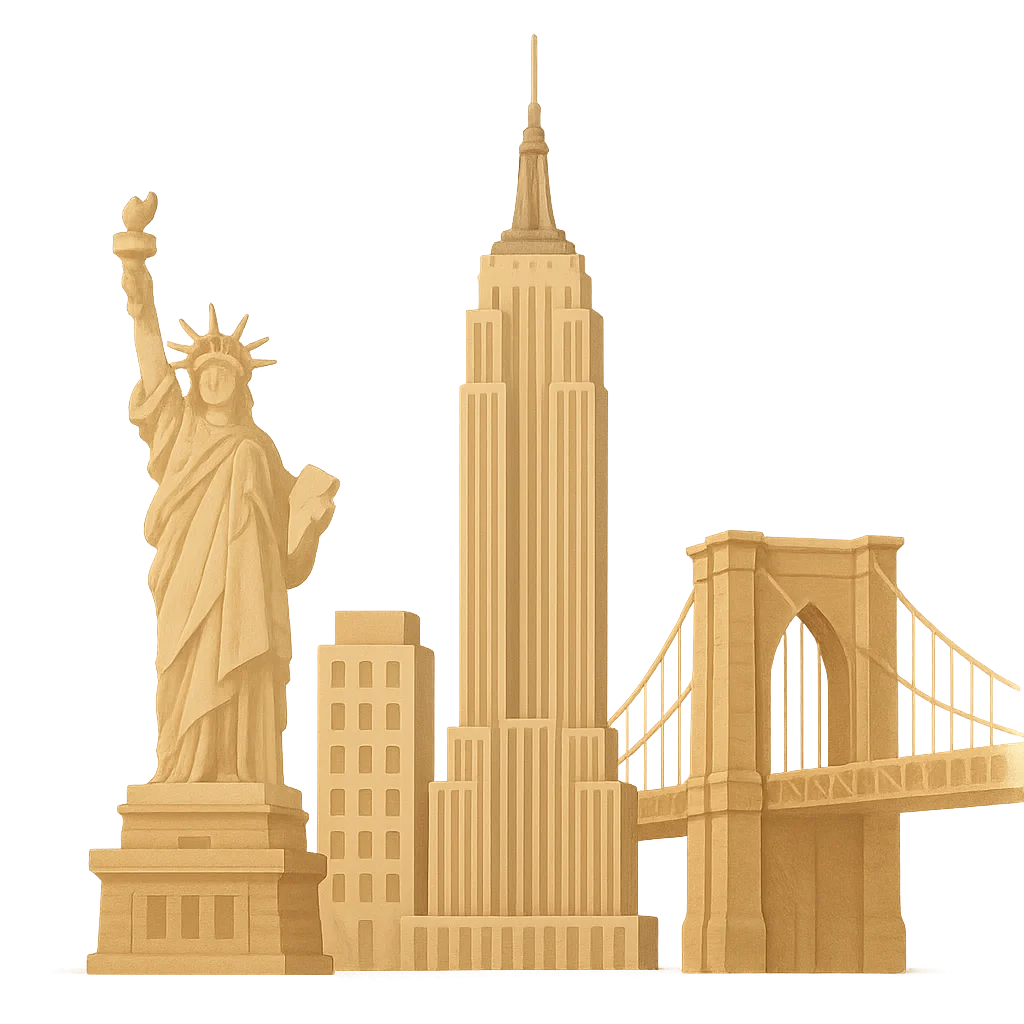
The City of a Million Stories
Listen closely. Can you hear my heartbeat? It’s the rumble of trains deep beneath my streets, a constant, steady rhythm. It’s the chorus of a hundred different languages spoken on a single corner, the soaring notes from a Broadway theater, and the quiet rustle of leaves in my great green parks. Look up, and you’ll see a forest not of trees, but of glittering towers that pierce the clouds, their windows reflecting the dreams of millions. I am a giant, sparkling island nestled between two rivers, a place where anything feels possible. People from all over the world come to me to build new lives and chase their ambitions. I am a city built on energy, hope, and resilience. I am New York City.
But before the first brick was ever laid for my skyscrapers, I was a very different place. My islands were covered in thick forests, rolling hills, and sparkling streams. I was known then as Lenapehoking, and I was the home of the Lenape people. For thousands of years, they lived in harmony with my land. They called my main island Manna-hatta, which means 'land of many hills.' They fished in my deep rivers, hunted in my woods, and built their villages where my busiest avenues now run. Their lives were woven into the seasons of my natural world. Then, on a clear day, September 11th, 1609, a strange and wonderful sight appeared in my harbor. A huge ship with tall masts and billowing sails, called the Half Moon, sailed into my waters. On board was an English explorer named Henry Hudson, working for the Dutch. He wasn't looking for me, but when he saw my magnificent natural harbor, he knew he had found something special, a gateway to a new world.
After Henry Hudson’s voyage, others followed. In 1624, Dutch traders and families arrived and built a bustling little settlement at my southern tip. They built a fort, laid down winding streets, and called their new home New Amsterdam. It became a lively hub of trade, with ships arriving from across the ocean. But my story was about to take another turn. In 1664, a fleet of English warships sailed into my harbor. The Dutch governor surrendered without a fight, and my name was changed to New York, in honor of the English Duke of York. I continued to grow, and my port became one of the busiest in the world. The opening of the Erie Canal in 1825 was a pivotal moment, connecting my harbor to the vast American interior and making me the nation's most important commercial center. It was then that I truly began to call out to the world. I became a beacon of hope for people seeking freedom and opportunity. A grand lady, the Statue of Liberty, was raised in my harbor to light their way, and on January 1st, 1892, Ellis Island opened its doors, becoming the gateway through which millions of immigrants would step into their new lives.
My transformation into the metropolis you know today happened with a great surge of energy. On January 1st, 1898, five distinct areas—Manhattan, Brooklyn, Queens, the Bronx, and Staten Island—agreed to join together. Overnight, I became one of the largest cities in the world. This was an age of incredible invention and ambition. While workers burrowed deep underground to create my amazing subway system, a different kind of race was happening above ground. Architects and engineers were racing to touch the sky. Steel skeletons rose higher and higher, creating my iconic skyline. Buildings like the Chrysler Building and the magnificent Empire State Building became symbols of human ingenuity. Yet, even as I grew taller and busier, my creators knew that people needed a place to breathe. They set aside a huge rectangle of land right in my center and created my green heart, Central Park, a beautiful oasis of fields, forests, and lakes for everyone to share.
Today, my heartbeat is stronger than ever. It is the rhythm of the more than eight million people who call me home, people whose families come from every corner of the globe. I am a living mosaic of cultures, foods, ideas, and dreams. I am a place where a poet can write in a quiet cafe, an artist can paint a masterpiece, and a scientist can make a world-changing discovery, all within a few blocks of each other. My story is not finished; in fact, it is constantly being written and rewritten by every person who walks my streets and adds their voice to my chorus. I continue to be a place where creativity, innovation, and hope thrive against all odds. My past is rich and deep, but my future is a story that is still unfolding, and perhaps one day, you will be a part of it too.
Activities
Take a Quiz
Test what you learned with a fun quiz!
Get creative with colors!
Print a coloring book page of this topic.













 Free for Educators