

 English

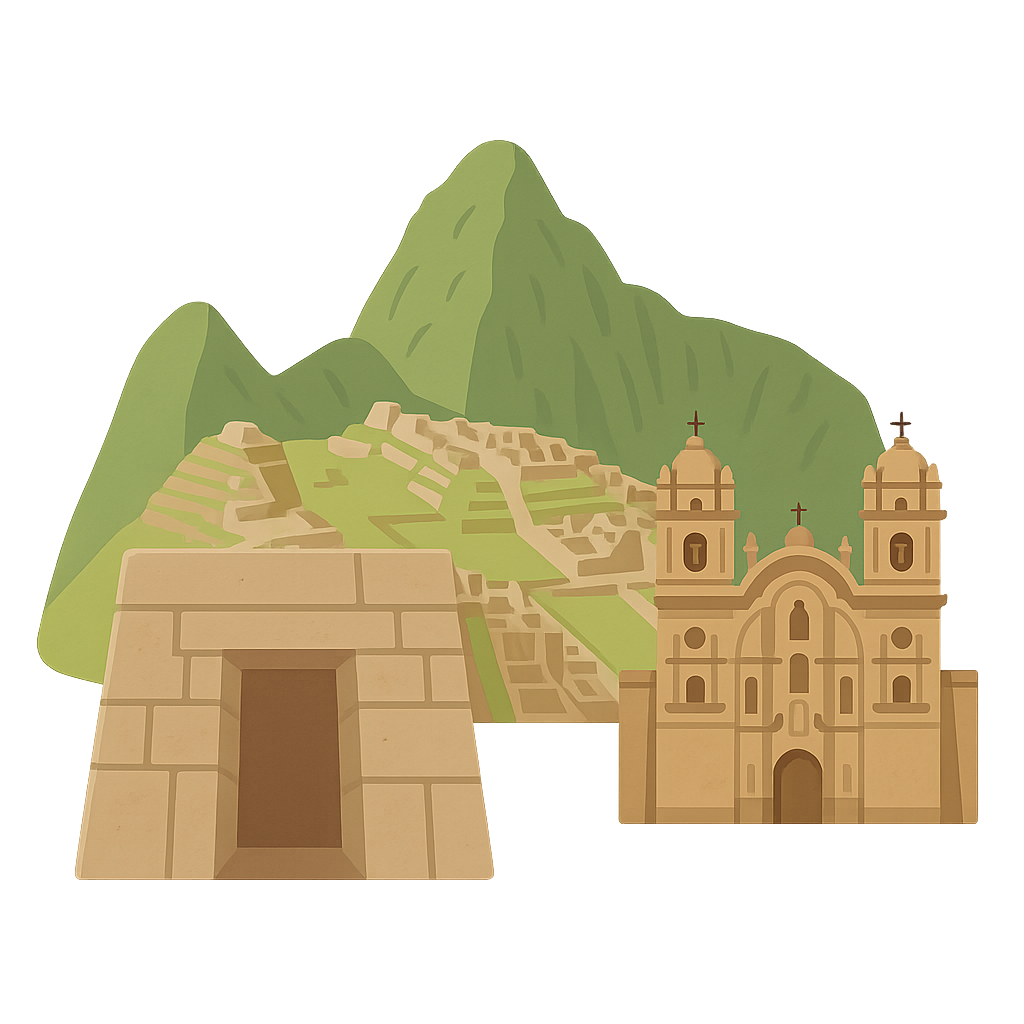
The Whispering Mountains: A Story of Peru
In the sharp, cold air of my highest peaks, condors soar on silent wings, looking down on a world of stone and sky. Far below, in my humid, green heart, the air is thick with the scent of damp earth and the symphony of a million unseen creatures. This is my Amazon rainforest, a place of vibrant, endless life. Then, travel west to my coast, where the great ocean meets a silent, sun-baked desert. Here, giant pictures of birds and spiders are drawn into the very soil, secrets so large they can only be understood from the heavens. My cities buzz with the energy of today, but my stones whisper stories from thousands of years ago. I am Peru, a country woven from mountains, jungles, and deserts, with a story as deep as the canyons I hold.
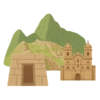
My story began long before maps gave me my current name. My earliest peoples, the Nazca, were the artists of the desert floor, etching those enormous figures for reasons we still ponder. The Moche, masters of clay, crafted pottery so detailed it tells vivid stories of their lives, their ceremonies, and their gods. But the empire that truly defined my heart was the Inca, who rose to power around the 13th century. They saw their world as a sacred place, with their capital, Cusco, as the 'navel of the world.' They worshipped the sun god, Inti, and believed their emperor was his direct descendant. Their genius was written in stone and stretched across mountains. Around the year 1450, they built the city of Machu Picchu, a masterpiece of engineering nestled on a mountain ridge so high it touches the clouds. They did this without mortar, fitting massive stones together so perfectly that not even a knife blade can slip between them. To connect their vast empire, they created the Qhapaq Ñan, a network of thousands of miles of roads that climbed mountains and crossed rivers, allowing swift runners to carry messages from one end of their domain to the other.
In 1532, my story took a sharp, unexpected turn. From across the vast ocean, strange ships with white sails appeared on my shores. They carried men in shining metal armor, led by a Spanish conquistador named Francisco Pizarro. This was not just a meeting; it was a collision between two very different worlds. The world of the Inca, with its deep connection to the earth and the sun, met a world of steel, horses, and a different god. The powerful Inca Empire, weakened by its own internal conflicts, fell to the Spanish. A new era began, and I became the Viceroyalty of Peru, a jewel in the Spanish crown. The Spanish founded a new capital, Lima, on the coast, shifting the center of power away from the Andean highlands of Cusco. My ancient traditions did not disappear, but they were forced to blend with new languages, new beliefs, and new ways of life. This time of great change forged a new, complex identity for me, one made of both sorrow and survival, of old memories and new beginnings.
For nearly three hundred years, I lived under Spanish rule. My people’s desire for freedom grew steadily, a quiet rumble that became a powerful roar. Heroes rose, inspired by the ideals of liberty that were sweeping across the Americas. One of these heroes was an Argentine general named José de San Martín, who believed that my freedom was essential for the freedom of the entire continent. He led his army to my shores, not to conquer, but to liberate. Then came the moment my heart had been waiting for. On July 28th, 1821, General San Martín stood before a cheering crowd in Lima’s Plaza de Armas and proclaimed my independence. With those powerful words, a new dawn broke over my mountains and coasts. I was no longer a territory ruled by a distant king. I was a sovereign nation, ready to define my own future and write the next chapter of my long and dramatic story.
Today, my heartbeat is a rhythm of many cultures. My identity is a vibrant blend of the Indigenous traditions of the Andes and the Amazon, the European heritage brought from across the sea, and the influences of African and Asian peoples who also made their home here. You can taste this mix in my world-famous food, hear it in the mix of Spanish and Quechua spoken in my markets, and see it in the diverse faces of my people. My history is not locked away in books; it is alive. It breathes in the ancient Quechua language still spoken in mountain villages and in the sense of wonder visitors feel when they first see the sun rise over Machu Picchu. My story is one of resilience and creation. I invite everyone to listen to my mountains and learn from my journey, because my spirit is a reminder that even after great challenges, beauty and connection can grow stronger than ever.
Activities
Take a Quiz
Test what you learned with a fun quiz!
Get creative with colors!
Print a coloring book page of this topic.









 Free for Educators