English

Asking For Help
Asking for help is a fundamental social and emotional skill that involves recognizing a need for support and…
Reads at Grades 3–5 Listens at Grades 1–5
Print & create
Answer keys·No prep·Free with an account
28 worksheets · answer keys · full story · quiz · Ages 8-10 · CEFR B1
Plus adds 279,000+ more stories in 27 languages, audio for every one, and printables for all of them.
Just want Asking For Help?
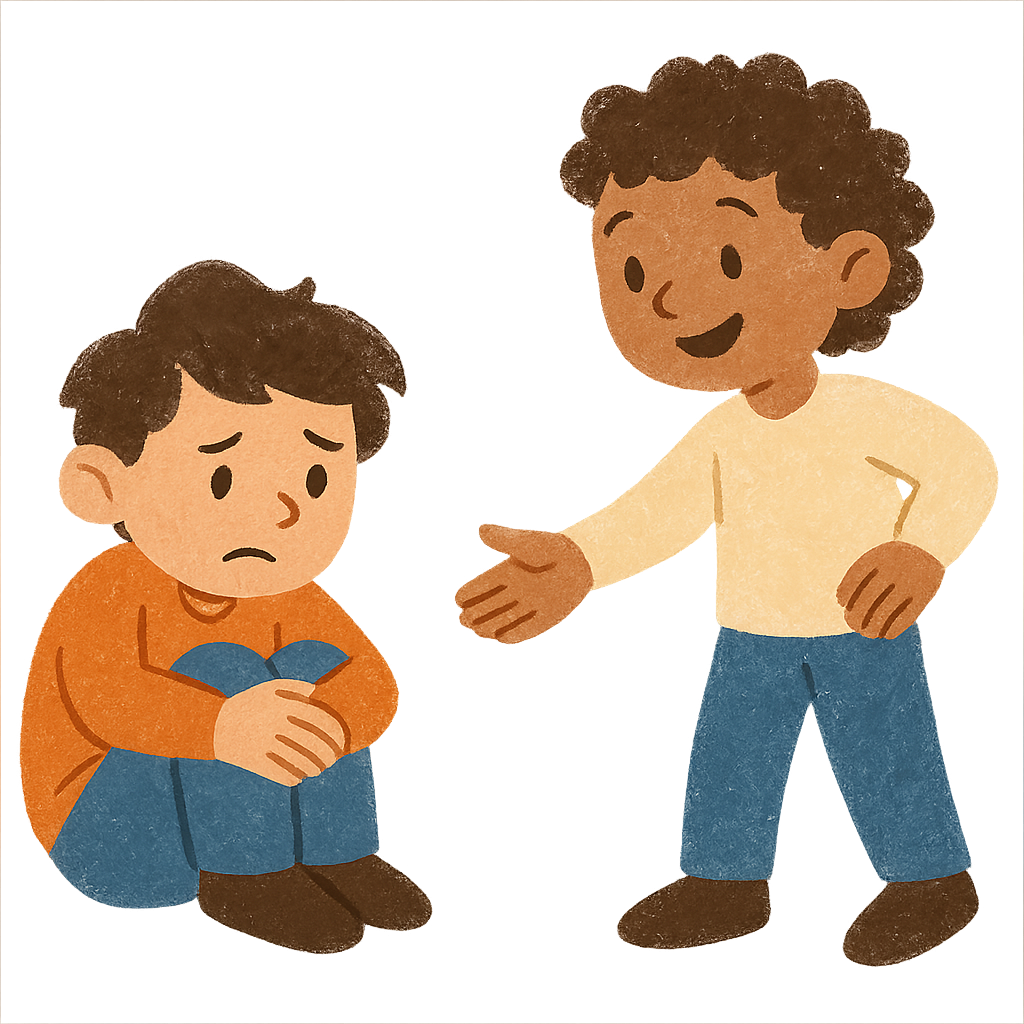
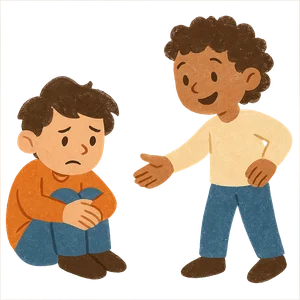
I want to talk about what it means to ask for help. Asking for help is letting someone know you need support with a problem or a feeling. It’s like being on a team—sometimes you have to pass the ball to a teammate because they have a better shot. I know that everyone needs help sometimes, whether it's with a tricky math problem or figuring out the rules to a new game. It is a smart and brave thing to do.
Sometimes it might feel a little scary or embarrassing to admit you're stuck. You might worry about what others will think of you. But I find that trying to solve a big problem all by yourself can feel lonely and frustrating. When you ask for help, that heavy, stuck feeling often disappears. It is replaced with relief, and you usually learn something new in the process, which makes it worth it.
Here is a simple, step-by-step guide for how to ask for help. First, take a moment to figure out exactly what you're stuck on. For example, you could say, 'I don't understand how to start this science project.' Next, think about who would be a good person to ask. This could be a teacher for schoolwork, a parent for a problem at home, or a coach for a sports skill. Then, find a good time when they aren't too busy. Finally, use clear, polite words to ask, like, 'Excuse me, could you help me for a minute? I'm having trouble understanding this part.' Being specific helps them give you the best support.
So, what happens after you ask for help? The person you ask can share their knowledge, show you a new way to do something, or just listen to you. Not only do you get the support you need to move forward, but you also show that person you trust them. This can make you feel capable and proud for taking charge of your own learning. It can also make your relationships with friends, family, and teachers even stronger.
The Power of Asking for Help
I want to talk about what it means to ask for help. Asking for help is letting someone know you need support with a problem or a feeling. It’s like being on a team—sometimes you have to pass the ball to a teammate because they have a better shot. I know that everyone needs help sometimes, whether it's with a tricky math problem or figuring out the rules to a new game. It is a smart and brave thing to do.
Sometimes it might feel a little scary or embarrassing to admit you're stuck. You might worry about what others will think of you. But I find that trying to solve a big problem all by yourself can feel lonely and frustrating. When you ask for help, that heavy, stuck feeling often disappears. It is replaced with relief, and you usually learn something new in the process, which makes it worth it.
Here is a simple, step-by-step guide for how to ask for help. First, take a moment to figure out exactly what you're stuck on. For example, you could say, 'I don't understand how to start this science project.' Next, think about who would be a good person to ask. This could be a teacher for schoolwork, a parent for a problem at home, or a coach for a sports skill. Then, find a good time when they aren't too busy. Finally, use clear, polite words to ask, like, 'Excuse me, could you help me for a minute? I'm having trouble understanding this part.' Being specific helps them give you the best support.
So, what happens after you ask for help? The person you ask can share their knowledge, show you a new way to do something, or just listen to you. Not only do you get the support you need to move forward, but you also show that person you trust them. This can make you feel capable and proud for taking charge of your own learning. It can also make your relationships with friends, family, and teachers even stronger.
Learning to ask for help is a skill you will use forever, not just in school. It helps you build strong friendships and work well in teams on projects or in sports. It also helps you solve bigger and bigger challenges as you grow up. Asking for help shows that you are strong enough to know your limits and smart enough to learn from the people around you. This is important because it makes you a more resilient and capable person throughout your entire life.
Wow facts
About
Asking for help is a fundamental social and emotional skill that involves recognizing a need for support and effectively communicating that need to others to solve problems, learn, or regulate emotions.
Take a Quiz
Question 1 of 5
According to the story, what is the first step you should take when you need to ask for help?
Explore next






Want to do even more?
Go beyond exploring. Unlock tools that turn every story into real learning.

Storypie Plus for families
Full stories, quizzes, and printables. Nights and car rides, sorted.
- Unlimited audio stories
- Create Mode: your child stars in the story
- Offline downloads
- Printable worksheets & coloring pages

Why Storypie for Schools
Students engaged. Prep in seconds. Evenings back to you.
- Worksheets & Quizzes
- Classroom Management
- Formative Assessment
- Custom Curriculum & Lesson Plans
- 27 Languages

Why Storypie for Homeschool
Curriculum done. They'll ask for more. Hours back in your day.
- Worksheet Generator
- First-Person Audio Stories
- Built-in Comprehension Quizzes
- Custom Curriculum & Lesson Plans
- Print & Go Activities