Français

Gustave Eiffel
Alexandre Gustave Eiffel était un ingénieur civil français…
Se lit à Niveaux 3–5 Écoute à Classes 1–5
Imprimer et créer
Clés de réponse·Aucune préparation·Gratuit avec un compte
27 fiches de travail · clés de réponse · histoire complète · quiz · Âges 8-10 · CECR B1
Plus ajoute 280,000+ histoires supplémentaires dans 27 langues, de l'audio pour chacune d'elles, et des imprimables pour toutes.
Vous voulez juste Gustave Eiffel ?
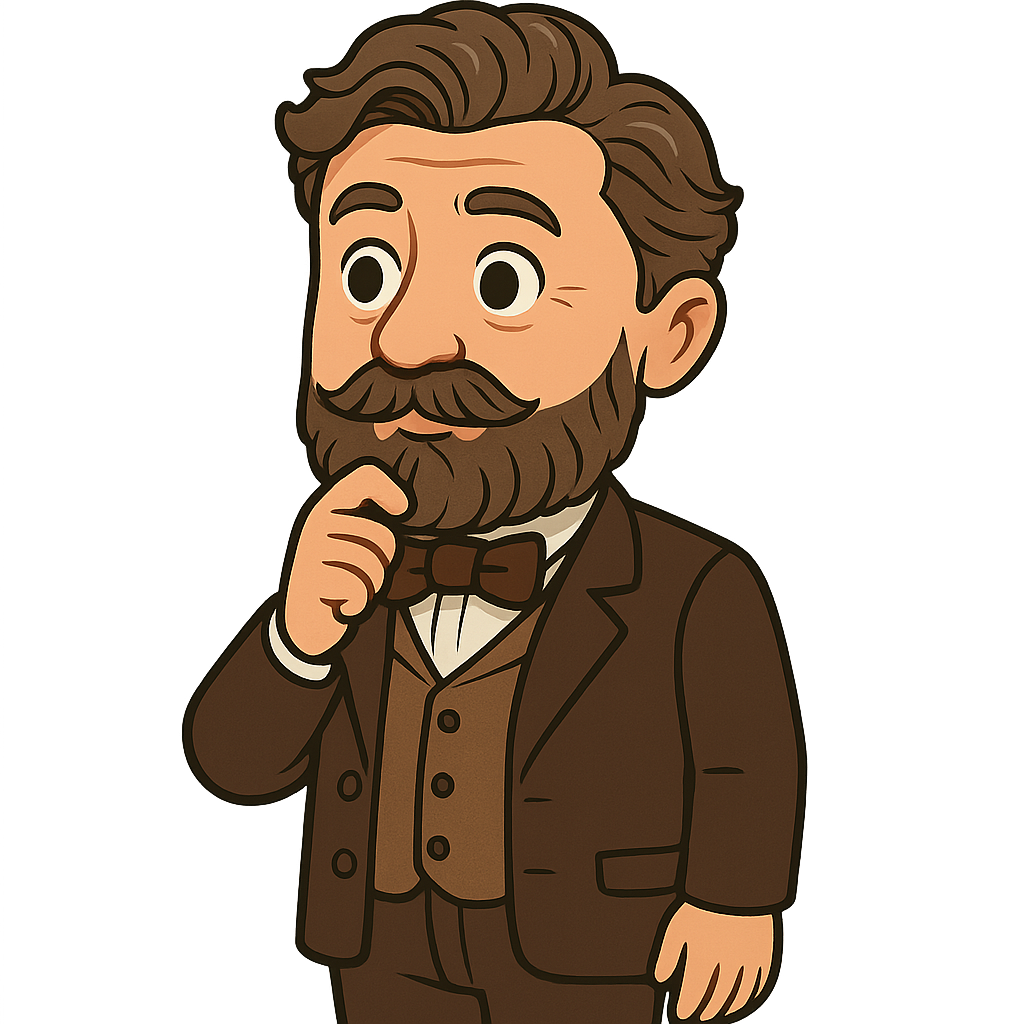
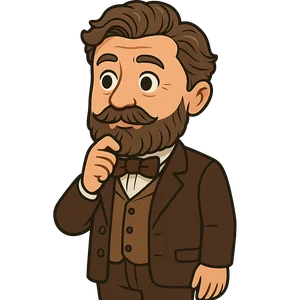
Bonjour. My name is Gustave Eiffel, and I am an engineer who loved to build amazing things with iron. I was born on December 15th, 1832, in a lovely French city called Dijon. Even as a young boy, I was fascinated with how things were put together. I loved science and figuring out how to build strong structures. This passion led me to a special school in Paris, the École Centrale des Arts et Manufactures, where I studied to become an engineer. After I graduated in 1855, I couldn't wait to start my work. My very first big project came in 1858 when I was asked to build a huge iron bridge in a city called Bordeaux. Seeing that massive railway bridge stretch across the water sparked a love for metal that would last my entire life. I knew then that I wanted to show the world the power and beauty of iron.
After my first success, I started my own company and quickly became known for building strong and beautiful bridges all over the world. These were not just simple crossings; they were like giant puzzles made of metal. Two of my proudest creations were built during this time. The first was the Ponte Maria Pia bridge in Portugal, which I completed in 1877. It had a giant metal arch that soared high above the river, something many people had never seen before. Then, in 1884, I finished the incredible Garabit Viaduct in France, which was even higher and seemed to float among the clouds. Building these bridges taught me so much. I learned everything about how to make metal structures that were not only strong enough to carry heavy trains but also light and elegant. Most importantly, I learned how to design them to stand up to powerful winds, a lesson that would be very important for my future projects.
Gustave Eiffel
Bonjour. My name is Gustave Eiffel, and I am an engineer who loved to build amazing things with iron. I was born on December 15th, 1832, in a lovely French city called Dijon. Even as a young boy, I was fascinated with how things were put together. I loved science and figuring out how to build strong structures. This passion led me to a special school in Paris, the École Centrale des Arts et Manufactures, where I studied to become an engineer. After I graduated in 1855, I couldn't wait to start my work. My very first big project came in 1858 when I was asked to build a huge iron bridge in a city called Bordeaux. Seeing that massive railway bridge stretch across the water sparked a love for metal that would last my entire life. I knew then that I wanted to show the world the power and beauty of iron.
After my first success, I started my own company and quickly became known for building strong and beautiful bridges all over the world. These were not just simple crossings; they were like giant puzzles made of metal. Two of my proudest creations were built during this time. The first was the Ponte Maria Pia bridge in Portugal, which I completed in 1877. It had a giant metal arch that soared high above the river, something many people had never seen before. Then, in 1884, I finished the incredible Garabit Viaduct in France, which was even higher and seemed to float among the clouds. Building these bridges taught me so much. I learned everything about how to make metal structures that were not only strong enough to carry heavy trains but also light and elegant. Most importantly, I learned how to design them to stand up to powerful winds, a lesson that would be very important for my future projects.
One day, I was asked to help with a very special project—a gift from the people of France to the people of America. You might know it as the Statue of Liberty. Now, I did not design the outside of the famous copper lady; another artist did that. My job was to figure out what would hold her up from the inside. Starting around 1881, I designed her secret, super-strong iron skeleton. Think of it like a human spine that holds up your body. I created a sturdy iron frame that would support all of the heavy copper skin. My design was very important because it was strong but also a little bit flexible. This allowed the huge statue to sway gently in the harbor winds of New York without ever breaking.
My greatest challenge came when Paris decided to host a huge World's Fair in 1889. The city wanted something spectacular to welcome visitors, and I had a big dream. I wanted to build the tallest structure in the world, made completely out of iron. At first, many people in Paris thought my idea was very ugly and called it a giant metal skeleton. They did not believe it would be beautiful. But I knew it would be magnificent. From 1887 to 1889, my team and I worked tirelessly. We pieced together over 18,000 individual iron parts, connecting them with millions of special metal pins called rivets. It was like building with the world’s biggest construction set. When my tower was finally finished, standing tall against the sky, I felt such immense pride. It soon became the beloved symbol of Paris, just as I knew it would.
My work didn't stop once the tower was built. I was always a scientist at heart, so I used my great tower as a giant laboratory in the sky. I climbed to the top to study the weather and a science called aerodynamics, which is the study of how things like airplanes fly through the air. I lived a very full and exciting life, and I was fortunate to see my work celebrated for many years. I lived to be 91 years old. Today, my tower is one of the most famous and beloved landmarks in the entire world. It is visited by millions of people who look up in wonder and see what can be achieved with a big imagination and a lot of hard work.
Des faits incroyables
À propos
Alexandre Gustave Eiffel était un ingénieur civil français, célèbre pour avoir conçu la mondialement célèbre Tour Eiffel à Paris et la structure interne de la Statue de la Liberté.
Passer un quiz
Question 1 de 5
In what year did Gustave Eiffel complete his very first big project, the iron bridge in Bordeaux?
Explorer ensuite



Vous voulez en faire encore plus ?
Allez au-delà de l'exploration. Débloquez des outils qui transforment chaque histoire en véritable apprentissage.

Storypie Plus pour les familles
Histoires complètes, quiz et imprimables. Soirées et trajets en voiture, organisés.
- Histoires audio illimitées
- Mode Création : votre enfant est la star de l'histoire
- Téléchargements hors ligne
- Feuilles de travail imprimables et pages à colorier

Pourquoi Storypie pour les écoles
Étudiants engagés. Préparation en quelques secondes. Soirées pour vous.
- Fiches de travail & Quiz
- Gestion de Classe
- Évaluation formative
- Curriculum et plans de leçon personnalisés
- 27 langues

Pourquoi Storypie pour l'Éducation à Domicile
Programme terminé. Ils en redemanderont. Des heures de retour dans votre journée.
- Générateur de fiches de travail
- Histoires audio à la première personne
- Quiz de compréhension intégré
- Curriculum et Plans de Leçon Personnalisés
- Activités à imprimer et à emporter