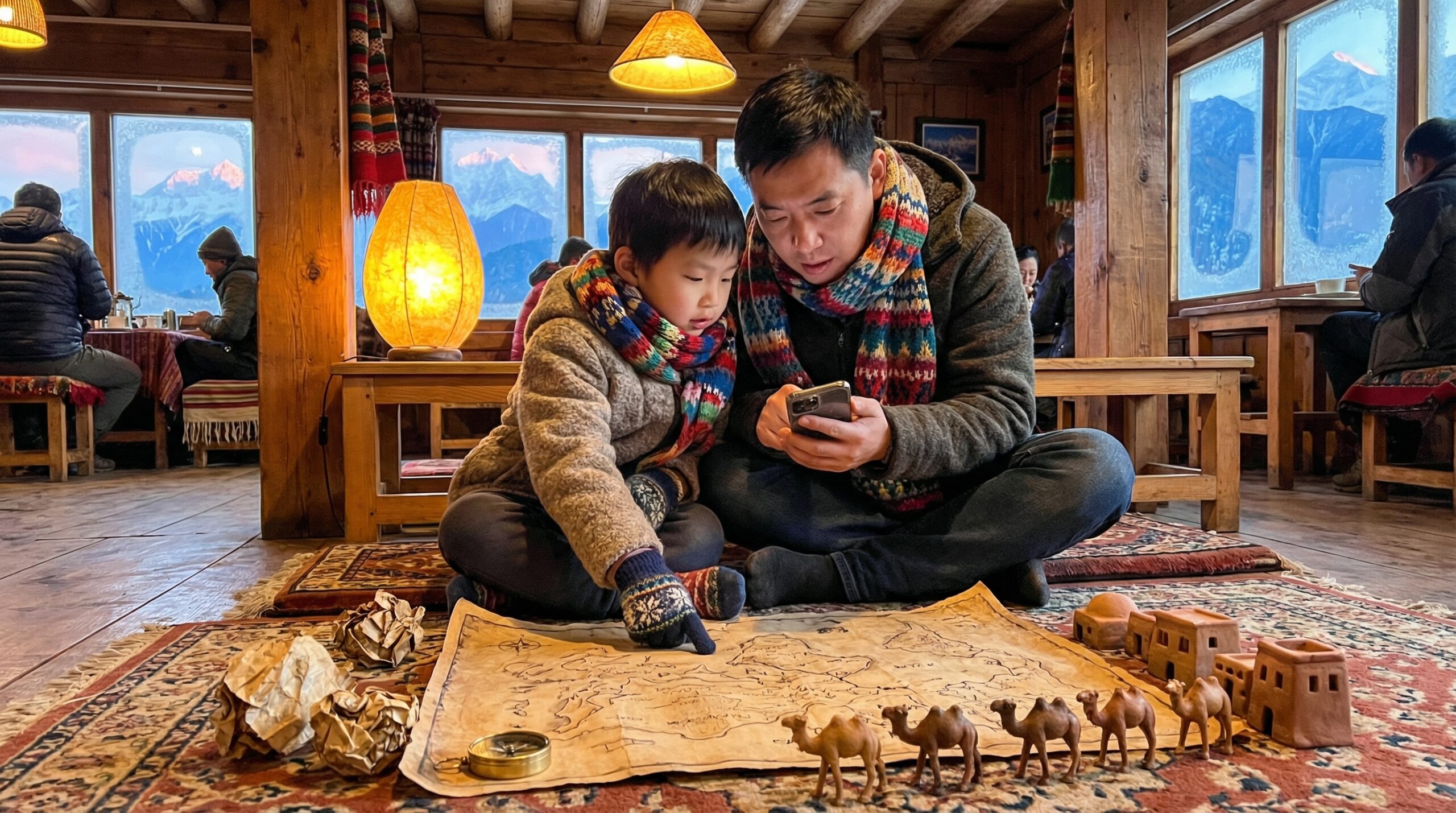
Asia continent for kids is a big, bright place to explore together. It is the largest and most populated continent. Families can turn facts into tiny adventures and one short question.
Asia continent for kids: Quick facts to share aloud
First, Asia covers about 44.6 million square kilometers. Also, nearly 60 percent of the world lives here. For example, as of January 13, 2026, Asia’s population is approximately 4,850,338,028, accounting for about 59% of the world’s total population, highlighting Asia’s significant role in global demographics.
- Regions: East, South, Southeast, Central, West, and North Asia.
- Countries: About 49 nations call Asia home.
- Big landforms: Himalayas, Tibetan Plateau, Gobi Desert, and many islands.
- Rivers: Yangtze, Yellow, Ganges, Indus, and Mekong shaped early life.
Bright spots and big features
Mount Everest reaches 8,848.86 meters. Meanwhile, the Tibetan Plateau is the world’s highest large plateau. Ancient cities grew where rivers spread rich soil. Therefore, many early civilizations began in river valleys. In 2025, Asia’s nominal GDP is projected to be around $42.6 trillion, representing 36.89% of the global GDP, showcasing Asia’s economic power.
Plants, animals, and food
Asia hosts every climate from tundra to tropical rainforest. Tigers roam forests. Giant pandas munch bamboo. Orangutans swing in tree canopies. Rice feeds billions, and tea has long warmed people everywhere. Sadly, many species are endangered. However, conservation work continues across the continent. In 2024, China added 86,892 megawatts of new wind energy capacity, marking an 18.3% growth from the previous year, illustrating Asia’s advancements in renewable energy.
Languages, religion, and inventions
Thousands of languages and many scripts live across Asia. Also, major religions began here, including Hinduism and Buddhism. In addition, Asia gave the world paper, printing, the compass, gunpowder, and silk. These goods and ideas travelled along the Silk Road and by sea.
Modern life and big cities
Today, Asia includes busy megacities like Tokyo, Delhi, Shanghai, and Mumbai. At the same time, quiet rural places remain important. Moreover, tech hubs and busy ports shape global life. Both urban and rural areas tell many stories. Additionally, Asia faced challenges due to climate change, as reported by the World Meteorological Organization, which documented 79 hydro-meteorological disasters in 2023 that caused more than 2,000 fatalities and directly affected about 9 million people.
Playful activities to try with children
Try short, hands-on ideas that spark curiosity. For families, these activities are simple and fun.
- Map and mark: Color a map and draw the Himalayas and one big river.
- Tiny experiment: Fold origami paper and tell a short tale about paper from China.
- Taste test: Cook rice or sip tea and talk about where the food grows.
- Read a folktale: Pick a short story and ask one question after listening. Try: “What part of Asia would you like to visit and why?”
Final thought
Short stories make geography feel close and friendly. Listen together. Ask one question. Then watch imagination go places.
Want ready-made stories and audio to share? Explore Storypie for playful prompts, charming characters, and narration that bring Asia to life.
Read or listen to a story about Asia (continent) now: For 3-5 year olds, For 6-8 year olds, For 8-10 year olds, and For 10-12 year olds.