Why choose audio first for kids
Audio first for kids offers a simple habit with big returns. For bedtime and other quiet moments, spoken stories reduce visual clutter. When the eyes are free, the mind builds scenes. As a result, attention settles and language lands more clearly. In fact, a 2024 study found that viewers reported significantly higher cognitive load when watching subtitled videos without sound, illustrating how audio can significantly reduce cognitive load.
How cognitive load changes with audio
Working memory is small. Visual screens add motion, text, menus, and tasks that all compete for the same mental space. Therefore extraneous cognitive load rises and comprehension can fall. In contrast, audio removes many visual demands. With eyes free, children can focus their resources on language and imagination. In short, audio first for kids clears the way for better listening and recall. A 2024 EEG study demonstrated that audio characteristics can reliably estimate cognitive load, reinforcing the importance of audio-first strategies.
What happens in the brain
When children listen, they infer characters and draw settings from words. In fact, vivid narration activates both language centers and sensory regions. Thus listening becomes an active creative task. Children do more than receive a story. They co-create it.
How audio first for kids fuels imagination and skills
Listening asks the brain to fill in details. Consequently children imagine colors, sounds, and motions that are not shown. Also regular spoken stories build vocabulary and sentence processing. They tighten listening comprehension and teach story structure. Research from Edison Research’s Infinite Dial 2024 indicates that 47% of U.S. persons aged 12 and older listened to a podcast in the past month, highlighting the growing popularity of audio formats.
- Vocabulary growth from repeated spoken words.
- Stronger sequencing skills from clear story arcs.
- Better listening focus during group or quiet times.
Short example
For example, a seven minute tale about a lost kite gives a child practice with sequence. First the kite flies. Then it gets stuck. Finally we solve the problem. These steps match early literacy goals.
Practical bedtime advantages
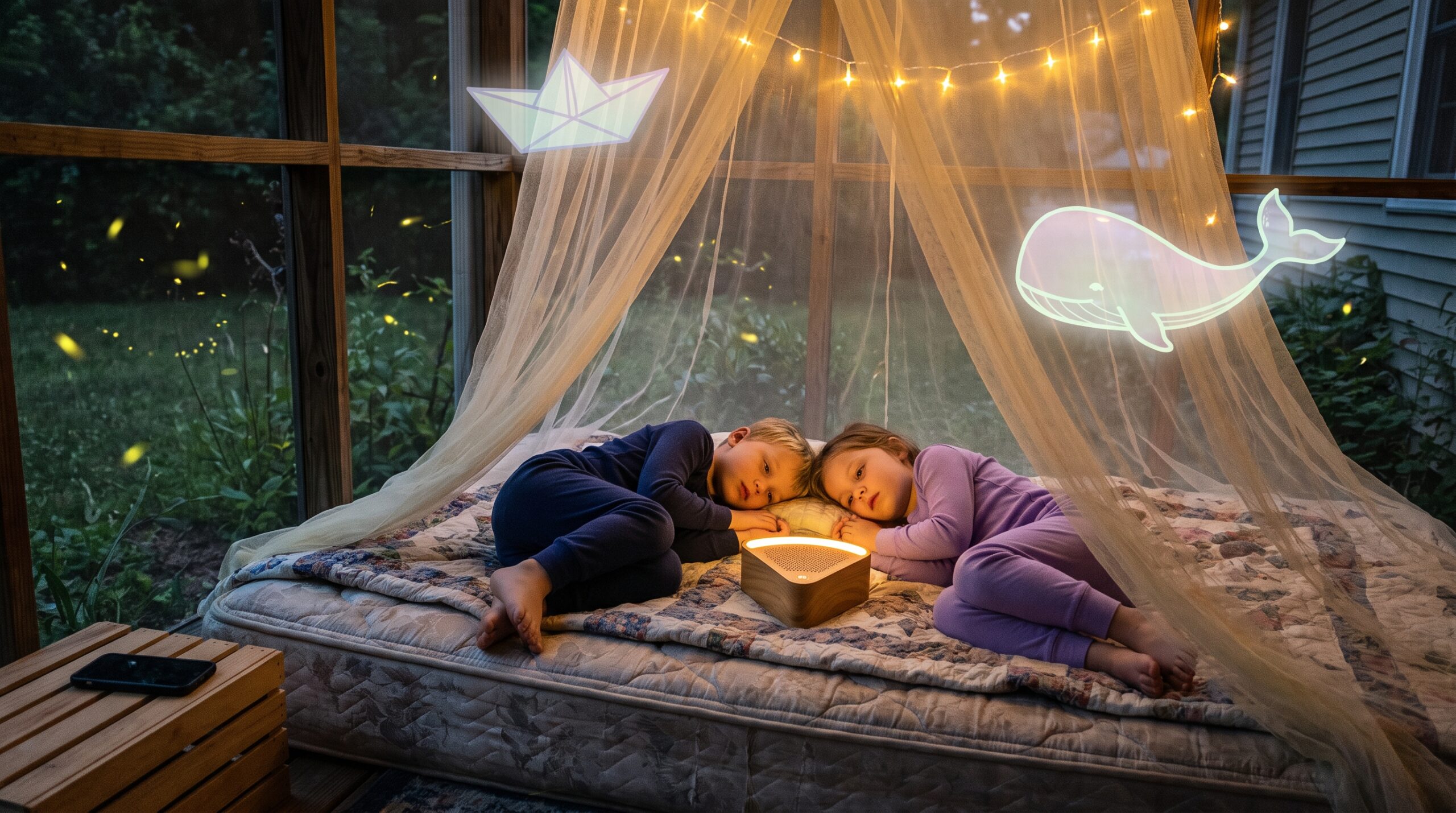
Screens emit blue light and fast motion. Consequently they can delay sleep and raise arousal. Swapping one screen session for a 10 minute Storypie story reduces light exposure. Also a calm audio tale signals the transition to rest without prolonging excitement. Keep narration gentle and avoid heavy sound effects at night.
Everyday perks and uses
Audio is portable and hands free. It supports emergent readers, bilingual homes, and children with visual differences. Also it works in the car, at the table, or beside a dim lamp. Use a short cue sound to mark story time. Keep stories brief so routines actually stick.
Limits and common sense
Audio does not replace visual literacy. Balance still matters. Moreover watch for overstimulating soundtracks and loud effects. For toddlers, stay present and responsive while they listen. Above all choose high quality content and calm pacing.
A tiny ritual that works
Try this simple routine and watch calm unfold.
- Pick a short, calm story.
- Dim lights and settle in.
- Play the story and listen together.
- Pause and ask one simple question at the end.
Try it this week: swap a single screen episode for a Storypie story and notice gentler transitions, brighter play, and richer imagination. Learn more about Storypie stories on our homepage.