Audio first for kids is a simple choice with big effects. When we pick listening before bright visuals, we free a child’s short term workspace. Working memory holds little. Too many on-screen details crowd it up. Listening clears competing visuals and leaves room for understanding and invention. A tiny theater in the head can begin to grow.
How audio first for kids lowers cognitive load
Cognitive load means the mental pieces a child holds at once. There are three kinds: the task itself, useless clutter, and useful thinking. Good narration trims clutter. As a result, children can use more brain power on the story. For example, hearing a line about a red kite asks for one small step of processing. By contrast, watching a busy animated scene asks for many more steps. Research shows that participants watching subtitled video without sound reported substantially higher cognitive load than with sound, indicating that the brain stays less crowded when sound leads.
Clear narration saves space
Short, calm narration keeps extraneous details out of the way. Because of that, children can follow plot and emotion easier. Also, clear pacing gives time for thinking. That timing matters for young listeners. A 2024 study demonstrated that EEG-based cognitive load estimation achieved a peak F1-score of 0.98 when assessing psychoacoustic parameters, indicating a strong correlation between audio characteristics and cognitive load.
Sound sparks imagination
Listening invites children to build whole worlds from few words. Neuroscience shows hearing descriptive speech lights the same sensory areas that see and touch. When a child hears “the pond smelled of moss,” the brain simulates smell and texture. A 2024 fMRI report found that natural auditory scenes produce decodable activity patterns in early visual cortex, demonstrating that auditory-only input can drive activity in visual areas linked to mental imagery. This simulation is imagination at work. Speaker and listener studies even show storytelling can align brain patterns. Therefore, listening helps both comprehension and shared feeling.
Quiet creates a tiny theater
Close your eyes and you will see it. A simple phrase can paint a place. Little minds then add color, sound, and movement. They name objects and make small stories. It is playful and powerful.
Developmental and practical benefits
Audio first for kids sharpens vocabulary, story sense, and attention. It supports children who struggle with print decoding. Also, it works in multilingual homes and for kids who need a head start. Bedtime often benefits the most. Replace blue screens with soft narration and melatonin can flow. A cozy ritual can emerge from that quiet time.
- Builds vocabulary and narrative skills
- Supports struggling decoders and multilingual families
- Encourages attention and calm before sleep
Small rituals that help
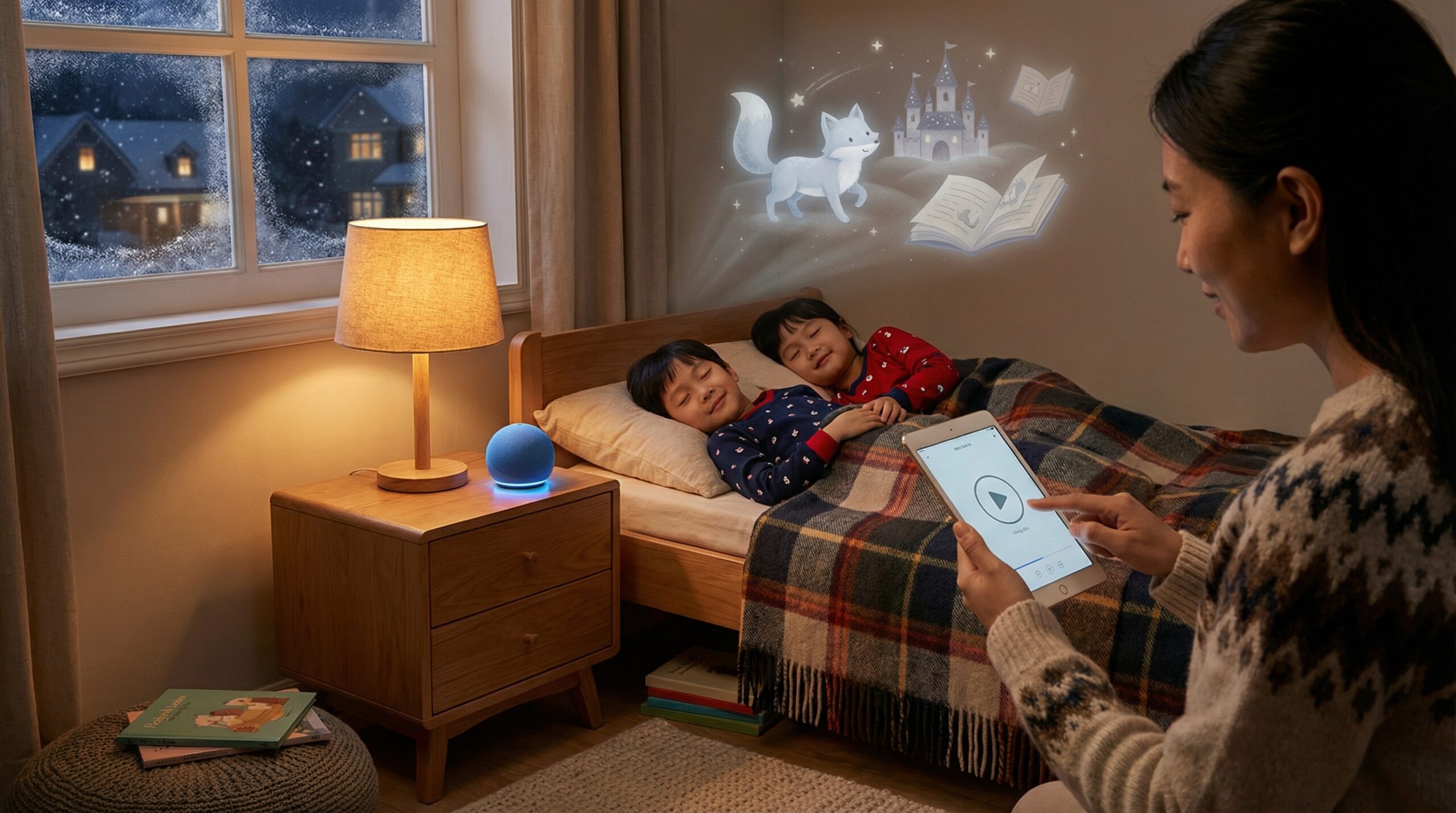
Make it cozy. Dim a warm lamp. Tuck a blanket around small legs. Pick one story and press play. Two minutes of greeting makes a sweet start. Then listen. Keep the room quiet and calm. This routine is tiny and powerful.
Caregiver moments
Co-listening for a few minutes adds value. Pause once to ask, “What did you see?” or “Which part surprised you?” A brief question grows language and empathy. Use quality narration with age-appropriate pacing. Short tracks suit younger kids. Longer tracks fit older listeners.
A small moment can stay with you. One evening a child closed her eyes at a line about a treehouse. She built a whole map in her head and named the lanterns. She drifted toward sleep with a shy smile. That’s the quiet magic of audio first for kids.
Explore Storypie narrated collections to begin. For features and tools, visit Storypie features. Or get the Storypie app for quick bedtime listening. These gentle steps help audio shine at home.
Audio is not a replacement for books. Print and play still matter. Instead, think of audio as a close cousin. It is ancient and modern at once. Listen well. Keep it simple. Let little imaginations run.