
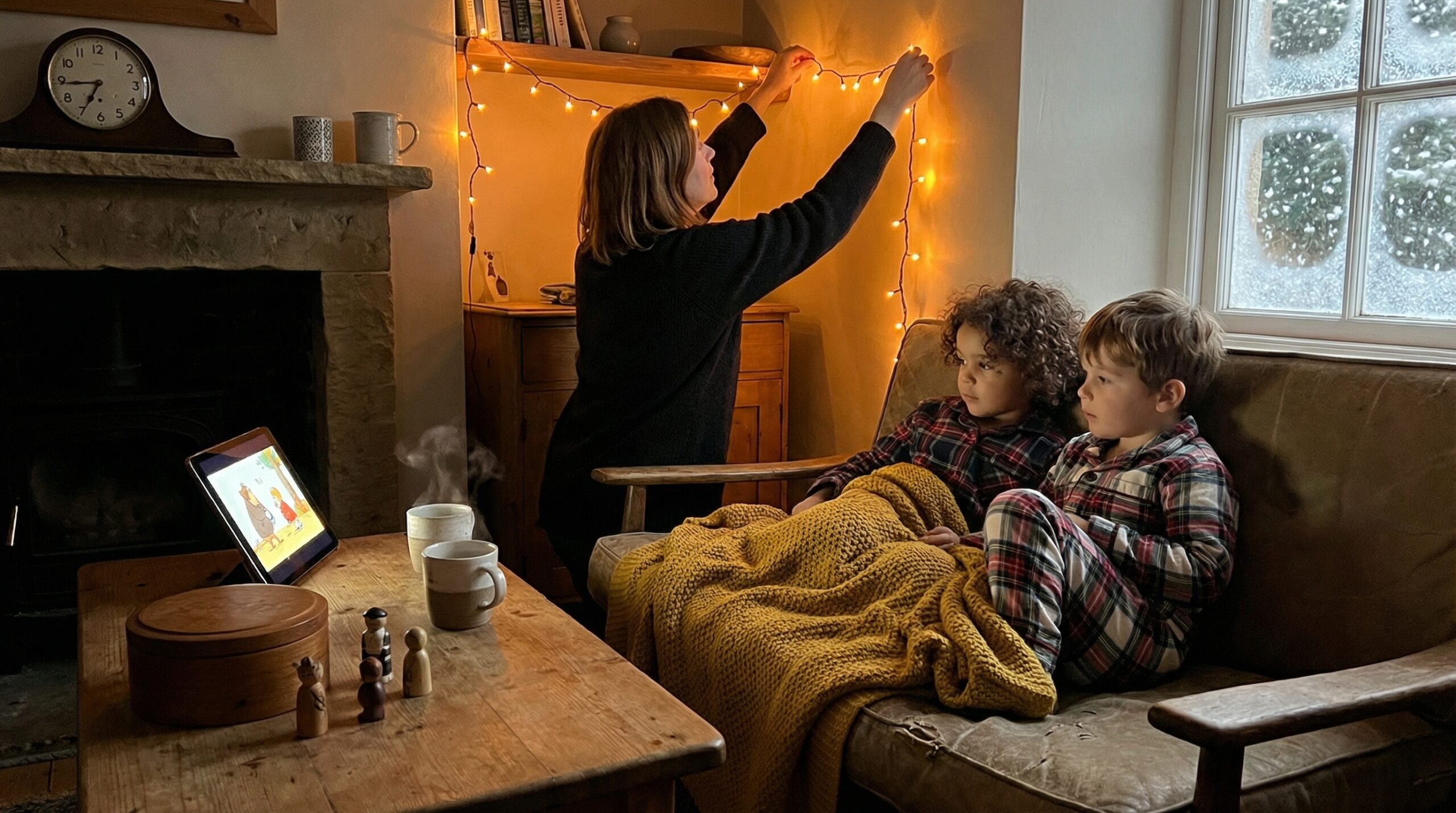
A bedtime mini story ritual is a short, repeatable storytelling moment that signals rest. Parents and teachers often call it a pocket of hush. Because it stays brief, it fits busy evenings and small attention spans.
What a bedtime mini story ritual is
The bedtime mini story ritual lasts about two to ten minutes. It focuses on predictability and gentle language. Historically, families used longer tales. However, modern life favors a trimmed practice that still feels magical. A 2025 study reported that consistent bedtime routines, including storytelling started as early as 3 months, were associated with fewer night-time awakenings, reduced sleep problems, and longer sleep durations by age 3.
Key characteristics of the ritual
First, the ritual is consistent. Next, it pairs a simple cue with a tiny story. Also, it leans toward calm tone and steady pacing. Families often use the same line, object, or rhythm as the cue. Over time, the cue becomes familiar and soothing.
Age and length
Toddlers usually need only two to four minutes of focused listening. Preschool kids often handle five to ten minutes. Early school age children may enjoy slightly longer moments. Importantly, consistency matters more than length. In fact, a nationally representative C.S. Mott Children’s Hospital poll found that 90% of parents of 1–6-year-olds report having a bedtime routine, and 67% report that their child’s bedtime routine includes reading a bedtime story.
Benefits and gentle returns
The bedtime mini story ritual supports sleep and behavior. For example, short, repeatable routines reduce bedtime protests. Also, they build listening muscles and introduce new words. Emotionally, the ritual becomes a tiny anchor of safety. Research from JAMA Pediatrics shows that in a randomized clinical trial, 105 families with toddlers showed small-to-medium improvements in sleep efficiency and reductions in night awakenings after implementing a bedtime routine.
Practical notes and safety traits
Low volume and minimal screen light preserve calm. The American Academy of Pediatrics recommends turning off all screens at least 60 minutes before bedtime and keeping bedrooms screen-free to protect children’s sleep. Parents choose narrators and recordings with soft tones. Devices stay out of direct pillow contact. These small choices protect rest and comfort.
Everyday examples and the feeling it creates
For instance, a small pebble or whispered cue can mark the moment. Over days, the signal alone invites settling. The result feels steady, warm, and unmistakably familiar. In short, it becomes the room where children come to rest. A 2025 study found that a two-week nightly bedtime reading routine improved empathy and creativity in children aged 6–8, showing significant gains in cognitive empathy and creative fluency.
Explore gentle mini stories and related collections at Storypie mini stories. Also visit the Storypie homepage for ideas and seasonal picks.
In sum, the bedtime mini story ritual is simple, sensory, and repeatable. It protects sleep, builds words, and keeps connection. Sweet, steady, and small, it fits modern family life.