
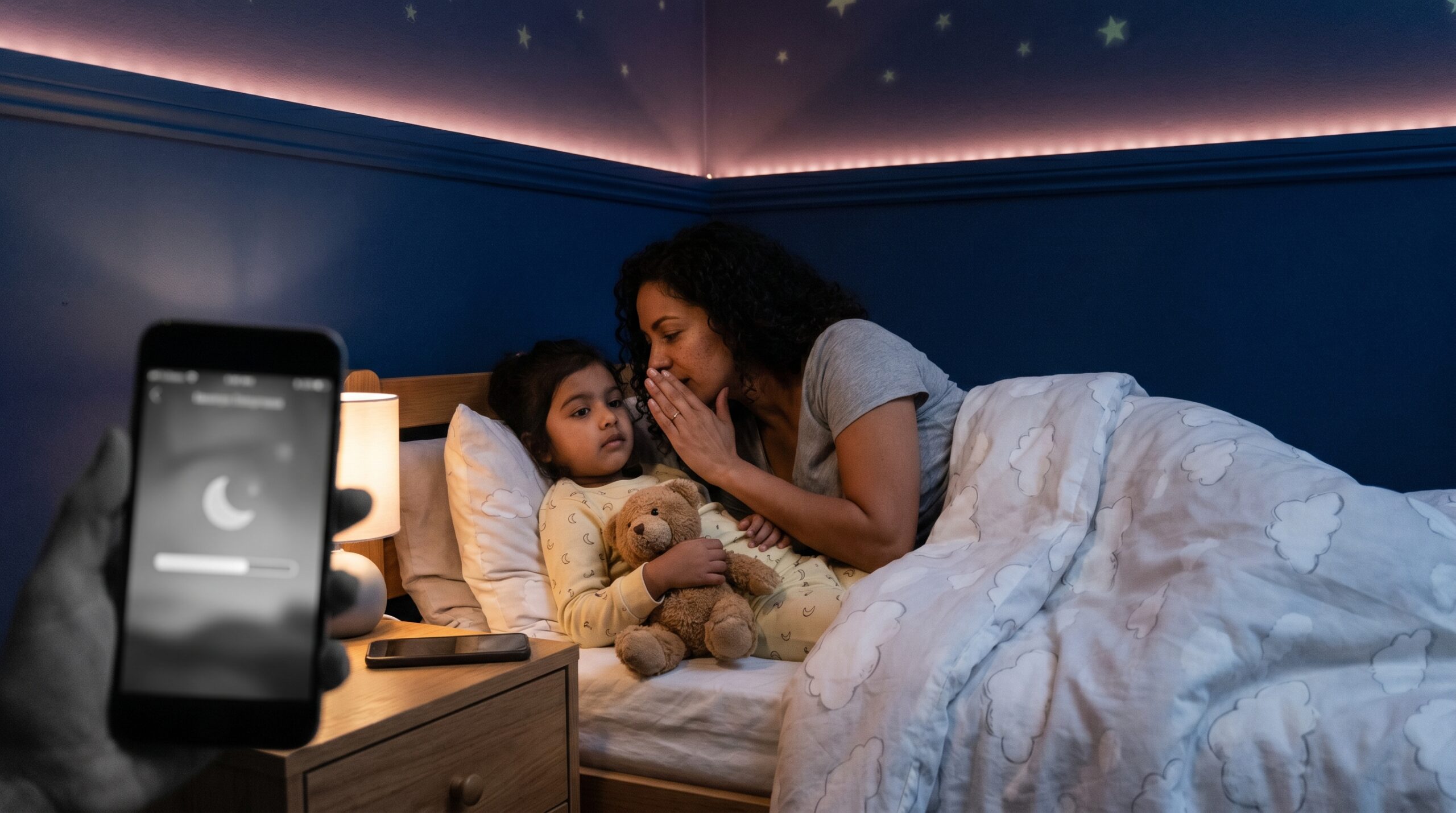
Bedtime mini story ritual is a tiny, calming habit that signals sleep time. It tells children the day is closing. For parents and teachers, it provides a predictable pause of comfort.
What the bedtime mini story ritual is
The ritual is a short storytelling moment near the end of the day. Typically, it lasts three to seven minutes. Across cultures, families used lullabies and quiet tales long before books existed. Today, the ritual blends that oral history with gentle, low-stimulus audio and voice work.
Why the bedtime mini story ritual matters
Predictability helps kids feel safe. For that reason, routines often improve sleep onset and reduce night wakings. A 2024 systematic review analyzed 21 randomized controlled trials for behavioral insomnia in children, concluding that structured bedtime routines are the primary evidence-based approach for treating behavioral insomnia in young children. Additionally, shared stories boost vocabulary and listening skills. In fact, 90% of parents of children age 1–6 report having a bedtime routine, and 67% say their child’s bedtime routine includes reading a bedtime story. In short, a small ritual gives calm, closeness, and emotional regulation.
Key characteristics of the mini story ritual
The ritual has a few simple traits. First, it stays short. Second, it follows a steady rhythm or pattern. Third, it uses soothing language and gentle pacing. Additionally, it fits easily into larger bedtime routines. Most families find it low-stress and high-impact.
Typical length and tone
Most mini story rituals run three to seven minutes. Parents often aim for about five minutes. Likewise, narrators keep sentences short and verbs soft. Therefore, the mood stays calm and the brain settles.
Forms and formats
The ritual appears in many forms. Live voice, audio-only tracks, and short recorded tales all work. For example, audio-only stories help when screens remain on elsewhere in the house. Also, multilingual families sometimes prefer audio for consistent delivery.
When the ritual helps most
Use the mini story ritual after active play and before the final bedtime steps. It suits infants through preschoolers best. However, older children sometimes enjoy a quick reset too. In busy homes, the ritual becomes a reliable cue to wind down. A 2025 study reported that consistent bedtime routines, including storytelling started as early as 3 months, were associated with fewer night-time awakenings and longer sleep durations by age 3.
What to look for in a mini-story source
Choose sources that match the ritual’s gentle nature. Look for these features:
- Length control between three and seven minutes
- Soothing, clear narrators
- Offline playback and simple timers
- Parental controls and transparent privacy settings
- Age guidance and calm, gentle content
Storypie curates short tales that fit these needs. Explore Storypie mini tales on the site for examples. Visit the Storypie home page to see formats and options.
A closing note
This bedtime mini story ritual is a pocket-sized miracle. It asks for five minutes and returns calm. A 2026 study found that a two-week nightly bedtime reading routine improved empathy and creativity in children aged 6–8, showing significant gains in cognitive empathy and creative fluency. Try it as a small, joyful closing to your day. For curated short audio tales, see Storypie mini tales and the Storypie home.