
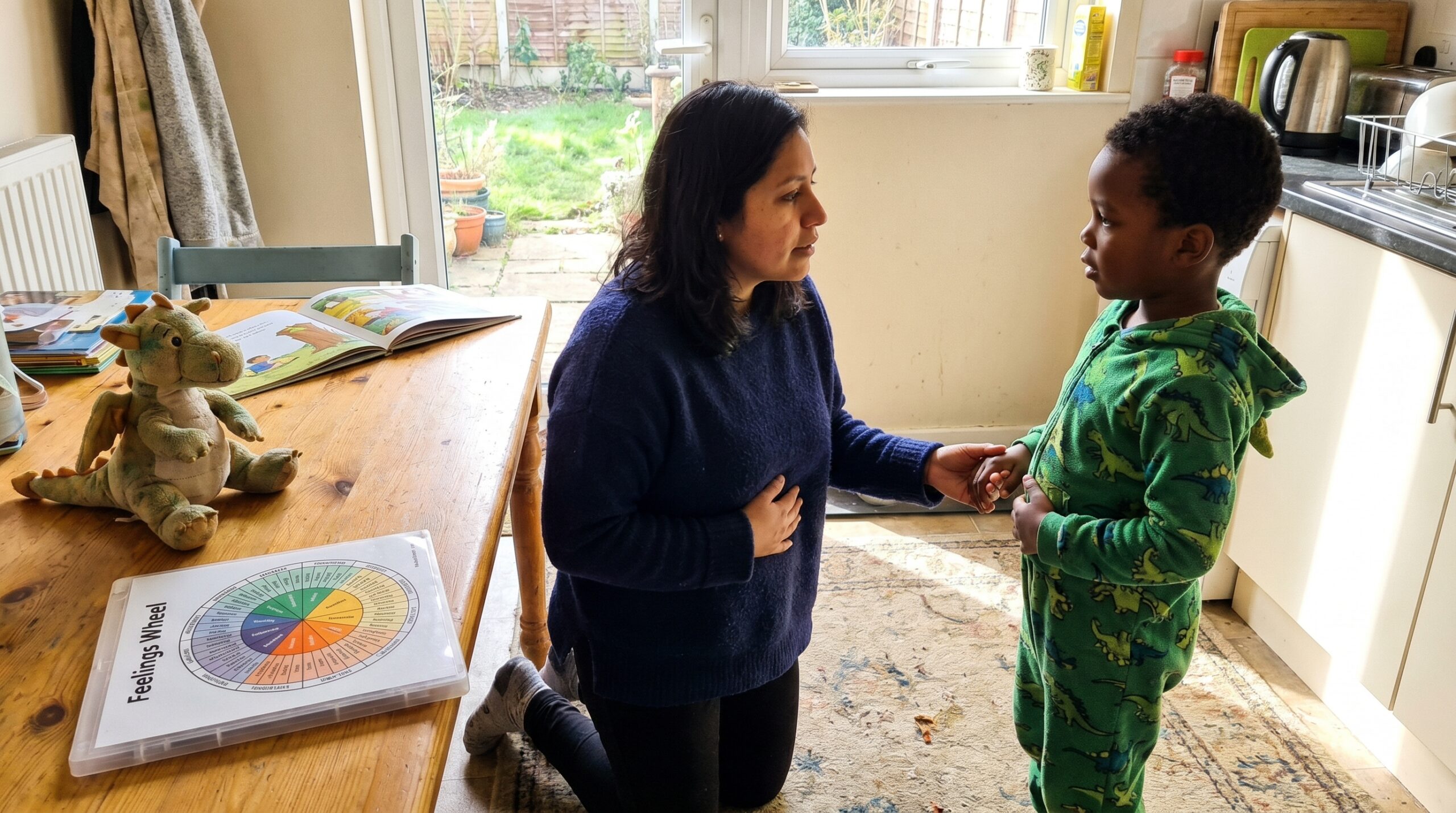
Help children manage anger with calm words and small daily rituals. At Storypie, we help kids name feelings. Also, we give families simple tools to turn hot moments into teachable ones. A little magic, a lot of calm.
What anger is and how it shows up
Anger is an adaptive emotion that signals a problem. Physically, it can show as a faster heart rate, quick breathing, tight muscles, or a flushed face. Emotionally, children may think sharply, want to yell, or shut down. Naming these signs early helps parents spot the rise before an outburst. In fact, according to Gallup’s 2024 report, 22% of adults worldwide reported experiencing ‘a lot’ of anger the previous day, highlighting how common this emotion is in daily life.
How anger develops with age
Toddlers show anger as tantrums while they learn words and control. Preschool and early school years bring shorter, intense outbursts that fade as language grows. School-age kids may sulk, stomp, or shout. Teenagers argue more or may withdraw. The brain is part of this story. The amygdala reacts fast. Meanwhile, the prefrontal cortex develops into the late teens. So expectations should follow development. Understanding these developmental stages is crucial, especially when considering that frequent episodes of strong anger, as noted in a study published in the European Heart Journal Open, were associated with a 23% increased risk of cardiovascular disease mortality in adults.
How to help children manage anger
First, stay calm. Co-regulation matters more than insisting on immediate self-control. Name the feeling and validate it. Then set a clear safety limit and offer a soothing strategy. For example, try this short script:
“I see you are angry because your toy was taken. It is okay to feel angry. It is not okay to hit. Let us take five slow breaths, then tell Sam you want it back.”
Parent roles that actually help
Be steady and short. Use calm, simple words. Also, repeat the same script so it becomes familiar. Short, steady words teach more than long lectures. In this way, children learn safe ways to use anger to set boundaries and solve problems. It’s important to note that a study in the European Heart Journal found that an outburst of anger was associated with an approximately 4.74-fold higher rate of myocardial infarction (heart attack) in the two hours following the outburst, which emphasizes the need for effective strategies to manage anger.
Practical tools families can use
Try one tool at a time and practice it daily. Tiny rituals bring big wins. For example:
- Breathing: five slow breaths together, or “smell the flower, blow the candle.”
- Movement: 20 jumping jacks or a quick walk to burn off adrenaline.
- Sensory bottle or calm jar to watch glitter settle.
- Drawing feelings or a feelings chart to name heat and words.
- Calm corner with a soft pillow and a sensory tool.
- Problem-solving: name the problem, brainstorm two solutions, pick one, and try it.
A simple routine to try now
This morning, pause for five deep breaths together. Then ask one calm question: “What made you feel that way?” Small rituals practiced daily create real change. You got this.
When to seek extra help
Consult a pediatrician or child mental health professional if anger injures others. Also, seek help if anger consistently interferes with sleep, eating, or school. Finally, talk to a professional if behaviors do not improve with usual strategies. In the workplace, the prevalence of irritability or anger is notable, with 19% of U.S. workers reporting these feelings in a recent survey.
Read or listen to a story about Anger now: For 3-5 year olds, For 3-5 year olds, For 6-8 year olds, For 8-10 year olds, and For 10-12 year olds.
Also, explore more resources at Storypie for gentle stories and activities to support feelings. Anger is teachable. With naming, steady adult calm, and short repeated practice, children learn safe ways to use anger. Tiny rituals create big changes when practiced daily.