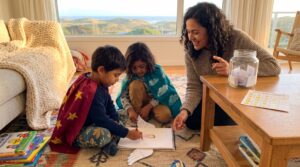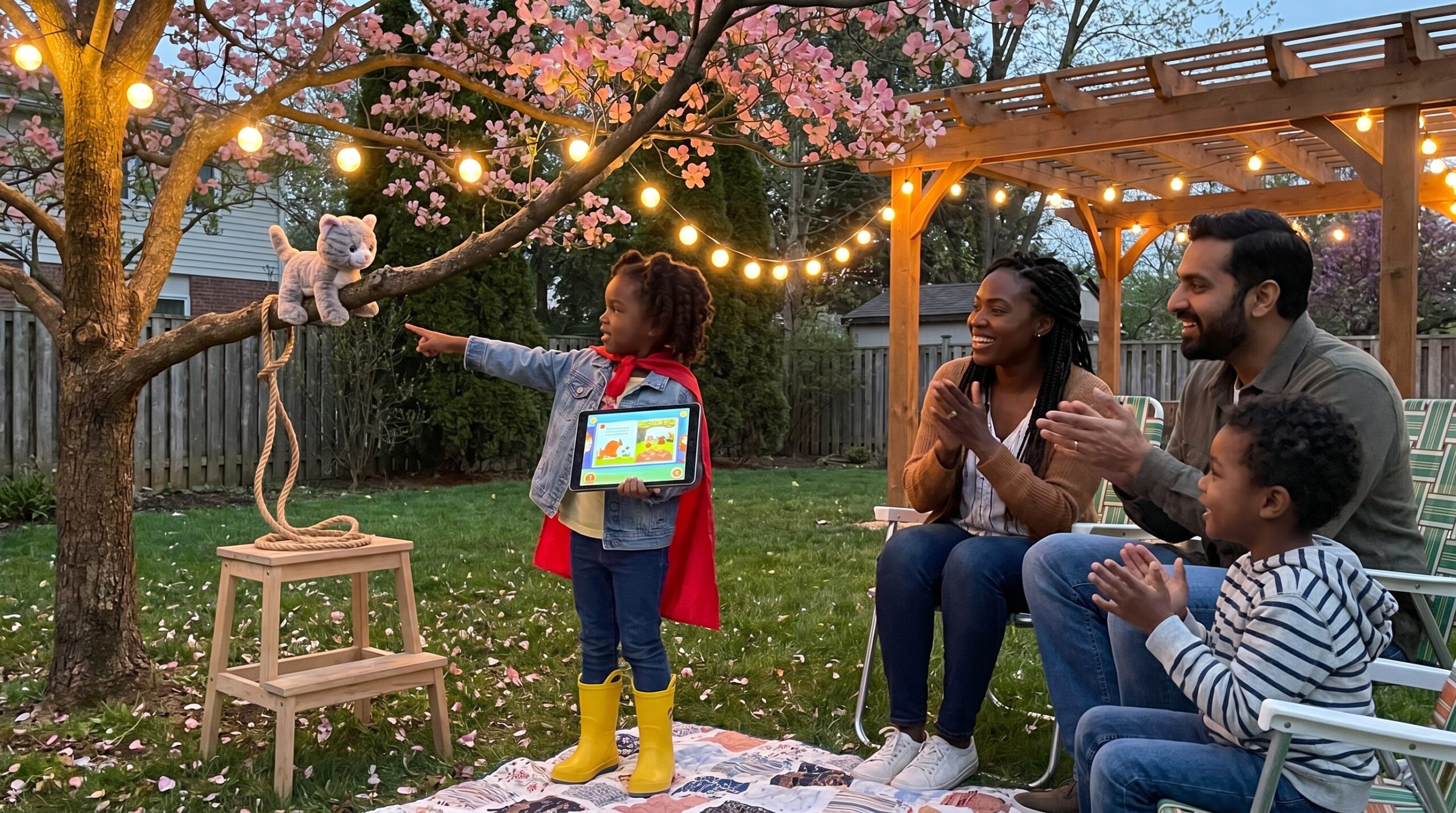
Tonight my son chose the problem and announced it like a mission. Right away I could see how kids become the hero. I watched him plan, fail, try again, and celebrate. It was small. It felt everything.
What it looks like when kids become the hero
Children show ownership in clear ways. They volunteer to lead a game. They suggest fixes for a fight. They change a story and try new endings. Also, they keep going when things get tricky. Then they beam and say, I did that. Those proud, loud moments are heroic in miniature.
Everyday signs of leadership
- They choose the story or the game.
- They try a new approach without asking to be rescued.
- They narrate their thinking step by step.
- They recover quickly from small setbacks.
Why this matters now
Developmental research points to the same truth. First, initiative and industry shape a child’s sense of agency. Also, successful attempts boost self-efficacy. Next, imaginative play helps kids practice planning and perspective taking. Over decades, studies link pretend leadership to stronger language, flexible thinking, and social understanding. In fact, a 2025 study found that parental modeling strongly predicts preschoolers’ leadership development, emphasizing the importance of positive parental examples.
A quick cultural note
Across cultures, stories use child heroes to model resourcefulness. From folktales to modern favorites, child protagonists show creativity and moral choice. So story worlds help kids imagine themselves in charge.
Benefits you will notice
Short term you will see more confidence and sharper problem solving. Also, dinner conversations will get richer and funnier. Long term this work builds resilience, school readiness, and a stronger voice with peers. Tiny wins often spark huge grins. Interestingly, a Pew Research Center survey found that 56% of teens who play video games reported that playing them has helped their problem-solving skills, demonstrating how engaging in such activities empowers children and teens to become more resourceful and resilient.
How it changes with age
Preschoolers act out leadership through fantasy and role play. Early school-age children prefer concrete leadership in group play and projects. Older kids and teens test values and shape identity through heroic narratives. Each stage needs different invitations to lead. So adapt your prompts and supports as they grow. A 2024 study of fourth-grade students showed that a multi-role, experience-based virtual scenario learning model produced significantly larger gains in empathy and problem-solving tendencies compared to a single-role model, highlighting the importance of experiential learning in developing these critical skills.
Safe adult roles
Be scaffold, not director. Provide safety and clear constraints. Offer short prompts, then step aside. Celebrate effort more than polish. It is delightfully simple and deeply effective. Research indicates that a 2023 multi-country longitudinal analysis found family stimulation activities, such as reading, playing, and singing, were positively associated with children’s early development across various domains, reinforcing the impact of active family engagement in nurturing children’s ability to take initiative and lead.
Try a tiny ritual tonight
Tonight, let your child pick a story and show how they would solve one small problem. Timebox it to ten minutes. Then celebrate the choice. This tiny ceremony can have a big effect.
For replayable family moments, try Storypie. The app keeps story libraries per child profile, plays audio narration, and shows reading progress. Also, it puts choices and replayability in kids’ hands so family stories can be reflected on again and again. Learn more on the Storypie app.
Finally, look for diverse child protagonists. Representation expands what a hero can be and who gets to lead. Celebrate each heroic move, no matter how small. Tiny actions become grand adventures. A 2018 study found that 48% of preschoolers in high-risk environments demonstrated resilience in behavioral, social, and developmental domains, showcasing their ability to overcome challenges and emerge as heroes in their own narratives.