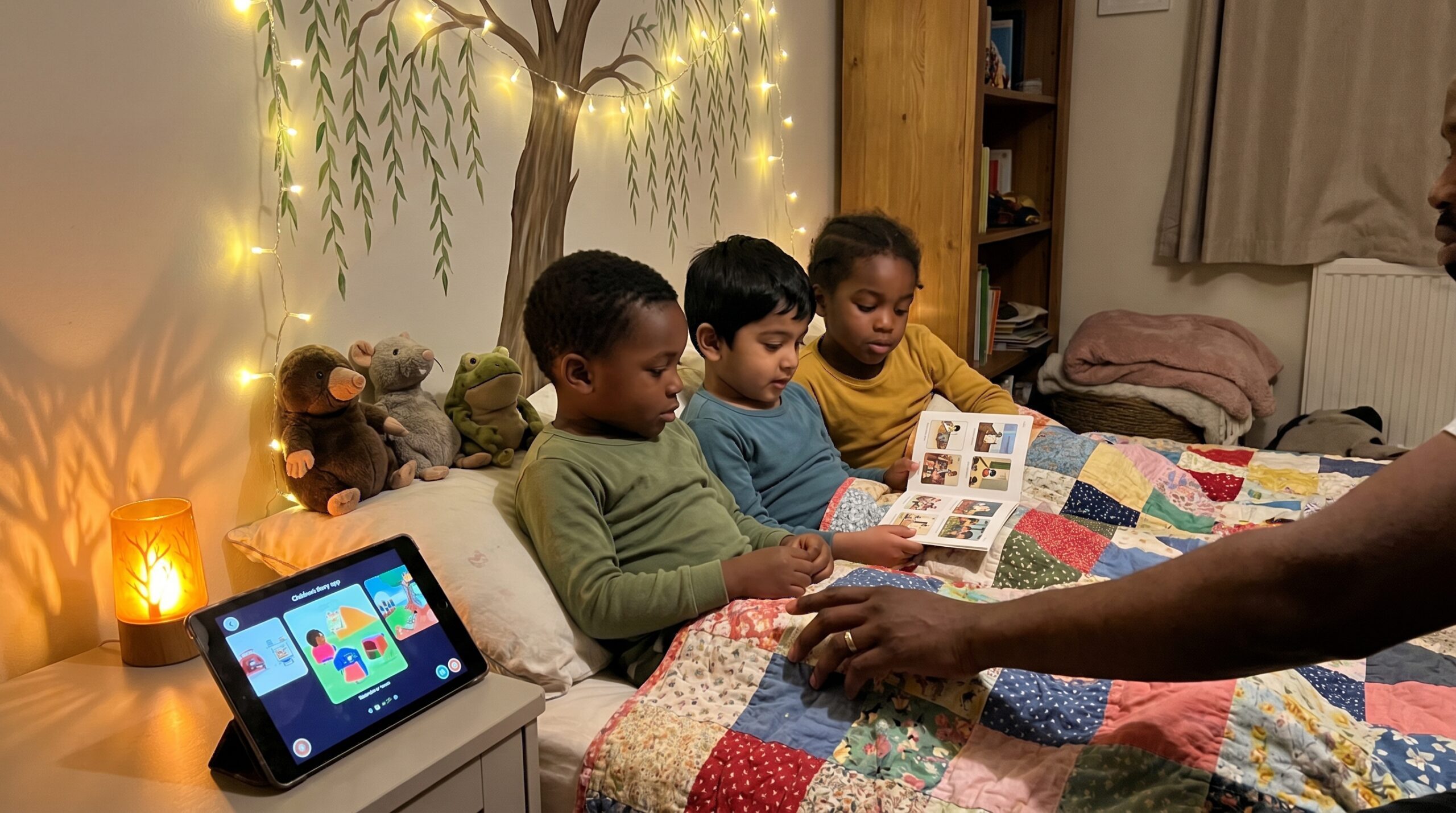
The Wind in the Willows novel reads like a friendly voice in the dark. Kenneth Grahame crafted it as bedtime tales for his son. The writing feels warm, intimate, and quietly amused. First published on October 8, 1908, by Methuen, this beloved classic has charmed generations.
What the novel is about
The story opens with Mole leaving his spring-cleaned burrow. He meets Ratty on the river and friendship begins. Then there is the larger-than-life Mr Toad, full of bluster and wild plans. Badger stays steady and protective. Otter and little Portly bring gentle, tender moments. The scenes move between lazy river days and the darker Wild Wood. The novel is approximately 66,000 words long and is divided into 12 chapters, making it perfect for episodic reading.
Importantly, the book is episodic. Each chapter often reads like a short play or scene. Therefore many chapters fit neatly into a single sitting. Also, the language mixes two tones. Lush, lyrical passages celebrate the river and seasons. Then comic, farcical scenes erupt, usually with Toad.
Characters and charm in The Wind in the Willows novel
Characters give the book its heart. Mole shows quiet curiosity. Ratty loves the river and calm days. Toad teaches about reckless charm and consequences. Badger stands for home and order. Together they paint a portrait of friendship and loyalty.
Also noteworthy is the book’s sense of place. The pastoral England of the Edwardian era sits at the center. Because of this, readers notice rhythm, season, and landscape. The language introduces new words. It rewards gentle pauses and small conversations about meaning.
Illustrations, audio, and family appeal
E. H. Shepard’s illustrations are classic. They add clarity and warm detail to each scene. Storypie carries readings and audio editions that feature short chapters and clear narration. For families, those recordings offer another way to meet the story and its characters. A new Oxford Children’s Classics edition was published by Oxford University Press in January 2024, highlighting the ongoing relevance of this timeless tale.
Moreover, the novel works for a wide age range. Younger children enjoy the pictures and animal voices. Older kids find charm in the language and subtle themes. In short, it sits comfortably between child and adult readers.
Practical features families will like
- Short, episodic chapters that stand alone.
- Classic illustrations that support the text.
- Rich, seasonal language that builds vocabulary.
- Audio editions and readings available on Storypie.
Read or listen to a story about The Wind in the Willows (novel) now: For 3-5 year olds, For 6-8 year olds, For 8-10 year olds, and For 10-12 year olds.
Finally, The Wind in the Willows novel rewards read-aloud nights and quiet independent reading. It teaches through feeling rather than lecturing. It is cozy, delightfully silly, and pure bedtime gold. By 1951, it had reached 100 editions in Britain alone, showcasing its lasting impact. Additionally, it was included on the BBC’s Big Read shortlist in 2003, ranking among the top 21 books, solidifying its cultural significance.
Learn more on Storypie: Storypie.