
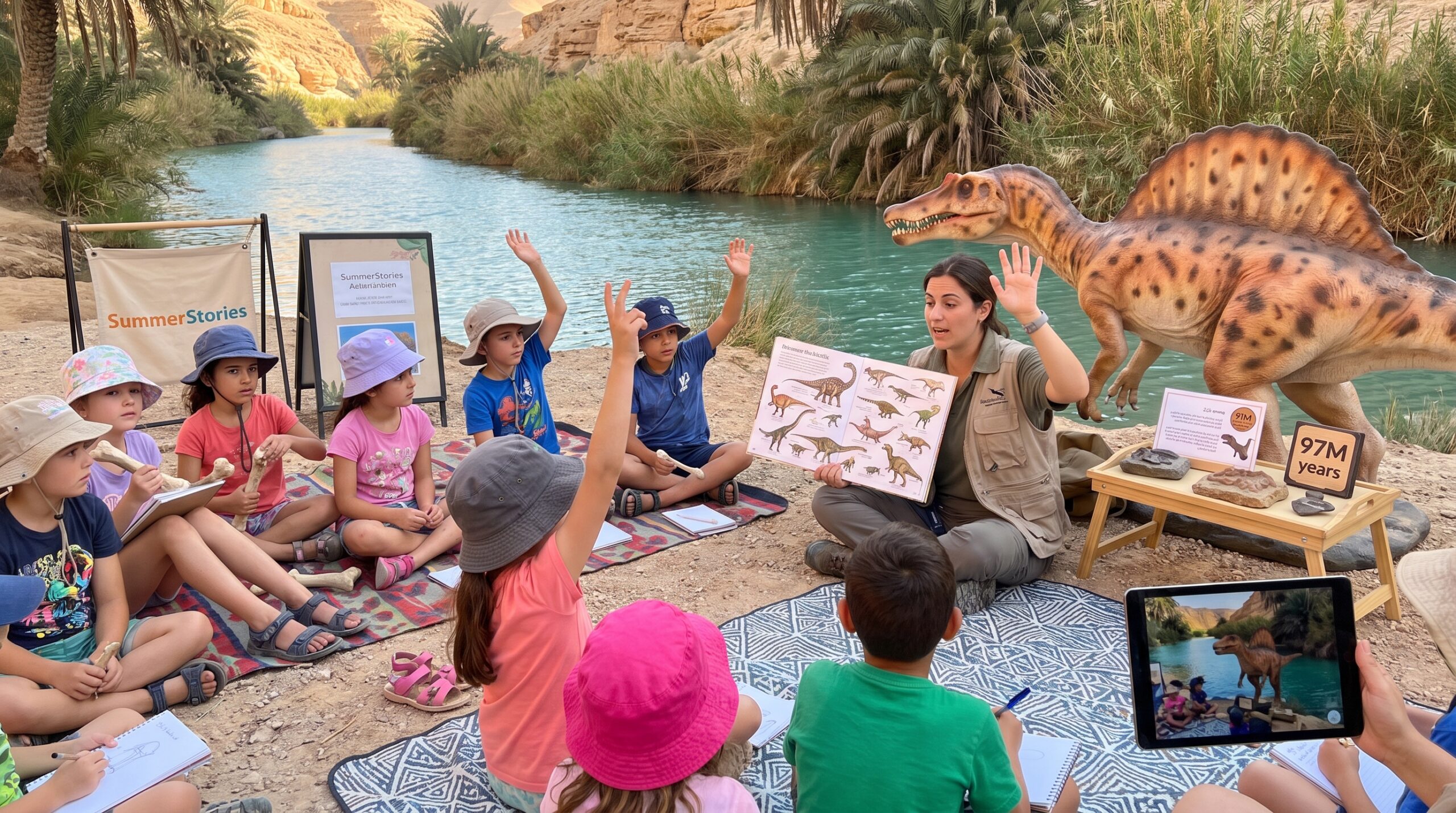
Spinosaurus aegyptiacus facts begin with a mystery and end with a jaw-dropping fish chomper. First named by Ernst Stromer in 1915, based on fossils excavated from Egypt’s Bahariya Formation, this dinosaur hunted rivers and deltas in North Africa about 95 to 100 million years ago. The genus name means ‘Egyptian spine lizard,’ highlighting its unique characteristics.
Lost fossils and a dramatic rediscovery
Stromer described bones from the Bahariya Formation in Egypt. Sadly, those original fossils were destroyed in 1944 during World War II. For decades, scientists studied fragments and hints. Then new fossils from Morocco in the 1990s and 2000s brought Spinosaurus back into the light.
What did Spinosaurus aegyptiacus look like?
Imagine a long, low body with a crocodile-like snout. The snout held round, conical teeth perfect for grabbing fish. Some large reconstructions reach 10 to 15 meters long, about the size of a school bus. In fact, *Spinosaurus aegyptiacus* was approximately 50 feet (15.2 meters) long and weighed around 7 tons, making it one of the largest known carnivorous dinosaurs, as detailed by National Geographic. Tall neural spines along the back formed a sail or ridge. Display, heat control, or fat storage could explain that sail, but scientists still debate its role.
Size, shape, and the famous sail
Estimates vary, and paleontologists revise ideas as new bones appear. Moreover, the sail’s shape and purpose remain lively topics in research, especially considering a 2020 Nature study that demonstrated that *Spinosaurus aegyptiacus* had a tail with extremely tall neural spines forming a large fin-like structure, producing significantly higher thrust and swimming efficiency compared to terrestrial dinosaurs. That uncertainty shows how science learns and changes over time.
Evidence for a river hunter
Multiple clues point to a semi-aquatic life. Skull shape and tooth form show fish eating. Also, dense limb bones likely reduced buoyancy, and a biomechanical flesh model estimates its body mass at approximately 7,390 kg, indicating it was too buoyant to submerge fully, according to a 2022 study published in eLife. Recent specimens even reveal a paddle-shaped tail. Isotope chemistry further supports frequent time spent in water. In fact, *Spinosaurus aegyptiacus* had a maximum surface swimming speed of roughly 0.8 m/s and barely faster when submerged (~1.4 m/s), illustrating its swimming capabilities crucial for understanding its hunting strategies.
Opportunistic predator
Still, Spinosaurus could walk on land. Therefore it probably ate more than fish when chances arose. Opportunistic predator fits this animal well. In short, it hunted rivers yet handled land too.
Why families and kids love Spinosaurus aegyptiacus facts
This dinosaur’s story mixes mystery, discovery, and bold reconstructions. Children enjoy the lost-and-found tale, and adults can share how science updates with new evidence. For curious families, it makes a perfect summer afternoon topic.
Read or listen to a story about Spinosaurus aegyptiacus now: For 3-5 year olds, For 6-8 year olds, For 8-10 year olds, and For 10-12 year olds.
Quick family activities
- Sketch a river scene with fish, a sail, and a long snout.
- Compare toy skulls: round and pointy versus serrated and slicing.
- Make a paper sail and tape it to a model dinosaur for playful learning.
Finally, visit Storypie to hear audio stories that bring fossils to life. Explore more and reward curiosity today.