In my previous blogs (link), I wrote about the nature of prosody in reading, its importance in the overall view of fluent and proficient meaningful reading, and ways for parents, caregivers, and teachers to develop prosody in children. By simply reading aloud to children with expressive, well-phrased, and meaningful textual language and then talking about how prosodic language improves comprehension will help students develop a better metacognitive sense of the nature and importance of prosody. In this blog entry I’ll explore more deeply how prosody can be developed in students. It’s not enough for students to listen to and develop an understanding of what constitutes prosodic reading, more importantly, they need to develop their own reading with prosody. Providing a prosodic assist is a powerful tool for moving students to higher levels of prosody and meaning making in their reading. Here are some ways to provide that assist:
- Choral reading. Choral reading involves a group of students reading (or singing) a text together and along with a teacher or other leader. In choral reading, the leader or the more proficient readers provide the model and assist for less fluent readers. Done on a regular basis, less prosodic readers will incorporate the prosodic cues in their own independent reading that they acquired in their choral reading.
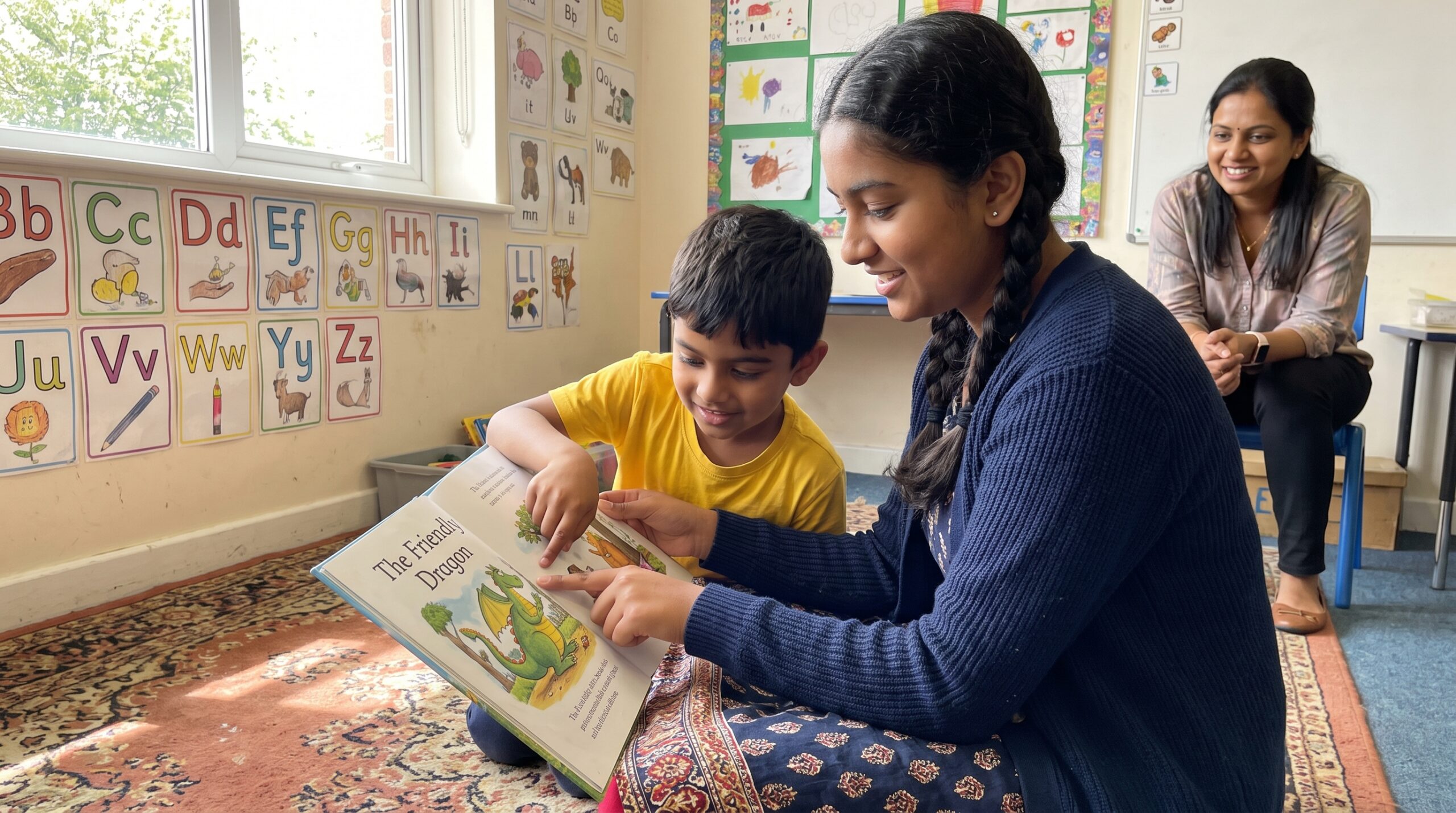
- Paired reading. Paired reading is essentially choral reading with two readers – a more proficient reader and a less proficient one. Both readers read the same text simultaneously (not alternate sentences). As with choral reading, the less prosodic reader absorbs the prosodic elements in his/her partner’s reading and embeds them into their own independent reading. Who can act as the more proficient reader? Essentially anyone – parents, teachers, volunteers, even other students as long as the student is more fluent than the partner. Research into Paired reading has shown that students can more than double their progress in fluency and overall reading achievement from ten minutes of Paired reading at home, daily with parents.
- Audio-Assisted Reading. In audio-assisted reading, a student reads a text orally while at the same time listening to a fluent recording of the same text. Again, the student is being supported by the fluent recording of the text. Research, again, has shown students to double their previous progress in reading instruction from 20 minutes of audio-assisted reading.
- Captioned Videos. What happens when we watch a television program that contains closed captioning? We are seeing the words presented on the screen, and we are also hearing those words presented orally in a prosodic. With many current television programs, the words are presented too quickly for developing readers. However, age-appropriate materials are available for children in a number of formats. I particularly like you tube videos of songs for children – when searching a song title on YouTube simply add “with captions” into the search bar. The song lyrics are then presented along with the presentation of the song itself.
Assisted prosodic reading has been shown not only to improve prosody but also because prosody is part of that fluency bridge to comprehension, comprehension and overall reading proficiency will improve. Just a few minutes each day of assisted reading can make an enormous difference in moving our students to better reading – both oral and silent.