
In my previous blog I wrote about the nature of prosody in reading and its importance in the overall view of fluent and proficient meaningful reading. I defined prosody as the ability to read orally or silently with appropriate levels of expression and phrasing that reflect and even amplify the meaning of the text being read. Think of that reader who does not read with good prosody: their reading tends to be in a monotone, slow, and word-by-word manner. As a listener, the first thing you likely notice is your own difficulty in understanding or comprehending what is being read. Comprehension for you, the listener, and comprehension for the reader is sacrificed.
The difference between low-achieving fourth grade readers and high achievers is quite dramatic. Research has shown a clear correlation between prosody and overall reading proficiency. Moreover, the lowest achievers have prosody and expression levels that are over 40% lower than the highest achievers. That difference is significant and suggests that prosody needs to be an integral part of reading instruction, along with phonics (decoding), vocabulary, automaticity in word decoding, and comprehension.
So, what can teachers (and caregivers) do to promote our students’ prosodic development? In this and my next blog I explore simple ways to make this happen.
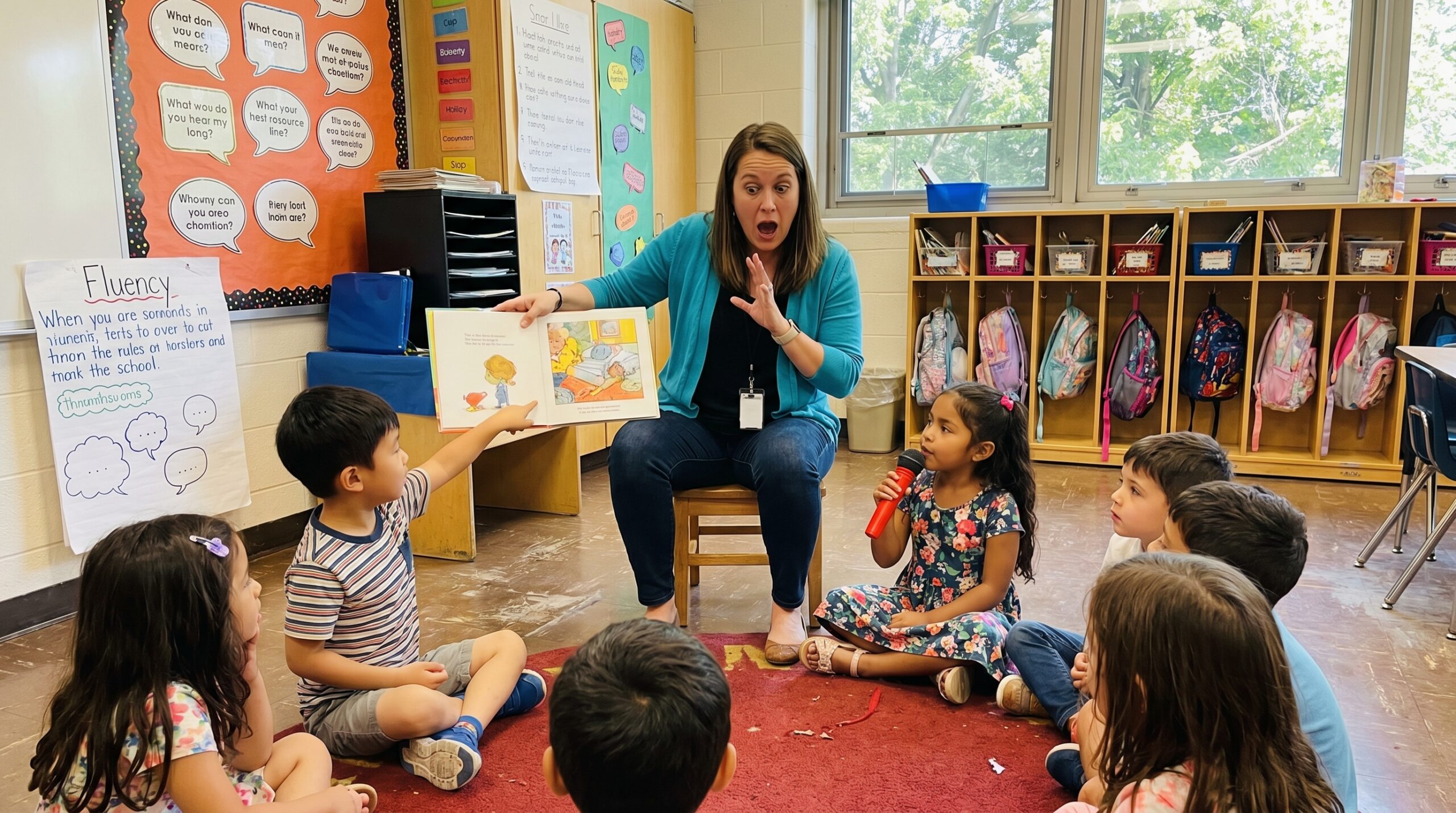
- Students need to develop a mental model of the nature of fluency. And, since fluency is most visible in oral reading, students need to hear prosodic reading, and a lot of it. This means parents and teachers need to read to children, and more than that, be sure to read with expression, sometimes even exaggerated expression, so that students can actually hear how the prosodic reading is affecting their comprehension and satisfaction with the listening.
- After reading to children we often talk about the content of what was read. Equally important, we should discuss the prosodic nature of the reading itself. Questions such as the following can direct children’s attention to what you were doing with your voice to improve their comprehension:
- Did you notice how I changed my voice tone when I became a different character?
- Why did I lower my voice loudness in this section of my reading?
- What were you thinking when I slowed down here and sped up there in my reading?
- Why did I have this long pause in my reading?
Of course, when children become more aware of the role of prosody in a parent or teacher’s reading, they are more likely to work to include prosody in their own.
- Sometimes we learn from a counter or negative example. Occasionally, you may want to read in a non-prosodic manner (slow, word-by-word, monotone). Because such reading is difficult to listen to, you can’t read in this manner for long. But after such a reading, be sure to talk about the nature of the reading:
- What did you notice about my reading?
- Did you like it?
- Did it help you understand the text I was reading?
- What could I have done better in my reading to help you?
Prosody in reading is important and often overlooked. It’s time we find ways to integrate prosody instruction and awareness into our children’s reading development as early as possible. Storypie stories are an excellent way to model and expose students to prosodic reading and build knowledge at the same time.
Storypie is a screen-optional knowledge-building and supplementary reading resource for classroom and home learning. It is based on the science of reading understanding that proficiency in reading is based on students’ possession of knowledge, and the development of the key reading competencies of word decoding, vocabulary, fluency (both automaticity in reading and prosody), and comprehension.