
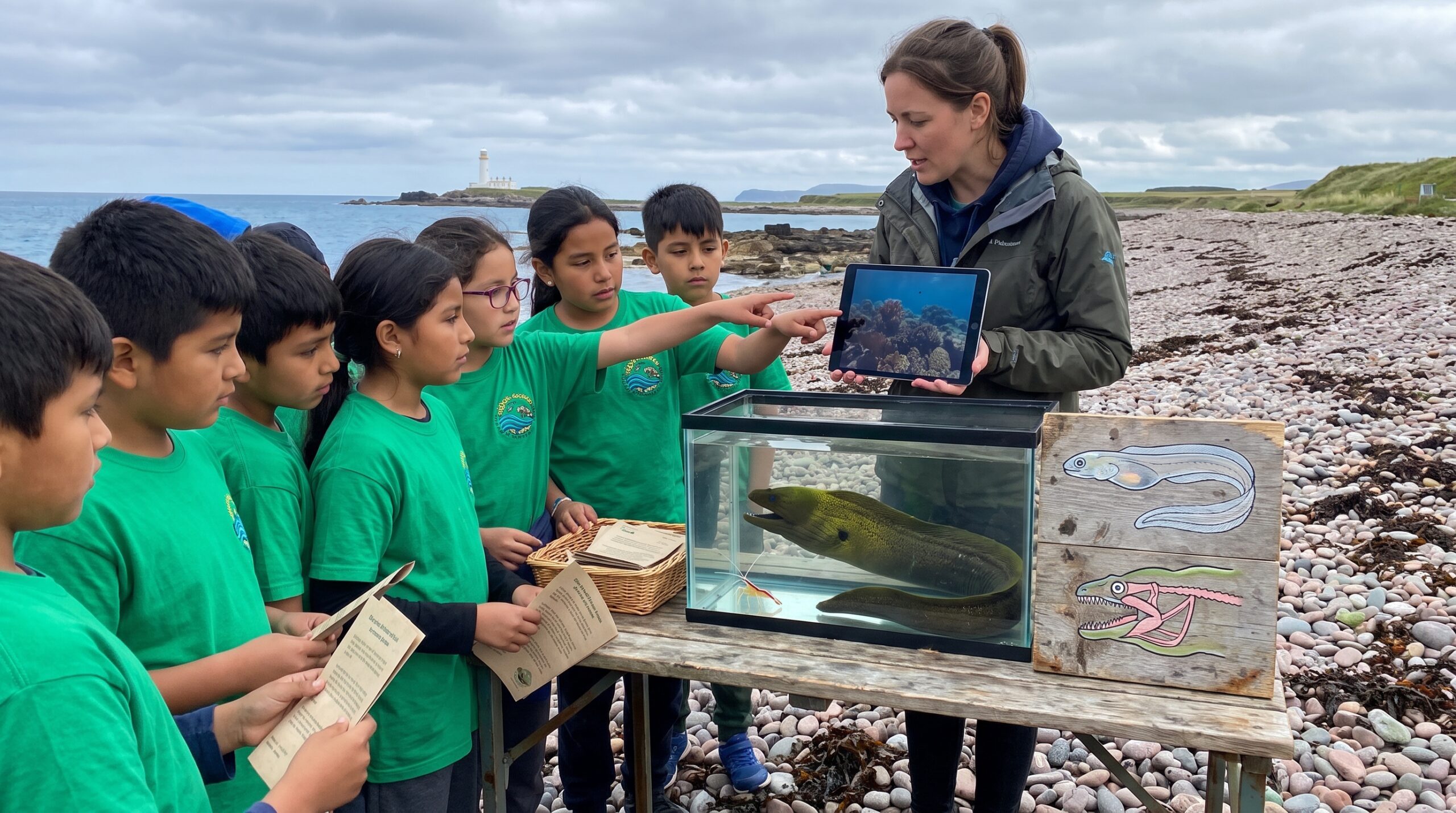
The green moray eel gets its color from a living slime coat. For many curious kids and parents, the phrase green moray eel sparks a fun surprise. Also, the eel’s skin is dark brown or olive. Then a yellowish mucus sits on top and makes the eel look green. Green moray eels can grow up to 2.5 meters (8.2 feet) in length and weigh up to 29 kilograms (64 pounds), which is quite impressive for such a fascinating creature, sparking interest in their biology.
Green Moray Eel color and slime
The mucus helps in two big ways. First, it cuts friction when the eel squeezes into tight crevices. Second, it protects against microbes. In addition, the slime gives the eel a glossy, slightly yellow sheen that looks magical on the reef.
Where they live
Green moray eels live in tropical and subtropical western Atlantic waters. You find them around Florida, the Bahamas, the Caribbean, and the Gulf of Mexico. They inhabit depths from 1 to 50 meters, most commonly between 5 and 30 meters. They favor coral and rocky reefs. By day they tuck into crevices. At night they slip out to hunt. A 2021 study tracked 16 green moray eels in St. Croix, U.S. Virgin Islands, showing a mean total length of 83 cm (range: 54–126 cm) and a home range size of 5.8 hectares (± 0.7 SE), giving insight into their habitat and behavior.
Read or listen to a story about Green Moray Eel now: For 3-5 year olds, For 6-8 year olds, For 8-10 year olds, and For 10-12 year olds.
Quick ID and size
Green moray eels have a long, muscular body. Also, a single continuous dorsal fin runs from head to tail. You will not see obvious scales with the casual eye. Adults commonly reach several feet, with many growing near 6 to 8 feet. Often they perch with their mouth open. That motion helps them breathe. It is not always a threat.
Life cycle
The life of a green moray eel starts with eggs. Next comes a transparent leptocephalus larva. It drifts in plankton for a while. Then juveniles settle on the reef. Finally, they grow into adults. Kids especially love the glassy, leaf-shaped larva stage.
Hunting and reef friends
Green moray eels hunt mostly at night, as they are nocturnal predators with poor eyesight, primarily using their sense of smell to hunt for fish, squid, octopuses, crabs, and occasionally other eels. They are ambush predators that eat fish, crabs, shrimp, and small cephalopods. Also, they have a clever inside tool. A second set of pharyngeal jaws lunges forward to pull slippery prey down the throat. It works like an internal grabber.
In addition, cleaner shrimp and cleaner fish work alongside morays. They pick parasites from a moray’s mouth and gills. The eel stays still and lets them work. That teamwork is delightful to watch.
Size, enemies, and human encounters
Adults often measure 1.8 to 2.4 meters. Large morays have few natural predators. Big reef sharks and large groupers may take pups or weak individuals. People sometimes meet morays while diving. Therefore do not tuck your hands into holes. Also, never feed them. In some places, reef predators can carry toxins. So follow local safety advice.
Safety and stewardship
Morays are shy. Do not try to touch or provoke them. Instead, look and enjoy from a distance. Respect local rules when you dive. Small choices at home and careful travel help protect reefs and their secretive residents.
Family activities and glossary
Try simple activities to spark curiosity. For example:
- Play a 10 minute reef story and count how often a moray peeks out.
- Draw a moray hiding in a crevice. Use olive and yellow to show the slime effect.
- Make a life journal with stages: egg, leptocephalus, juvenile, adult.
Glossary
- leptocephalus: the transparent, leaf shaped larva that drifts in plankton.
- pharyngeal jaws: the second set of jaws inside the throat that grab prey.
- mucus: the yellowish slime the eel makes. It reduces friction and protects skin.
Learn more on the Storypie Green Moray Eel page.
Conservation note
Healthy reefs keep morays safe. However, pollution, warming, and habitat loss threaten reefs. In addition, thoughtful travel and small home choices help protect these secretive reef residents. A 2021 study observed that larger green moray eels (mean total length 93 cm) were noted to emigrate nocturnally from estuarine mangrove habitats to offshore coral reefs at a mean speed of 3.4 km/h, with emigration occurring between December and May. This detail about their migratory behavior enhances the understanding of their life cycle and habitat preferences.