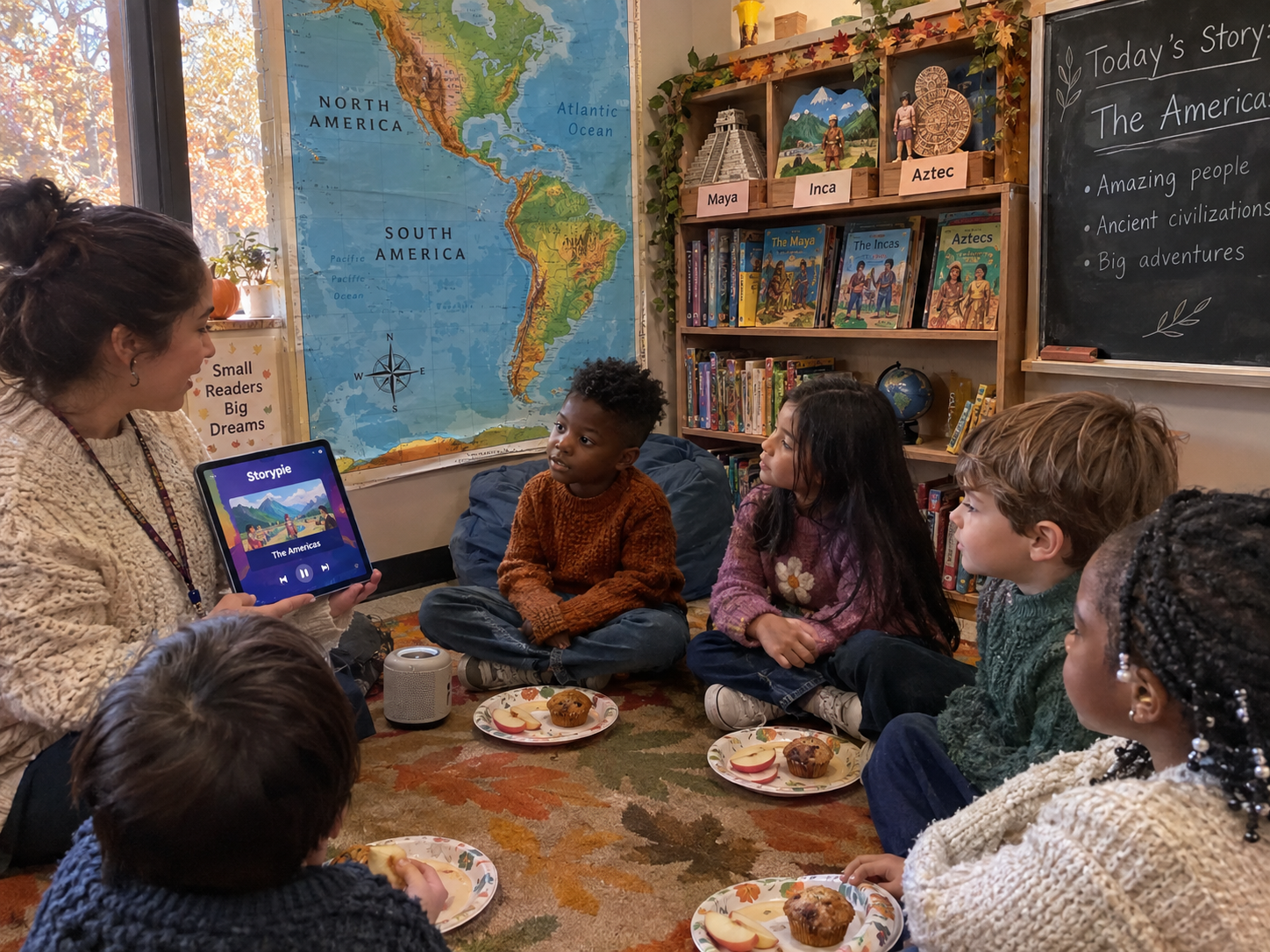
The Americas for kids is a big, friendly place to explore at snack time. I start with a map and a small snack to make it cozy.
A quick frame: what the Americas include
The Americas stretch from Arctic ice to Antarctic seas. They include North America, Central America, South America and the Caribbean.
That map frame helps children hold the place in their imagination. It gives a clear picture, and it sparks curiosity fast.
People, history, and long stories
People have lived in the Americas for thousands of years. Archaeology shows humans here at least 15,000 years ago. Early travelers crossed Beringia and then spread into many regions.
As a result, hundreds of distinct indigenous nations and languages grew. Names and places stuck that way. Children remember faces and stories more than long lists.
Great cities and clever builders
There were great cities and clever engineers in many regions. Norte Chico, the Olmec, the Maya, the Aztec, the Inca and Mississippian towns show that clearly.
People made calendars, roads, terraces, and large stone buildings. Those achievements feel grand and memorable to kids.
Foods, landscapes, and lively culture
Many foods we love started here. Maize came from Mexico. Potatoes grew in the Andes.
- Other crops include beans, squash, cassava, cacao, tomatoes, and chili peppers.
- Ask a child to find one of these in the kitchen. It becomes a small treasure hunt.
The land itself is dramatic and full of variety. The Amazon rainforest breathes with life. The Andes run the length of South America.
In North America, the Rockies and Great Plains shape weather and lives. Rivers like the Amazon and Mississippi carve the map.
Change, contact, and resilience
Contact with Europe after 1492 changed everything. The Columbian Exchange moved plants and animals across oceans.
Disease devastated many indigenous peoples. Slavery brought millions of Africans whose cultures reshaped the Caribbean, Brazil, and other regions.
These are hard facts, so keep explanations gentle. Focus on resilience and survival. Emphasize endurance and creativity.
In recent years, the Americas have continued to face challenges, including health issues. In 2022, for example, the age-standardized prevalence of diabetes among adults aged 18 years and over was 13.1%, corresponding to about 112 million people living with diabetes, highlighting significant public health challenges in the region, according to the Pan American Health Organization.
Modern nations and many languages
Many nations won independence in the late 1700s and 1800s. Today there are 35 independent countries and many territories.
Languages vary across the Americas. Spanish, Portuguese, and English are widespread. Hundreds of indigenous languages remain alive.
Music, cities, and big challenges
The Americas are rich in culture, music, and food. Samba, salsa, reggae, and jazz show mixing and invention. Cities like Mexico City, São Paulo, and New York feel like lively storybooks.
At the same time the region faces big environmental and social challenges. Deforestation, inequality, and climate impacts matter. For instance, as of 2023, the number of people in the United States living illegally surged to an all-time high of 14 million, up from 11.8 million the previous year, indicating dynamic immigration trends that shape social dynamics in the Americas, as noted by the Pew Research Center.
Moreover, the Organization of American States (OAS) recorded at least 1,104 migrant deaths or disappearances in the Americas in 2023, with many due to environmental conditions, illustrating the dangers faced by migrants in the region. This underscores the humanitarian issues that need our attention, according to the OAS.
Invite questions. Curiosity is the best classroom, and wonder is a great guide.
Ten-minute family activity
Try this quick activity to bring The Americas for kids to life.
- Pick one crop or city.
- Make a two minute story in first person.
- Record it on a phone or tablet.
- Ask one simple follow-up question.
Play a 15 to 20 minute Storypie episode during snack time to spark curiosity. Read or listen to a story about The Americas now: Read or listen to a story about The Americas now: For 3-5 year olds, For 6-8 year olds, For 8-10 year olds, and For 10-12 year olds.
If you want to go further, try a map activity or a short family read aloud from a reputable kids resource. Keep it playful and human. Stories turn geography into a friend.