The great barrier reef for kids opens like a giant underwater garden. It lies off Australia s northeast coast in the Coral Sea and stretches about 2,300 kilometres. Today the reef dazzles with coral gardens and bright blue water.
Great Barrier Reef for kids: What the Reef Is
The Reef is often called the largest living structure on Earth. In fact, it contains around 2,900 individual reefs and about 900 islands. Together they cover roughly 344,000 square kilometres, so it is really vast.
Tiny animals called coral polyps build the reef. Each polyp makes a limestone skeleton. Over many generations these skeletons create the reef framework. Also, many corals host microscopic algae called zooxanthellae. The algae photosynthesize in sunlight and feed their coral hosts. That partnership makes reefs bright, colorful, and able to grow faster.
Life on the Reef
Coral reefs support huge biodiversity. For example, you can find more than 1,500 species of tropical fish and hundreds of corals. You will also see molluscs, sea stars, sea urchins, and sea snakes.
In addition, six of the world s seven sea turtle species visit or nest here. Dugongs, whales, and dolphins use nearby seagrass beds and islands. The reef is a patchwork of habitats: shallow fringing reefs, deep slopes, seagrass meadows, mangroves, and sandy cays where birds nest. This mix makes the Reef a lively classroom for curious minds.
People, Culture, and Care
The Reef holds deep cultural and spiritual meaning for Aboriginal and Torres Strait Islander peoples. For thousands of years Traditional Owners have cared for these seas. Today their seasonal knowledge helps modern reef management and conservation.
Threats and Conservation
However, the Reef faces major threats. Rising sea temperatures cause coral bleaching when corals expel their algae. In fact, in 2023, approximately 36% of the Great Barrier Reef exhibited signs of coral bleaching. In 2024, the Great Barrier Reef experienced its fifth mass coral bleaching event since 2016, impacting shallow water areas across two-thirds of the reef, according to NASA Earth Observatory. Poor water quality from runoff, outbreaks of the coral eating crown of thorns starfish, coastal development, and pollution also harm coral cover.
Fortunately, Australia manages the area through the Great Barrier Reef Marine Park and the Reef 2050 Plan. Scientists run coral nurseries and monitor reef health closely. Also, community groups and citizen science projects join the effort. Together they test coral restoration, control crown of thorns, and rehabilitate seagrass. Interestingly, hard coral cover in the Northern region of the Great Barrier Reef increased to 39.5% in 2023, up from 35.8% the previous year, providing a glimmer of hope amid broader challenges.
Moreover, the Great Barrier Reef contributes more than $9 billion annually to the Australian economy and supports approximately 77,000 full-time jobs. In 2022–23, over 1.2 million people resided in the Great Barrier Reef catchment area, highlighting its importance not just ecologically but also socially.
How families can learn and help
The Reef makes a wonderful prompt for family conversations about nature and care. For example, try asking “How can we help?” at dinner and let children share ideas. Simple actions build empathy and tiny habits make a difference.
- Reduce single use plastics and choose reef friendly sunscreen.
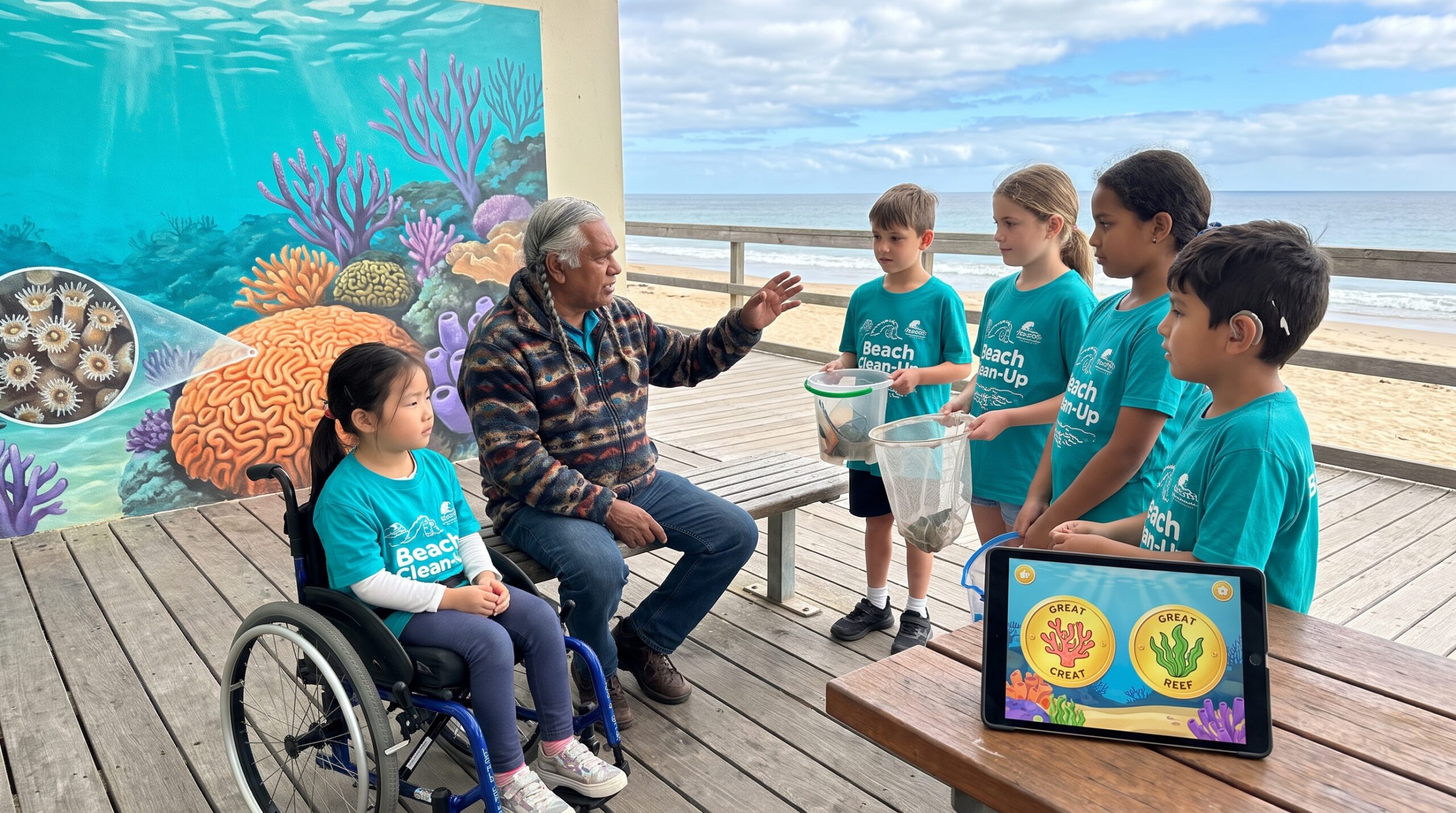
- Join a local beach clean and follow park rules when visiting.
- Try a craft that shows coral structure or watch a short documentary segment.
Read or listen to a story about The Great Barrier Reef now: For 3-5 year olds, For 3-5 year olds, For 6-8 year olds, For 8-10 year olds, and For 10-12 year olds.
Practical visitor tips
If you visit, choose licensed operators and respect the reef. Do not touch or stand on coral. Never feed wildlife and take all litter home.
Also, visit in the drier months for calmer seas. Be aware of stingers in summer. Pick mineral based sunscreen and apply it before entering the water.
Final thought
The Great Barrier Reef is a place of wonder and a clear lesson in how tiny things and people s choices matter. Finally, explore Storypie for family friendly stories and prompts that turn curiosity into caring.