The metric system for kids begins with a simple idea. Also, it uses tens so kids can move a decimal point to convert units. Therefore the system removes odd fractions and makes arithmetic friendlier.
The metric system for kids: a short history
In the 1790s French leaders wanted fair, shared measures. So they asked scientists to create one system for trade and science. The metric system was officially adopted in France in 1799. Scientists like Lavoisier, Borda, Laplace, Delambre, and Méchain helped define the metre from the Paris meridian. Then nations agreed to cooperate. In 1875 the Treaty of the Metre formed an international bureau. Later, the modern SI standard began in 1960. Finally, in 2019 the kilogram gained a new definition based on the Planck constant. As of around 2015, approximately 189 out of 196 countries had adopted the metric system as the compulsory and exclusive system of measurement. These steps made units stable and global.
Basic units children can touch
Kids can learn the metric system for kids by handling simple tools. For example, everyday units are easy to find around the house.
- SI base units include metre (m), kilogram (kg), second (s), ampere (A), kelvin (K), mole (mol), and candela (cd).
- Common home measures include millimetres, centimetres, metres, grams, kilograms, millilitres, and litres.
- Celsius is the usual thermometer scale at home.
Friendly prefixes and quick facts
Prefixes make the metric system playful and logical. Also, kilo means 1000, centi means 0.01, and milli means 0.001. Then conversions often just move a decimal point. For example, 1 litre of water weighs about 1 kilogram. A ruler is 30 centimetres. A doorway is around 2 metres tall.
Practical differences and handy numbers
Most countries use metric units every day. However, some places still use customary units. Still, science and global work run on the metric system. Useful exact and near-exact conversions include:
- 1 inch = 2.54 cm (exact)
- 1 pound ≈ 0.4536 kg
Playful activities to try
Try these short games to make metric learning tactile and fun.
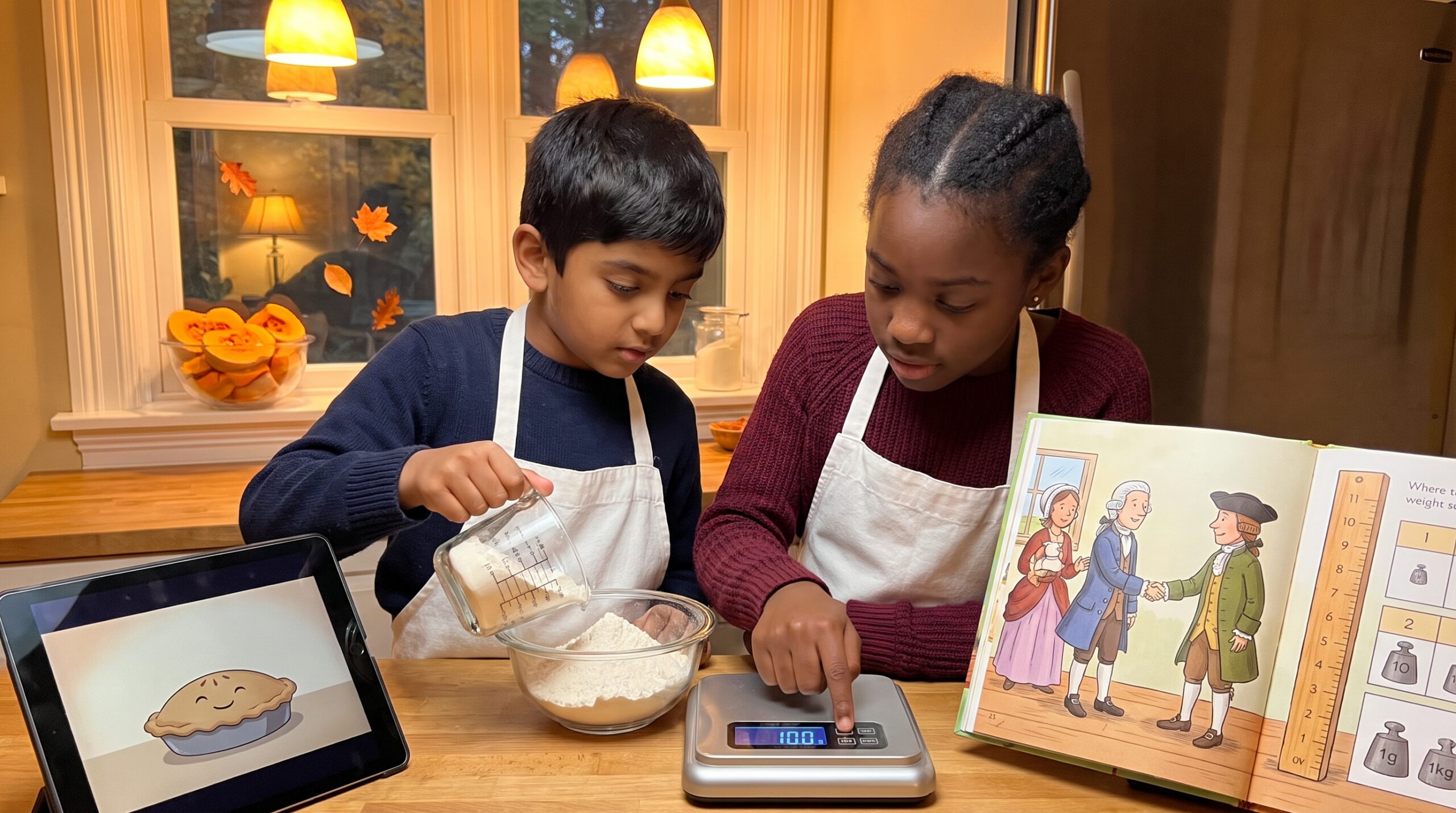
- Kitchen metric game: scale a recipe by 10 and move the decimal.
- Centimetre scavenger hunt: find items that are 5 cm, 10 cm, and 30 cm.
- Family height chart: measure everyone in centimetres and compare.
Tools that help
Borrow or buy a few simple tools. A metric ruler with mm and cm helps accuracy. Also, a kitchen scale in grams, a measuring jug with millilitres and litres, and a Celsius thermometer work well.
Why the metric system matters
The metric system grew from a wish for fairness. So one shared standard stopped local confusion in trade. In the United States, the Metric Act of 1866 legalized the use of the metric system, and later in 1988, the metric system was declared the preferred system for U.S. trade and commerce by federal law. Today metric keeps science precise and global. Therefore teaching it early builds number sense and confidence. It also eases later work in STEM. Interestingly, a 1977 Gallup poll reported that approximately 74% of Americans had heard of the metric system, but fewer than 24% wanted it adopted in the U.S.
Read or listen to a story about Metric System now: For 3-5 year olds, For 6-8 year olds, For 8-10 year olds, and For 10-12 year olds.
Also, if you want the app, visit Storypie to gently explore more stories and activities.
Final thought. The metric system is more than numbers. It is fairness, clarity, and curiosity. Teach it playfully and children gain useful skills and great confidence.