
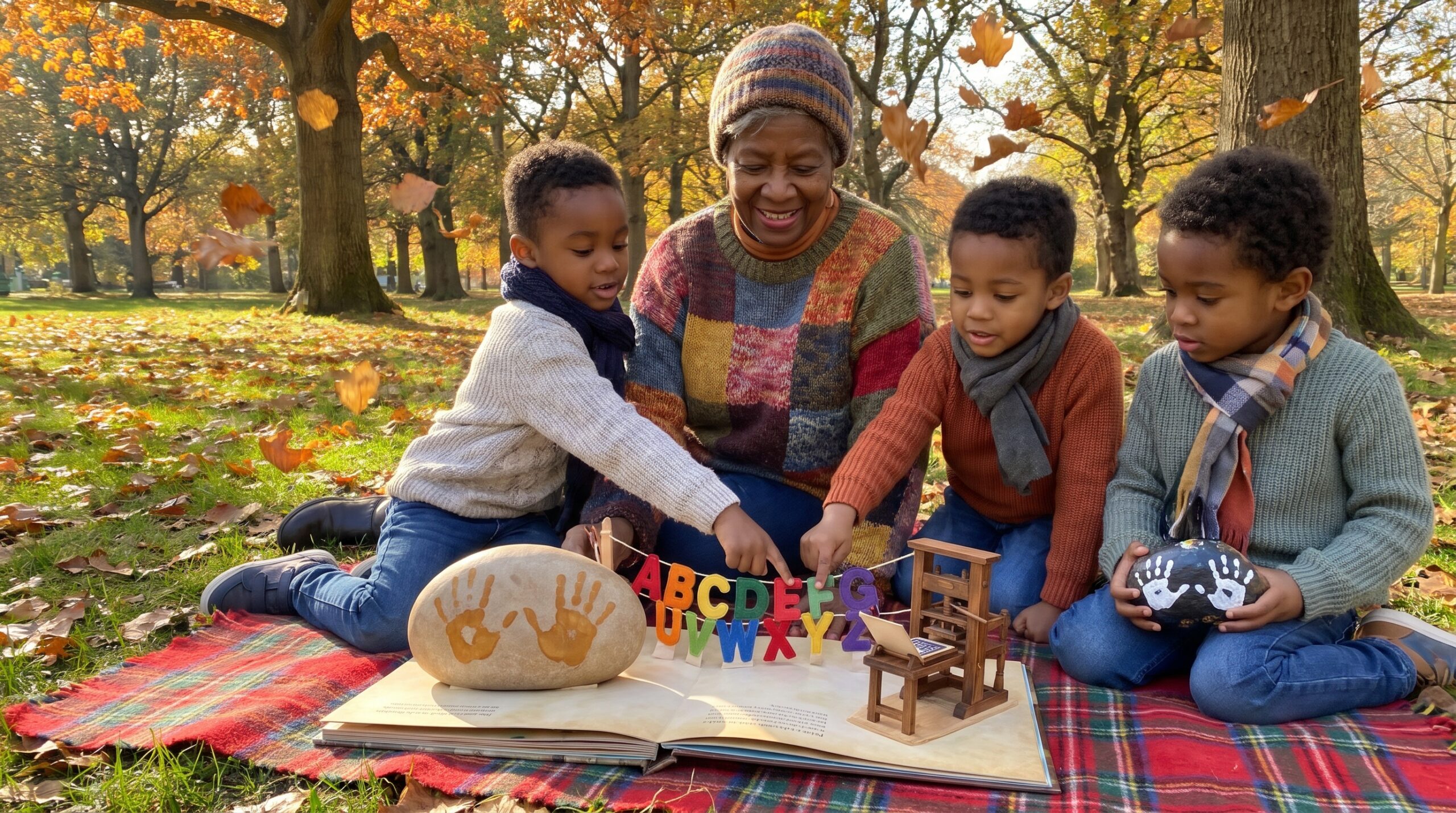
The history of writing traces how people turned marks into messages that last. First, early marks and pictures helped memory. Then systems developed that recorded speech and ideas for others. This long story shows how writing shaped law, science, and stories.
History of writing: What it is and why it began
Writing is a system of visible marks that record language and ideas. People used marks long before true writing began. For example, Sumerians pressed a stylus into clay tablets around 3200 BCE. Also, Egyptians carved hieroglyphs on stone and wrote on papyrus scrolls. China used a continuous script for thousands of years. Maya people carved logo-syllabic signs in Mesoamerica.
Key milestones in the history of writing
Here are a few vivid steps that children might enjoy hearing about:
- Cuneiform clay tablets with a stylus, about 3200 BCE.
- Egyptian papyrus scrolls written with a reed pen.
- Parchment and quill in medieval books and law rolls.
- Gutenberg’s movable type in the 1450s, which made books common.
- Keyboards and Unicode today, which let text travel across phones and tablets.
Types of writing systems
Writing systems take different shapes. In short, each system matches marks to speech in a different way.
- Logographic: symbols for words, like Chinese characters.
- Syllabic: symbols for syllables, like Japanese kana.
- Alphabetic: letters for sounds, like Latin script.
- Abjad: mostly consonants, like early Arabic and Hebrew.
- Abugida: consonant plus vowel signs, like Devanagari.
- Featural: letters that show articulation, like Hangul.
Why the history of writing changed the world
Alphabetic writing made literacy easier to spread. Proto-Sinaitic signs led to Phoenician letters. Then the Greek alphabet grew from Phoenician. Next, Latin letters reached English and many other languages. Printing helped fix spellings. However, sound shifts like the Great Vowel Shift left older spellings behind. Sadly, as of 2023, 28% of adults in the United States scored at or below Level 1 in literacy assessments, indicating limited proficiency in reading and writing. This highlights the ongoing importance of writing education.
Writing today and access
Writing keeps law, science, and stories across generations. Today technology supports many scripts. For example, Louis Braille gave blind readers a raised-dot code. Also, Unicode helps phones show many writing systems. Thus writing keeps adapting to help more people read and write. In fact, in 2023, Write the World engaged over 13,000 new writers aged 13-19, publishing 29,000 pieces totaling over 8.5 million words, fostering a global community of young writers. Furthermore, a February 2026 national survey revealed that 35% of U.S. adults had either considered writing a book or had already started writing one, showcasing the ongoing interest in personal storytelling.
A quick family activity
Try this short, playful idea. First, make cave drawings on brown paper. Then trace letters in sand. Next, type the same line on a keyboard. You will see how tiny scratches can turn into whole worlds. Finally, try a secret symbol together. It might become your child’s first private mark.
Read or listen to a story about Writing now: For 3-5 year olds, For 6-8 year olds, For 8-10 year olds, and For 10-12 year olds.
Final thought
Share one short Storypie episode tonight and you might hear, just one more. Every child has a story to tell. When we help them find that voice, imagination grows louder and brighter. Explore the history of writing, make a mark, and watch wonder happen.