I love the Sahara at dusk. Tonight I share simple sparks about the Tuareg people for parents and teachers. These short facts can turn a little screen time into a curious, cozy moment.
Where the Tuareg people live
The Tuareg people are an Amazigh group of the Sahara and Sahel. Their homelands stretch across Mali, Niger, Algeria, Libya, Burkina Faso, and Mauritania. The total Tuareg population is estimated to be between 1.2 million and 3 million, spread across these countries, illustrating their cultural diversity and geographic reach. Over many centuries they adapted to life in hot sands and wide skies.
Daily life, travel, and tents
Many Tuareg families were traditionally nomadic pastoralists. They raised camels, goats, and sheep. Camels carried people and goods across long desert routes. Camels also provided milk that helped families on long journeys.
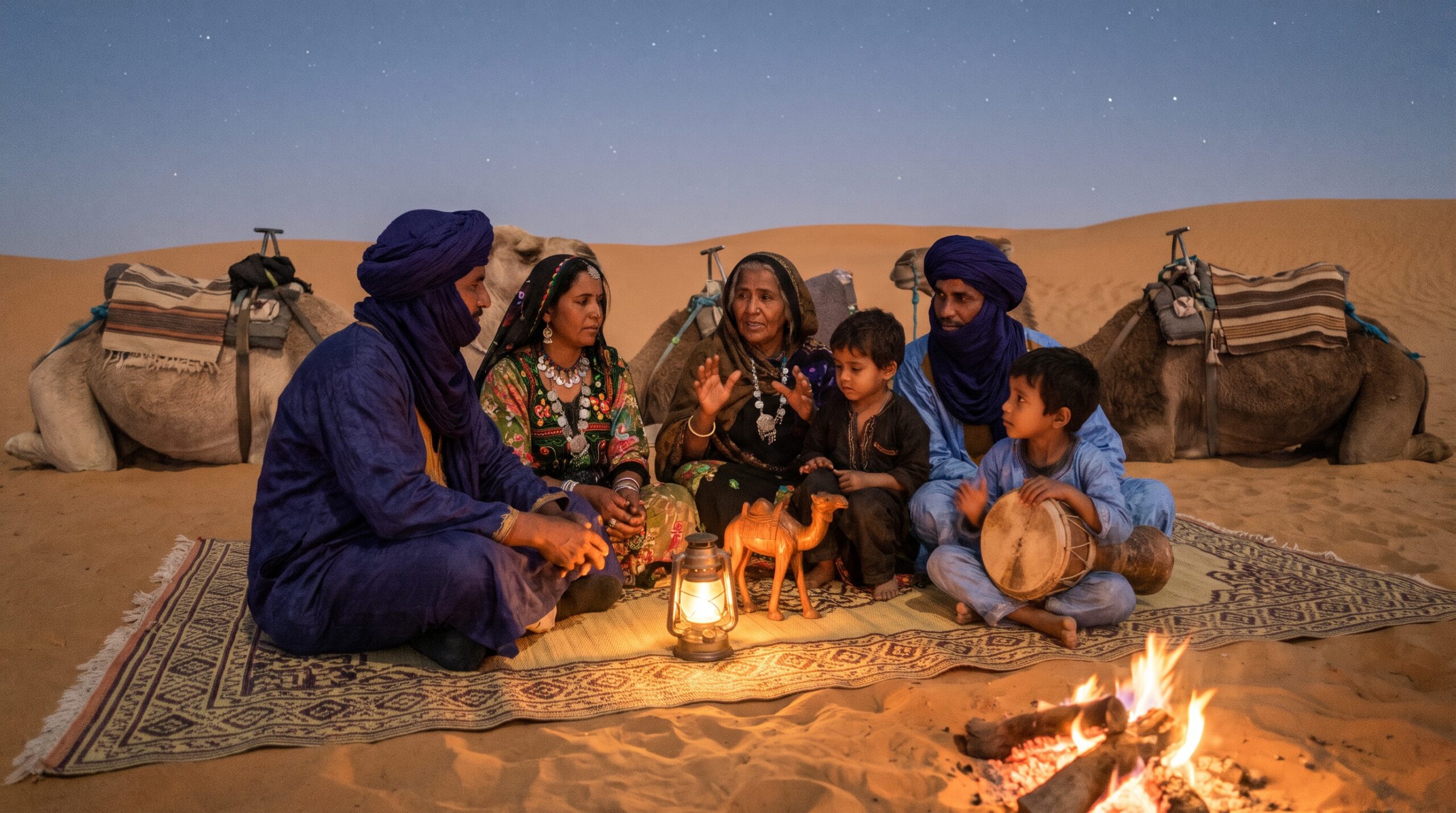
Their tents come from woven goat hair. These black tents pack up and travel easily. When indigo meets sunlight the cloth can look wonderfully blue and bright.
Clothing, color, and the tagelmust
Look for indigo robes and head veils called tagelmust. The tagelmust protects from sun and blowing sand. Indigo dye can tint skin slightly blue. This is how travelers began calling them the Blue People of the Sahara.
Family roles and music
Women carry important roles in many Tuareg families. They pass down songs, names, and lineage. Music keeps family history alive. Families sing and play instruments like the imzad and the tende drum.
In modern times, Tuareg artists have shared their sound with the world. Bands such as Tinariwen brought desert music to many listeners. Crafts like silverwork and leather remain full of bright patterns and storytelling designs.
Groups, change, and resilience
The Tuareg are not one single nation. They live in many related clans and confederations. Some people live in towns. Others keep nomadic or semi-nomadic ways. Today they face borders, drought, and political change. Still, they adapt and keep singing, crafting, and creating.
Quick sparks to share tonight
- Play a short Tuareg song. Then ask one curious question together.
- Point out the blue robes and the camel. Invite a small wonder-filled comment.
- Share a tiny fact about the imzad or a drum. Keep it playful and light.
Read or listen to a story about Tuareg people now: For 3-5 year olds, For 6-8 year olds, For 8-10 year olds, and For 10-12 year olds.
For a gentle next step, explore more on Storypie and listen on the app. The Tuareg people offer music, crafts, camels, and bright indigo stories to admire. Keep respect first, ask a small question, and listen closely.