English

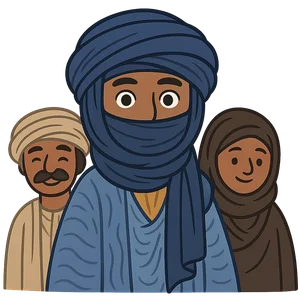
Tuareg people
The Tuareg are a large Berber ethnic group who are traditionally nomadic pastoralists of the Sahara Desert…
Reads at Grades 6–8 Listens at Grades 4–8
Print & create
Answer keys·No prep·Free with an account
28 worksheets · answer keys · full story · quiz · Ages 10-12 · CEFR B2
Plus adds 116,000+ more stories in 27 languages, audio for every one, and printables for all of them.
Just want Tuareg people?
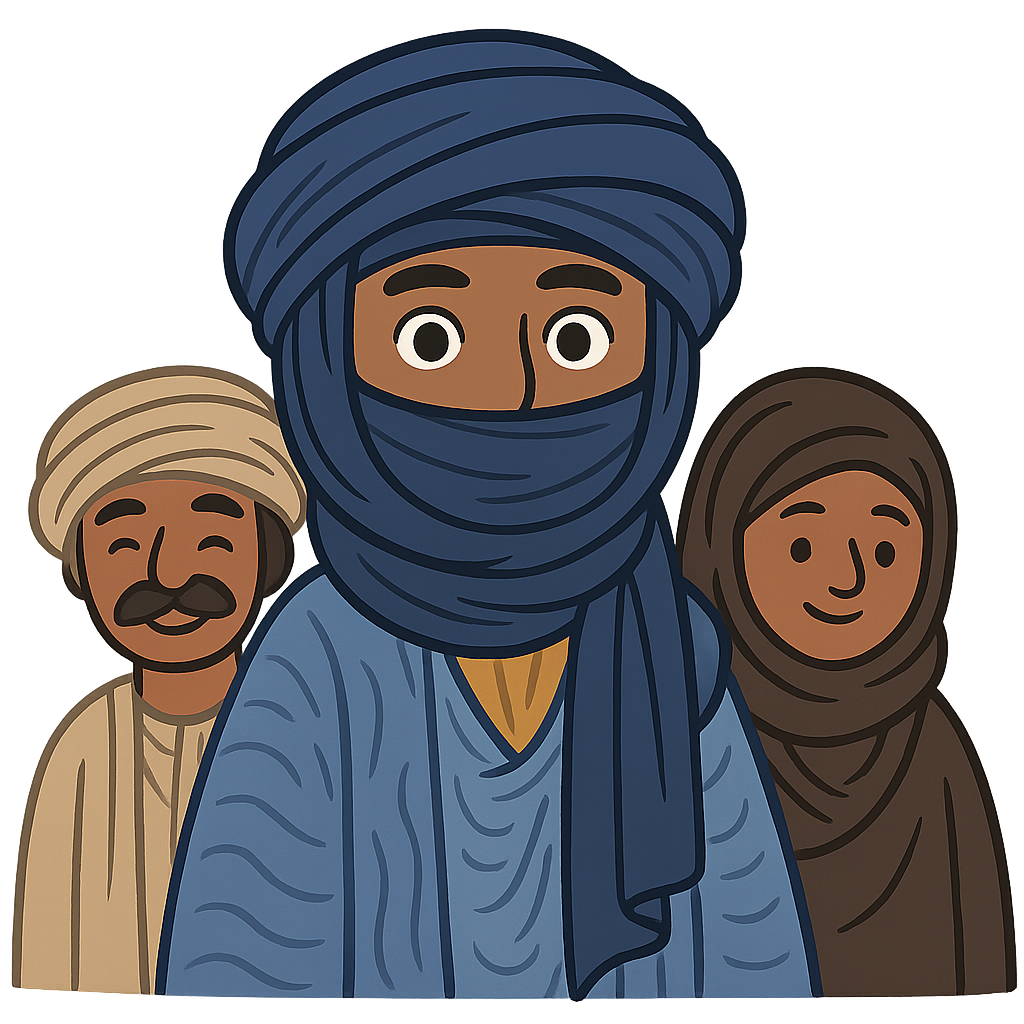
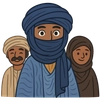
Greetings. We are the Kel Tamasheq, a name that means “speakers of our language, Tamasheq.” Many people know us as the Tuareg. We are a Berber people whose home is the vast and beautiful Sahara Desert. For thousands of years, our lives have been woven into the fabric of this immense landscape of sand and rock. Our ancestors lived a nomadic life, moving with their herds across the endless dunes and arid plains, guided by the sun and stars. This deep connection to the desert shapes who we are. One of our most recognizable traditions is the indigo-dyed veil, or tagelmust, that our men wear. The deep blue color sometimes rubs off onto our skin, which is why others have long called us “the Blue People.”
For many centuries, we were the undisputed masters of the Sahara. Our ancestors were the guardians and guides of the great trans-Saharan trade routes, the arteries of commerce that connected West Africa with the Mediterranean world. Imagine long caravans of camels, numbering in the hundreds, laden with precious goods. From the south came gold, and from the north came massive blocks of salt, a mineral so valuable it was sometimes traded for its weight in gold. Our role was essential. Without our guidance, these caravans would have been lost to the harshness of the desert. Our deep, inherited knowledge of the land was our greatest strength. We knew the location of every hidden oasis and well, we navigated by the patterns of the stars at night, and we understood the shifting sands like no one else.
We Are the People of the Veil
Greetings. We are the Kel Tamasheq, a name that means “speakers of our language, Tamasheq.” Many people know us as the Tuareg. We are a Berber people whose home is the vast and beautiful Sahara Desert. For thousands of years, our lives have been woven into the fabric of this immense landscape of sand and rock. Our ancestors lived a nomadic life, moving with their herds across the endless dunes and arid plains, guided by the sun and stars. This deep connection to the desert shapes who we are. One of our most recognizable traditions is the indigo-dyed veil, or tagelmust, that our men wear. The deep blue color sometimes rubs off onto our skin, which is why others have long called us “the Blue People.”
For many centuries, we were the undisputed masters of the Sahara. Our ancestors were the guardians and guides of the great trans-Saharan trade routes, the arteries of commerce that connected West Africa with the Mediterranean world. Imagine long caravans of camels, numbering in the hundreds, laden with precious goods. From the south came gold, and from the north came massive blocks of salt, a mineral so valuable it was sometimes traded for its weight in gold. Our role was essential. Without our guidance, these caravans would have been lost to the harshness of the desert. Our deep, inherited knowledge of the land was our greatest strength. We knew the location of every hidden oasis and well, we navigated by the patterns of the stars at night, and we understood the shifting sands like no one else.
This expertise, combined with our mastery of raising and riding camels, made us powerful and respected across North Africa. We didn't just lead the caravans; we protected them, ensuring safe passage through a challenging environment. Our command of the desert allowed our culture to flourish and gave us a central role in the history of the region. We were the bridge between different worlds, facilitating not only the trade of goods but also the exchange of ideas and culture across the world’s largest hot desert. This legacy as skilled navigators and protectors is a source of great pride for us.
Our traditional society is organized in a way that might seem unique to many. We are a matrilineal people, which means that we trace our family lines and ancestry through our mothers. A person’s social standing comes from their mother’s side of the family. In our communities, women have traditionally held a high status. They own the family tent, which is the heart of the home, and it is passed down from mother to daughter. Furthermore, our women are often the keepers and teachers of our traditional script, called Tifinagh. In contrast to many cultures, it is our men who traditionally wear a veil, the tagelmust. A young man begins to wear his veil during adolescence, and it is a symbol of his journey into manhood.
Art is a vital part of our identity, a language that communicates our history, beliefs, and connection to one another. We are known for our intricate silver jewelry, with each piece carrying deep symbolic meaning. Perhaps the most famous is the Cross of Agadez, a beautiful pendant whose design is passed down through families and often tells the story of our origins. We also create detailed leatherwork, decorating everything from camel saddles to bags and pouches with geometric patterns. These are not simply decorations; they are symbols that can identify a person’s family, home region, and social group. This visual artistry is complemented by our love for the spoken and sung word. Poetry and music are central to our culture, used to share stories, celebrate events, and pass our history from one generation to the next.
The world around us began to change dramatically in the late 19th and early 20th centuries. European countries arrived and established colonies, drawing new borders directly across our traditional lands. For a nomadic people who moved freely with the seasons, these artificial lines on a map were devastating. Suddenly, our ancient migration routes were cut off, and our territory, the Sahara, was divided among several new countries. Families and clans found themselves separated by national borders they had no part in creating. This profoundly disrupted our way of life, making it difficult to trade and travel as we always had.
These political changes were not the only challenges we faced. The Sahara has experienced severe droughts that have made it harder to sustain our herds and our traditional nomadic lifestyle. These environmental pressures, combined with political conflicts in the regions where we live, have forced many of us to adapt. Over the past century, many of our people have had to abandon full-time nomadism, seeking new ways to support their families and preserve their communities. These hardships have tested our resilience, but they have not broken our spirit.
Today, we are still a vibrant and proud people, adapting to the realities of the modern world while holding onto the traditions that define us. While many of us now live in towns and cities across the Sahara and Sahel regions, we work hard to keep our culture alive. We continue to speak our Tamasheq language, share our poetry, and celebrate with our distinct music. In fact, Tuareg music has found a global audience, with musicians sharing our sounds and stories with people all over the world. We are finding new ways to be Kel Tamasheq, honoring our past as masters of the desert while building a future for the next generation. Our culture continues, not as a relic of the past, but as a living, breathing part of the world today.
Wow facts
About
The Tuareg are a large Berber ethnic group who are traditionally nomadic pastoralists of the Sahara Desert, known for their distinct culture and mastery of desert trade routes.
Take a Quiz
Question 1 of 5
According to the story, why were the Tuareg people historically powerful and respected in the Sahara?
Explore next



Want to do even more?
Go beyond exploring. Unlock tools that turn every story into real learning.

Storypie Plus for families
Full stories, quizzes, and printables. Nights and car rides, sorted.
- Unlimited audio stories
- Create Mode: your child stars in the story
- Offline downloads
- Printable worksheets & coloring pages

Why Storypie for Schools
Students engaged. Prep in seconds. Evenings back to you.
- Worksheets & Quizzes
- Classroom Management
- Formative Assessment
- Custom Curriculum & Lesson Plans
- 27 Languages

Why Storypie for Homeschool
Curriculum done. They'll ask for more. Hours back in your day.
- Worksheet Generator
- First-Person Audio Stories
- Built-in Comprehension Quizzes
- Custom Curriculum & Lesson Plans
- Print & Go Activities