English

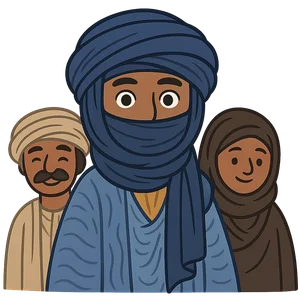
Tuareg people
The Tuareg are a large Berber ethnic group who are traditionally nomadic pastoralists of the Sahara Desert…
Reads at Grades 3–5 Listens at Grades 1–5
Print & create
Answer keys·No prep·Free with an account
28 worksheets · answer keys · full story · quiz · Ages 8-10 · CEFR B1
Plus adds 116,000+ more stories in 27 languages, audio for every one, and printables for all of them.
Just want Tuareg people?
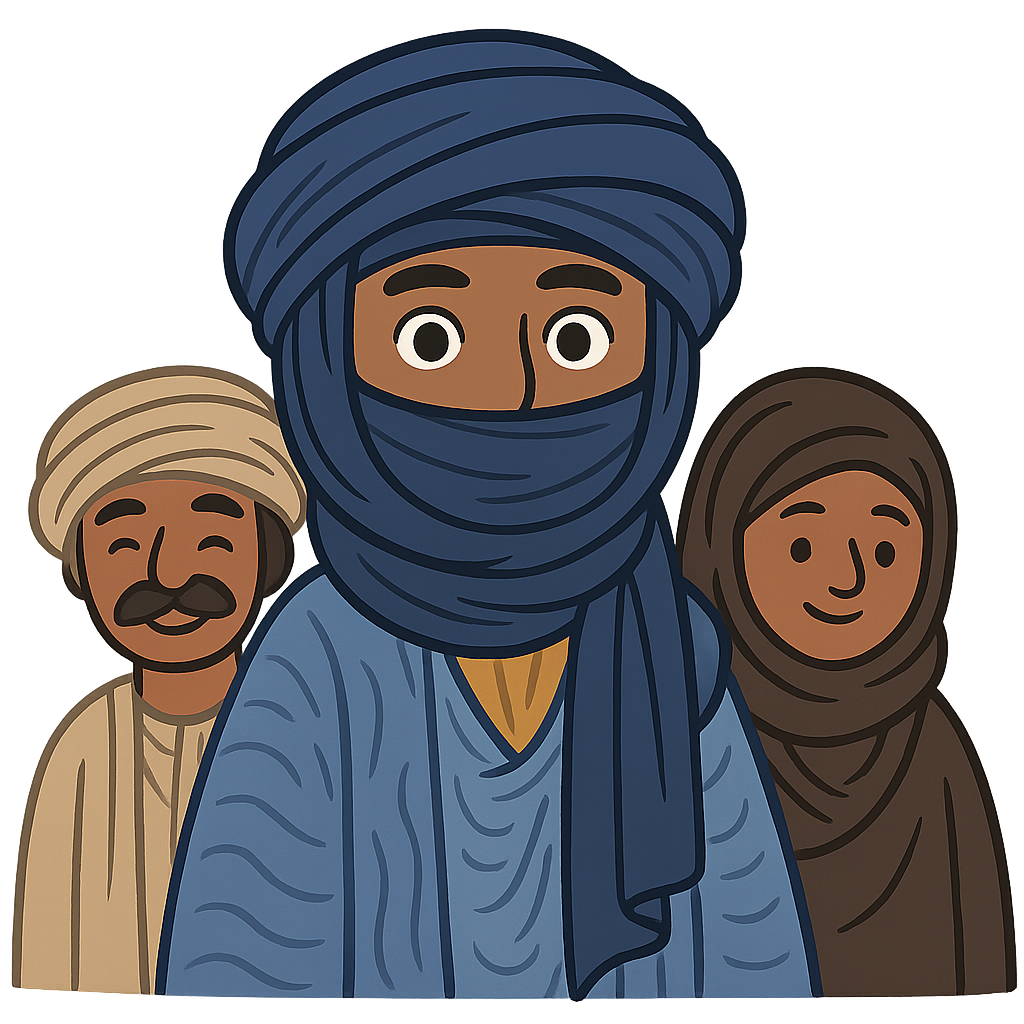
Hello, we are the Tuareg people. In our own language, we call ourselves the Kel Tamasheq, which means “speakers of our language, Tamasheq.” Our home is the vast and beautiful Sahara Desert, a place of endless sand, bright sun, and starry nights. This incredible landscape, which stretches across North and West Africa, has been our ancestral home for thousands of years. We have learned its secrets, from the direction of the winds to the location of hidden wells, and our history is written in the desert itself. Our identity is deeply connected to this land and to the language that we share.
For many centuries, a great number of our people lived as nomads. This means we moved from place to place with our precious herds of camels and goats. We did not wander without purpose; we traveled along ancient paths to find fresh pasture for our animals to graze and sources of water for them and our families to drink. Life in the desert requires constant movement to survive. Our camels were not just for travel; they provided milk and were our trusted companions on long journeys. Our goats also gave us milk and were a vital part of our survival. This nomadic lifestyle taught us to be resourceful, patient, and deeply knowledgeable about the natural world.
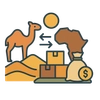
Living this way made us experts at surviving in one of the world's harshest environments. We learned to navigate the enormous desert, a place with few landmarks, by watching the sun during the day and the patterns of the stars at night. We understood how to find shelter from the powerful sun and how to endure the intense heat. Because we possessed these special skills, we became the masters of the great trans-Saharan trade routes. For centuries, we guided enormous caravans across the desert, a journey that was impossible for outsiders to make alone. We led merchants carrying valuable goods like salt, which was as precious as gold, and gold itself, connecting the cultures and economies of Africa.
We Are the Kel Tamasheq
Hello, we are the Tuareg people. In our own language, we call ourselves the Kel Tamasheq, which means “speakers of our language, Tamasheq.” Our home is the vast and beautiful Sahara Desert, a place of endless sand, bright sun, and starry nights. This incredible landscape, which stretches across North and West Africa, has been our ancestral home for thousands of years. We have learned its secrets, from the direction of the winds to the location of hidden wells, and our history is written in the desert itself. Our identity is deeply connected to this land and to the language that we share.
For many centuries, a great number of our people lived as nomads. This means we moved from place to place with our precious herds of camels and goats. We did not wander without purpose; we traveled along ancient paths to find fresh pasture for our animals to graze and sources of water for them and our families to drink. Life in the desert requires constant movement to survive. Our camels were not just for travel; they provided milk and were our trusted companions on long journeys. Our goats also gave us milk and were a vital part of our survival. This nomadic lifestyle taught us to be resourceful, patient, and deeply knowledgeable about the natural world.
Living this way made us experts at surviving in one of the world's harshest environments. We learned to navigate the enormous desert, a place with few landmarks, by watching the sun during the day and the patterns of the stars at night. We understood how to find shelter from the powerful sun and how to endure the intense heat. Because we possessed these special skills, we became the masters of the great trans-Saharan trade routes. For centuries, we guided enormous caravans across the desert, a journey that was impossible for outsiders to make alone. We led merchants carrying valuable goods like salt, which was as precious as gold, and gold itself, connecting the cultures and economies of Africa.
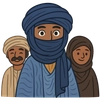
You may have heard us called the “Blue People,” and there is a special reason for this name. It comes from our traditional clothing, which is often dyed with a deep blue color called indigo. Over time, the rich dye can transfer onto our skin, giving it a bluish tint. Our men traditionally wear a veil called a tagelmust, which is wrapped around the head and face. It is not just for tradition; it is a practical tool that offers important protection from the blowing sand and the hot desert sun. These customs are a visible part of our unique identity, shaped by the environment we call home.
Our culture has many other important traditions. In our society, women are highly respected and hold a central place in our families and communities. In fact, our family lines are often traced through the mother, which is a practice that makes our culture distinct. We also have our very own ancient alphabet, a script called Tifinagh. This writing system has been part of our heritage for a very long time, allowing us to write our language, Tamasheq, and to pass down stories, poems, and messages from one generation to the next. Having our own alphabet is a great source of pride and a symbol of our long history.
Today, our world is changing, and our lives are changing with it. While some of our families continue the nomadic traditions of our ancestors, moving with their herds, many of us now live in towns and cities. Our ancestral lands in the Sahara are now divided by the borders of several different countries, such as Mali, Niger, Algeria, and others. These modern borders can make it difficult for us to travel freely across the desert as we once did, creating new challenges for our communities. We are adapting to these new circumstances while holding onto the heritage that defines us.
Even as our lifestyles change, we work hard to keep our culture alive and strong. We continue to celebrate our identity through our powerful music and the beautiful words of our poetry. We are also famous for our intricate silver jewelry, which is crafted by skilled artisans and worn with pride. These traditions connect us to our past and carry our spirit into the future. Though we may live in different ways than our ancestors, we are still the Kel Tamasheq, the people of the Sahara, and we continue to share our unique story with the world.
Wow facts
About
The Tuareg are a large Berber ethnic group who are traditionally nomadic pastoralists of the Sahara Desert, known for their distinct culture and mastery of desert trade routes.
Take a Quiz
Question 1 of 5
Why are the Tuareg people sometimes called the 'Blue People'?
Explore next


Want to do even more?
Go beyond exploring. Unlock tools that turn every story into real learning.

Storypie Plus for families
Full stories, quizzes, and printables. Nights and car rides, sorted.
- Unlimited audio stories
- Create Mode: your child stars in the story
- Offline downloads
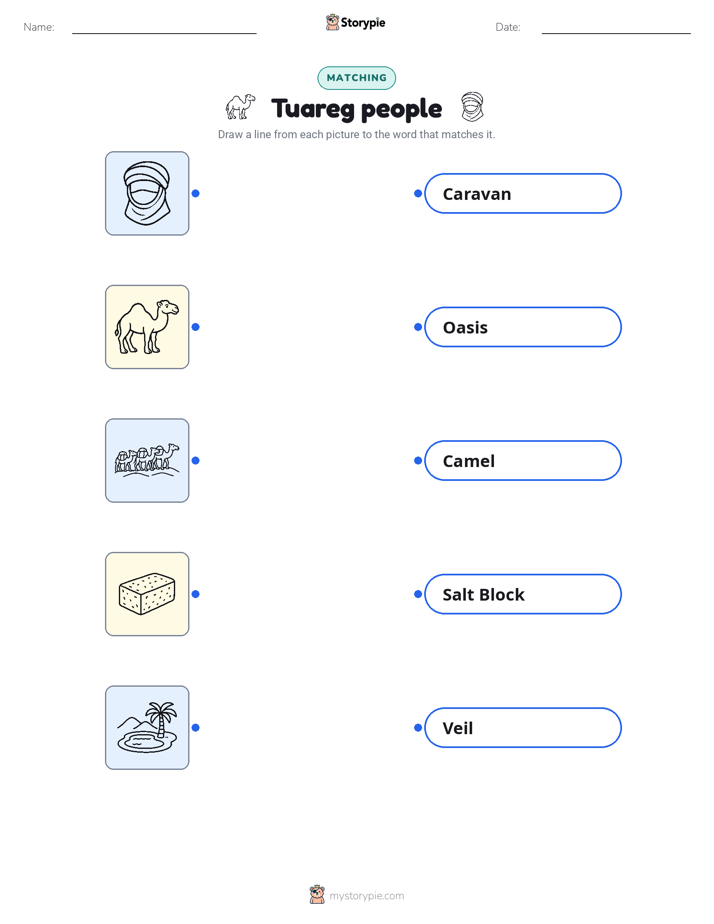
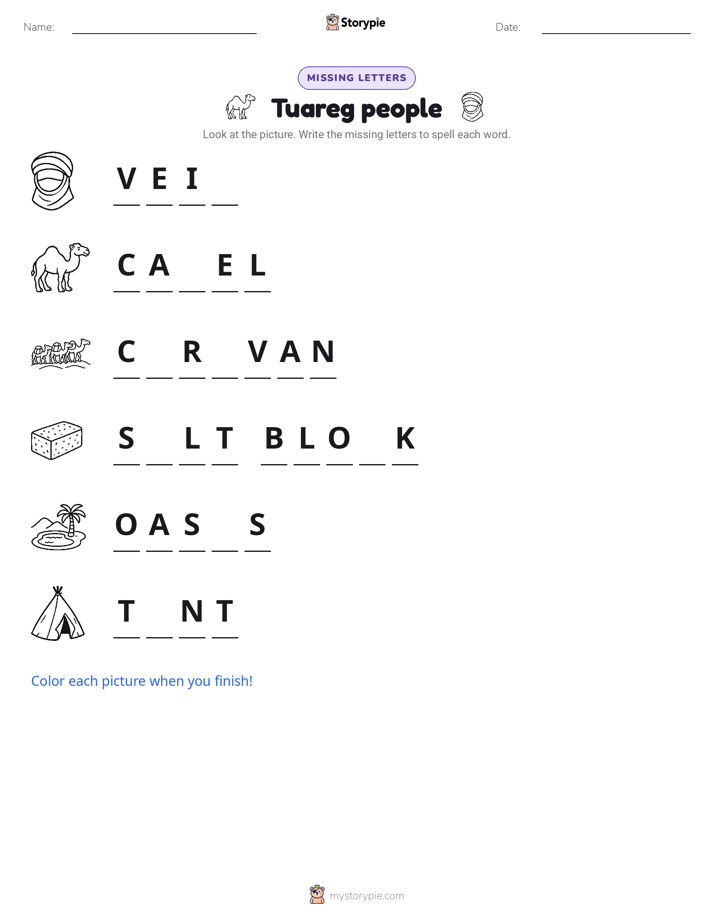
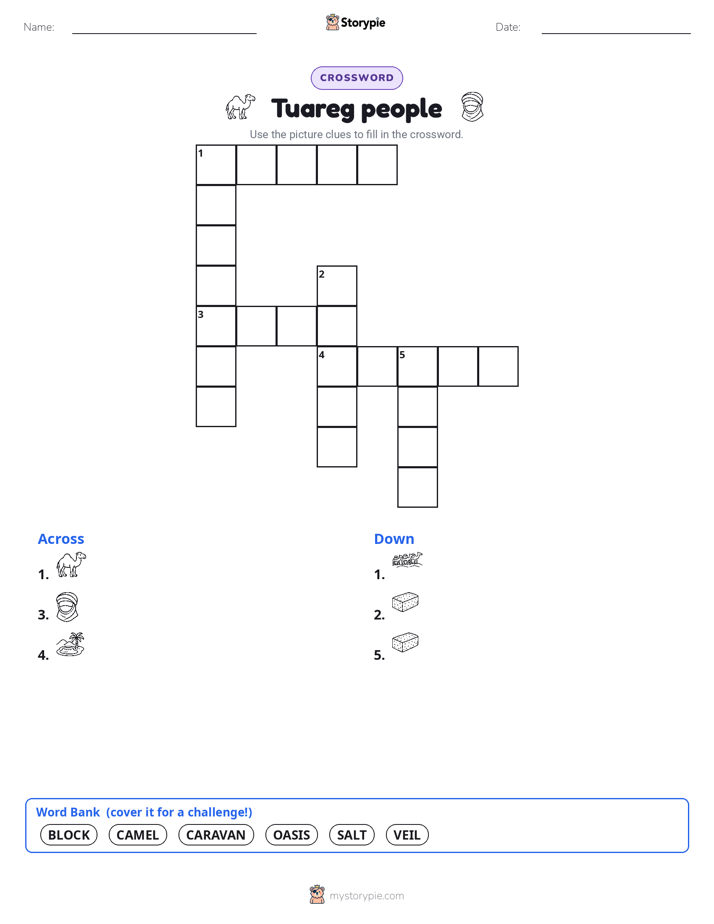
- Printable worksheets & coloring pages

Why Storypie for Schools
Students engaged. Prep in seconds. Evenings back to you.
- Worksheets & Quizzes
- Classroom Management
- Formative Assessment
- Custom Curriculum & Lesson Plans
- 27 Languages

Why Storypie for Homeschool
Curriculum done. They'll ask for more. Hours back in your day.
- Worksheet Generator
- First-Person Audio Stories
- Built-in Comprehension Quizzes
- Custom Curriculum & Lesson Plans
- Print & Go Activities