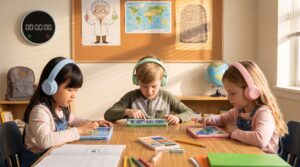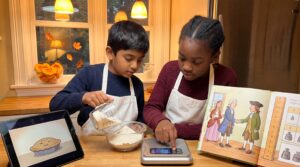
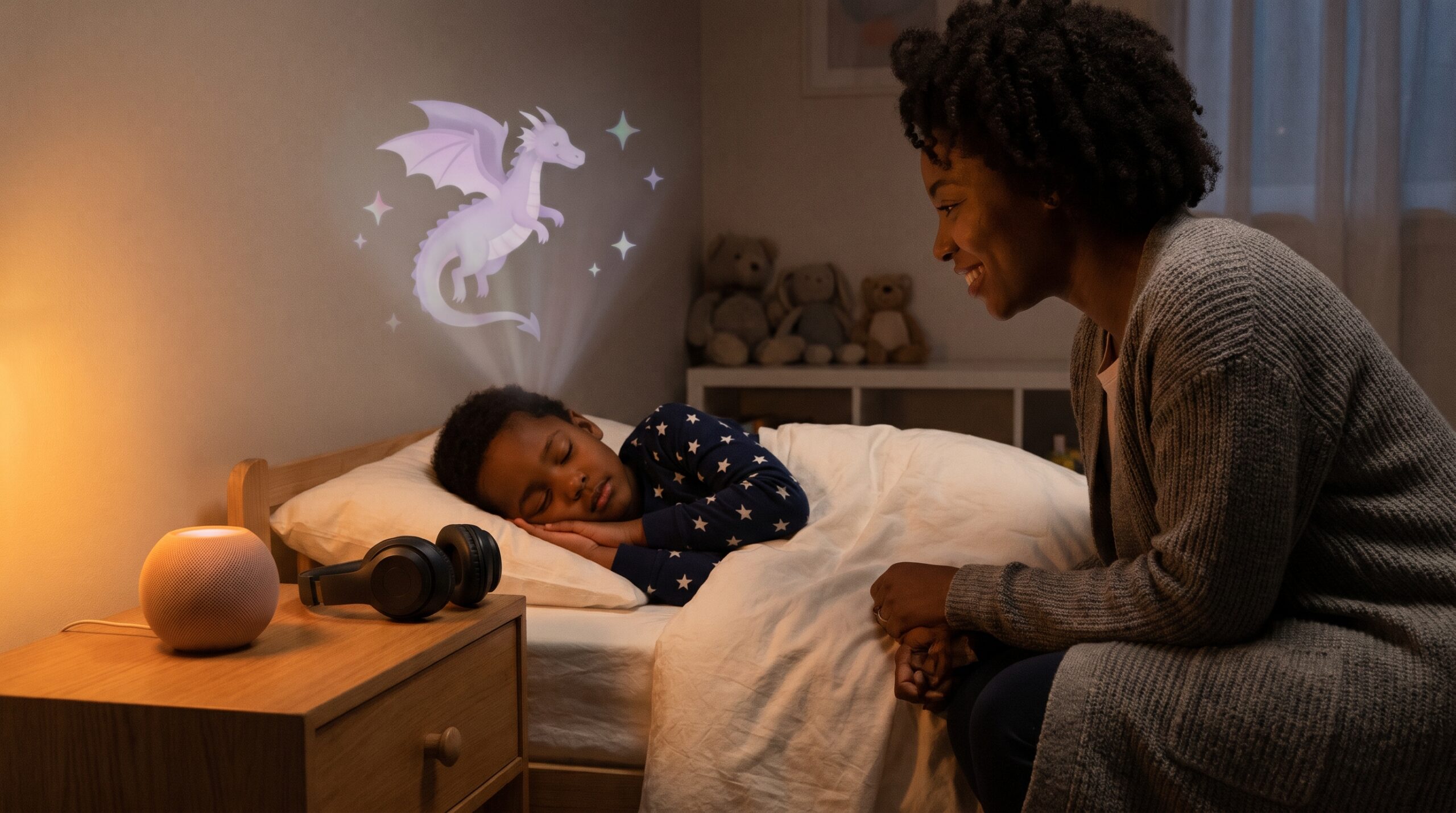
Close your eyes for a second. Audio-first cognitive load asks the brain to imagine, not to watch. When a voice tells a story, children create bright, surprising pictures inside their heads. Today this simple choice supports attention, language, and playful thinking.
A little history and a big idea
Oral storytelling came long before writing. For centuries people sat by fires and told tales. Later radio plays and audiobooks kept the same magic alive. Today, audio-first apps bring that living tradition into daily life. Because audio-first cognitive load asks children to make mental images, the mind stays busy imagining, not just consuming pictures. According to a 2024 study, viewers reported significantly higher cognitive load when watching subtitled videos without sound, emphasizing the importance of audio in reducing cognitive strain.
Why less visual input helps
Cognitive load theory explains the why. The brain has limited bandwidth. Therefore too many visuals can crowd out language processing. Also dual coding theory shows that words plus self-made images create stronger memory traces than words with ready-made pictures. So when we reduce visual clutter, children use working memory for meaning and mental play. A 2024 EEG study found that audio characteristics can reliably estimate cognitive load, reinforcing the importance of audio-first strategies.
Audio-first cognitive load in the brain
Neuroscience offers a delightful insight. Listening to vivid stories activates language centers. In addition, these networks often light up visual and sensory regions too. In other words, hearing a story can trigger the same brain areas used for seeing. That means imagination is not guesswork. Instead it is mental play made biological.
Practical benefits for children
Audio-first cognitive load brings clear benefits parents and teachers notice. For example:
- It boosts vocabulary and exposes children to new sentence patterns.
- It strengthens narrative comprehension and sequencing skills.
- It grows attention and working memory through sustained listening.
- It fuels richer pretend play and more varied imaginative content.
These gains help reading and creative play later on. Also audio-first approaches often encourage longer, more focused listening bursts. In fact, a 2026 report by the National Literacy Trust found that 47.3% of children and young people aged 8 to 18 listened to audiobooks or podcasts, indicating a growing trend of audio consumption among youth.
Accessibility and inclusion
Audio-first formats lower barriers for many learners. Children with dyslexia or visual impairment get full access to stories through sound. Learners of English as an additional language hear natural pronunciation and sentence flow. In short, audio-first cognitive load can be an inclusive route to narrative learning.
Age and design notes
Not all audio is equal. Younger children need short, clear segments and repetition. Older children enjoy longer arcs and layered detail. Good audio uses clear pacing, expressive narration, and well-placed sounds. These choices guide imagination without doing the imagining for the child. Research shows that an enthusiastic voice narration can lead to higher transfer performance in multimedia learning, emphasizing the role of voice modulation in effective audio content.
Limits, balance, and simple rituals
Audio-first is powerful but not absolute. Some learning needs pictures, for example letter shapes or spatial diagrams. Meanwhile adult interaction still matters. Conversation about a story amplifies vocabulary and comprehension. Try a simple ritual tonight: play a short Storypie story at bedtime and ask, “What did you picture?” Pause and listen for wonderfully surprising answers.
At Storypie we go audio-first because it lowers cognitive load and lets kids’ imaginations do the heavy lifting. For a gentle next step, visit the Storypie homepage or the Get the App page. Try a short story tonight and watch imagination grow.