
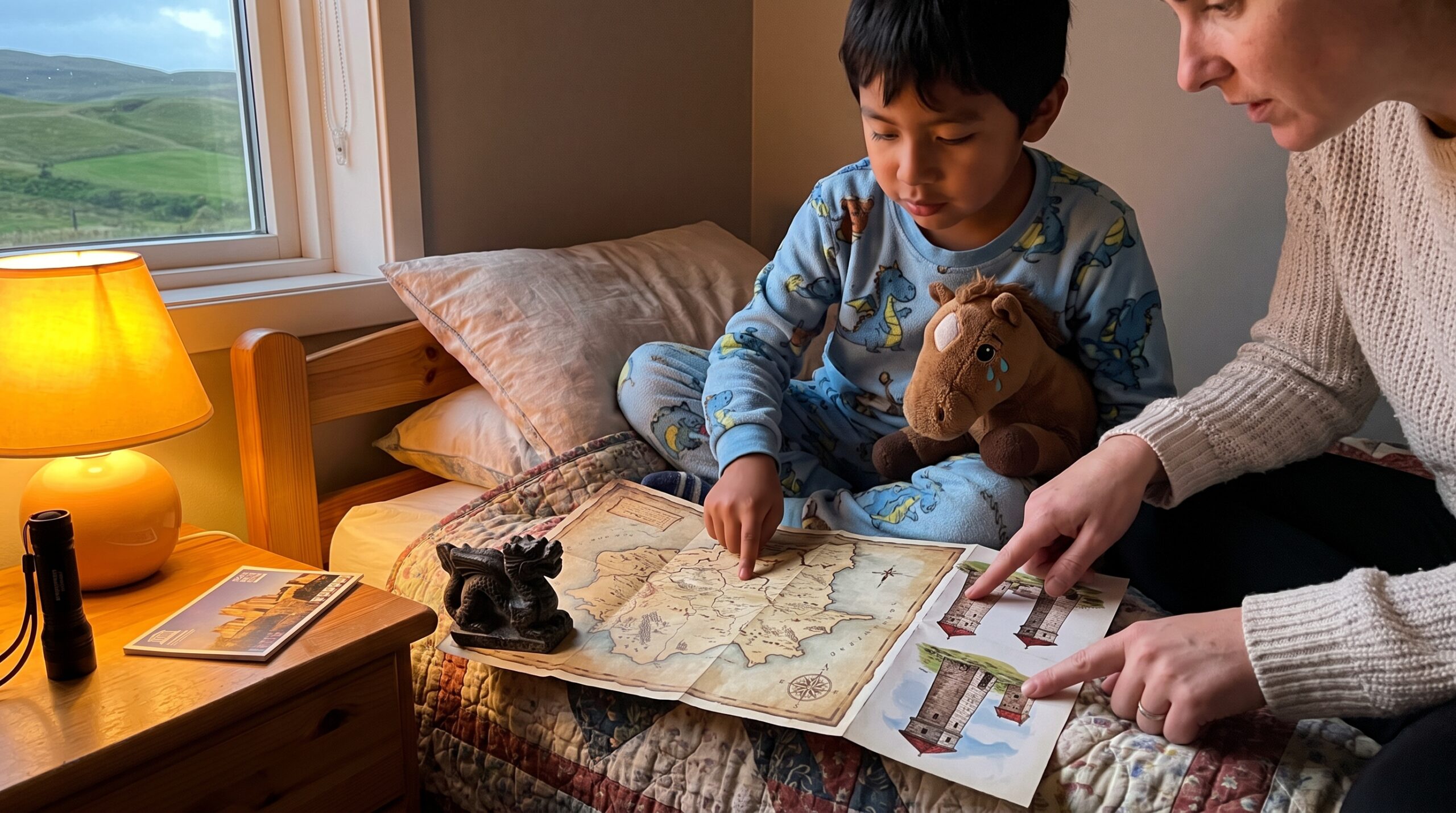
Great Wall of China family guide: warm stone under a small hand. Cool brick smells faintly of earth. The Great Wall invites map-hunting fun and tiny tracing rituals at the kitchen table.
Great Wall of China family guide: What it is
The Great Wall of China is many walls, not one ribbon. For centuries, builders added trenches, towers and natural barriers across northern China. In 2012 archaeologists mapped about 21,196 kilometres of walls, trenches and defenses, a figure that has been confirmed in more recent measurements to be precisely 21,196.18 kilometers (13,170.70 miles), including 43,721 relics and structures.
Some stretches use packed earth. Others use cut stone or brick. The Ming dynasty rebuilt many famous sections, contributing approximately 8,851.8 kilometers (5,500.3 miles) to the Wall’s total length, with about 526 kilometers (327 miles) located within Beijing. Typical Ming walls stand around 7 to 8 metres high and 4 to 5 metres wide on top. In short, the Wall varies a lot. It feels both ancient and very human.
Short timeline and purpose
First, frontier lines appeared in the Warring States era. Then Qin leaders linked many walls after 221 BCE. Next, the Han dynasty extended the frontier work. Later, the Ming dynasty rebuilt and fortified large sections. Finally, the entire system earned UNESCO status in December 1987, covering an area of 2,151.55 hectares with a buffer zone of 4,800.8 hectares.
The Great Wall protected borders and controlled trade. It also worked as a signaling network. Watchtowers sent smoke by day and fire by night. Soldiers and lookouts kept watch. So the Wall did practical work and sent a clear message: this place was defended.
Who built the Wall
Soldiers, local laborers and craftsmen raised the Wall. Whole communities supported garrisons and supplied food and tools. Building it required huge human effort and great teamwork.
Famous spots and family tips
Pick a restored stretch for little legs. Badaling and Mutianyu feel safe and family-friendly. For older children, Jinshanling and Simatai offer rugged climbs and dramatic views. Huanghuacheng has water near the Wall. Shanhai Pass meets the sea. Bring sturdy shoes, water and a sun hat. Also try a tiny flag for extra fun. Plan a short map-tracing ritual at your kitchen table; spread a printed map and trace the route together.
Hands-on activities
- Mini-wall build with clay or blocks to show tamped earth, stone and brick.
- Beacon craft using cotton and paper for safe, supervised fun.
- Map game: trace a route and color restored sections one color and unrestored sections another.
Myths, care and quiet respect
The Wall is not visible from the Moon with the naked eye. That popular claim is a tall tale. Conservation matters because erosion, tourist wear and development harm fragile stretches. Teach children to photograph, not pick. Remind them to leave bricks in place. Small rituals and respect make visits kinder and richer.
Tonight’s summer bedtime
Tell a short story about a watchtower keeper lighting a signal as dusk falls. Have your child trace the Wall on a map before lights-out. Read a linked short story together for a picture-perfect ending.
Read or listen to a story about The Great Wall Of China now: For 3-5 year olds, For 6-8 year olds, For 8-10 year olds, and For 10-12 year olds.
Small hands can touch big history. The Great Wall of China feels big, human and full of stories. Pause to listen, to trace, and to wonder.