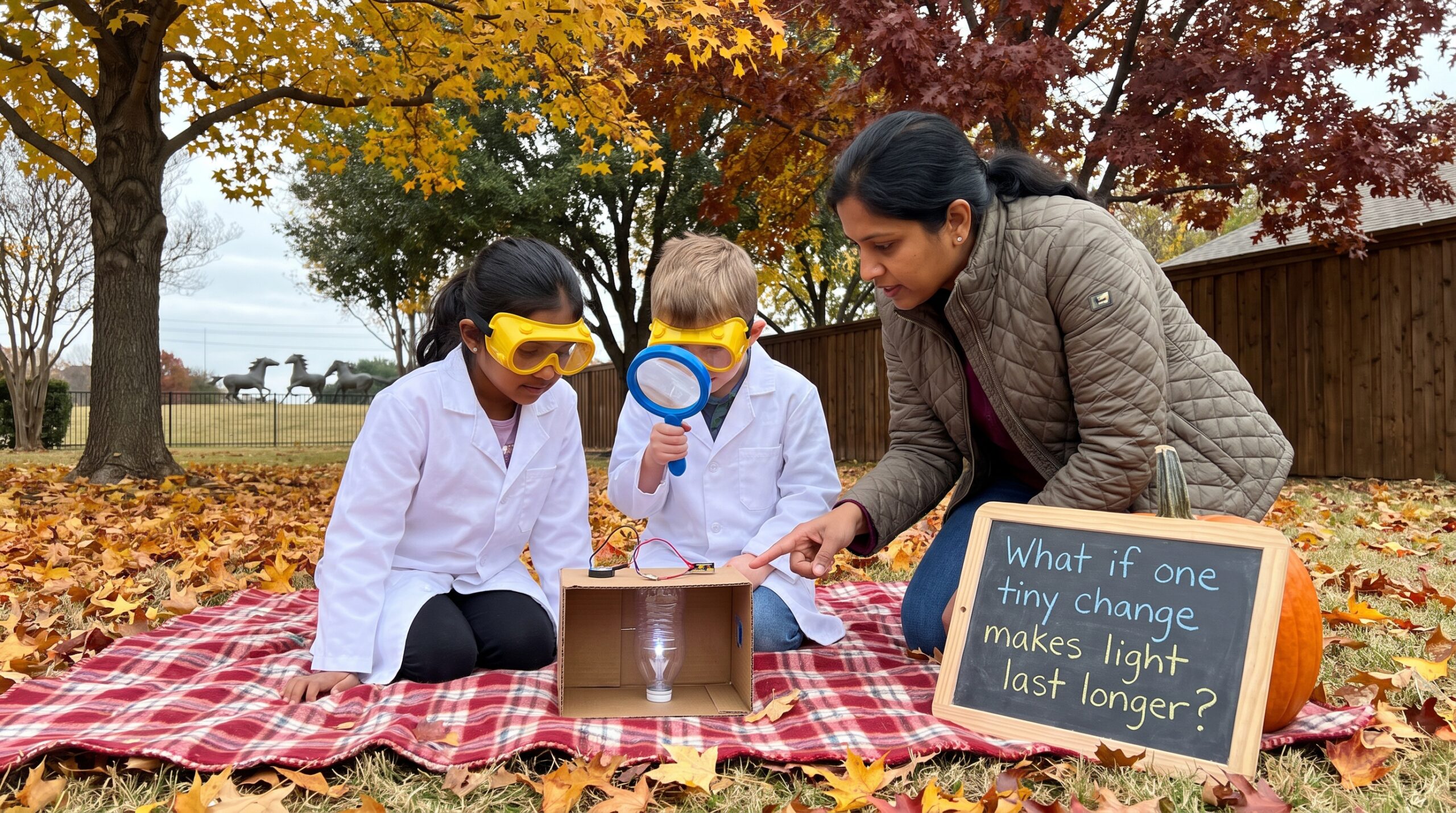
Irving Langmuir biography begins with a tinkering mind and a bright curiosity. He was an American chemist and physicist born in 1881. He worked most of his career at the General Electric Research Laboratory in Schenectady, New York. He liked small, hands-on experiments. For parents and teachers, his story feels playful and powerful.
Irving Langmuir biography: Early life and curiosity
Langmuir showed curiosity from a young age. He mixed careful measurement with joyful experiment. As a scientist, he loved solving real problems. For that reason he fit perfectly at General Electric.
Big ideas from small experiments
Langmuir won the Nobel Prize in Chemistry in 1932 for his discoveries in surface chemistry. He studied how gases and thin layers of molecules behave on surfaces. Those ideas sound small. However, they changed light bulbs, welding, and modern materials.
What he did, simply
- He improved incandescent bulbs by tracking how filaments evaporate. Then he showed how the gas inside a bulb changes life and brightness.
- He developed atomic hydrogen welding. This gave industry a precise, high-heat tool.
- He described how gases stick to surfaces in a clear formula now called the Langmuir adsorption isotherm. He explained monolayers and how to move them.
Why surface science mattered
Imagine friends standing in a single line at the edge of a pool. That single line is a monolayer. Add more rows and it is no longer a single layer. Langmuir studied that single row and taught scientists how to move it from water onto glass or metal. His methods inspired Langmuir-Blodgett films. Today, those films help build sensors, coatings, and electronics.
Plasma, probes, and new words
Langmuir also explored ionized gases. He helped popularize the word plasma for charged gases. Also, he invented the Langmuir probe to measure electron temperature and density. Think of plasma as a charged soup. Langmuir gave scientists ways to measure that soup.
Style, mentorship, and legacy
Langmuir mixed precise numbers and playful experiments. He mentored other researchers, including Katharine B. Blodgett. His work underpins many coatings, thin-film technologies, and improved lighting. Everyday tech, from bulbs to sensors, traces back to him. His hands-on curiosity makes him a lovely example to share with kids.
Simple demos and a tiny ritual
Try safe, supervised demos at home. For example:
- Make soap films stretched across a wire loop and watch colors move.
- Float a drop of oil on water and tilt the dish to see how the sheen changes.
Then try this tiny ritual together:
- Read a short story together.
- Ask one “what if?” question to spark imagination.
- Try a tiny demo under adult supervision.
Read or listen to a story about Irving Langmuir now: For 3-5 year olds, For 6-8 year olds, For 8-10 year olds, and For 10-12 year olds.
Also, visit Storypie for more kid-friendly science stories. Langmuir shows that careful, small experiments can change the world. That lesson is wonderfully simple and wildly fun.