English

Irving Langmuir
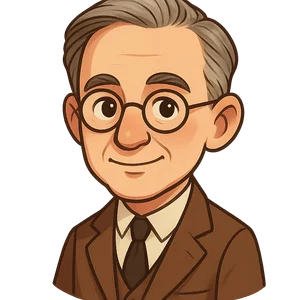
Irving Langmuir was an American chemist and physicist who won the 1932 Nobel Prize in Chemistry for his work…
Reads at Grades K-2 Listens at K–3
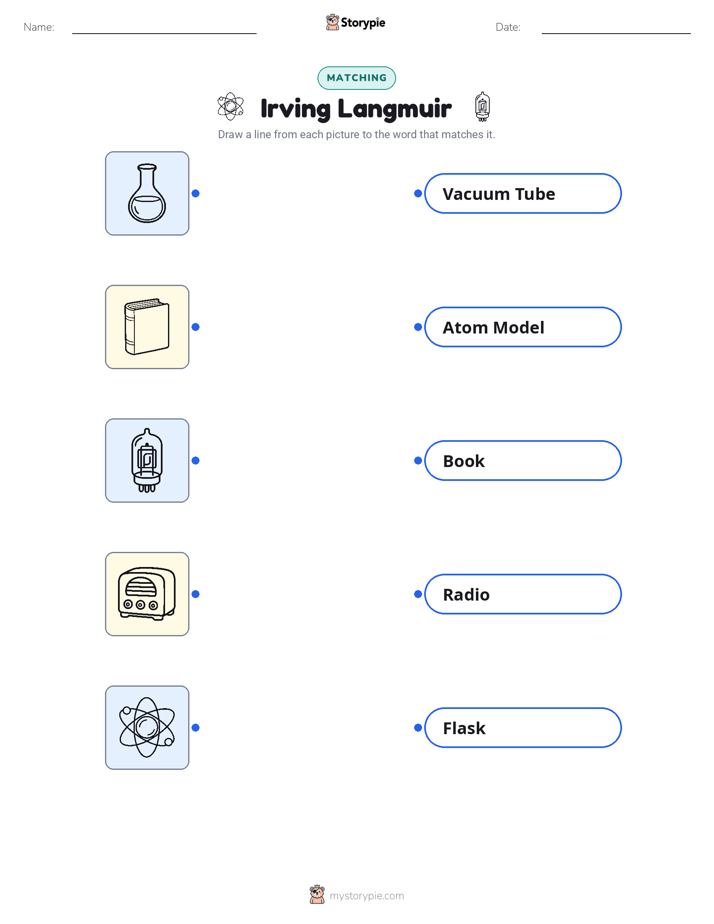
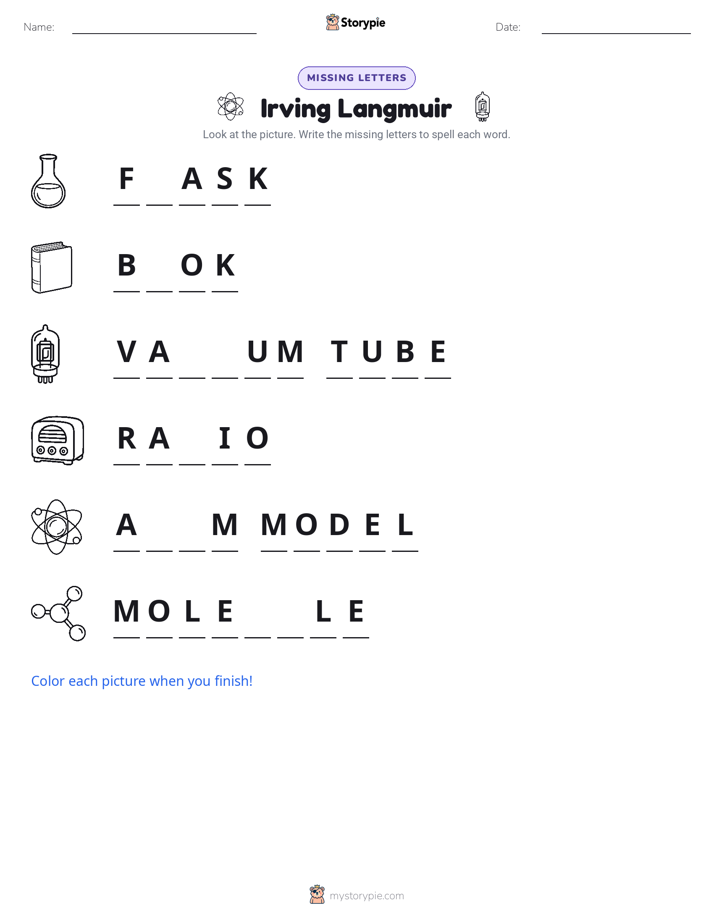
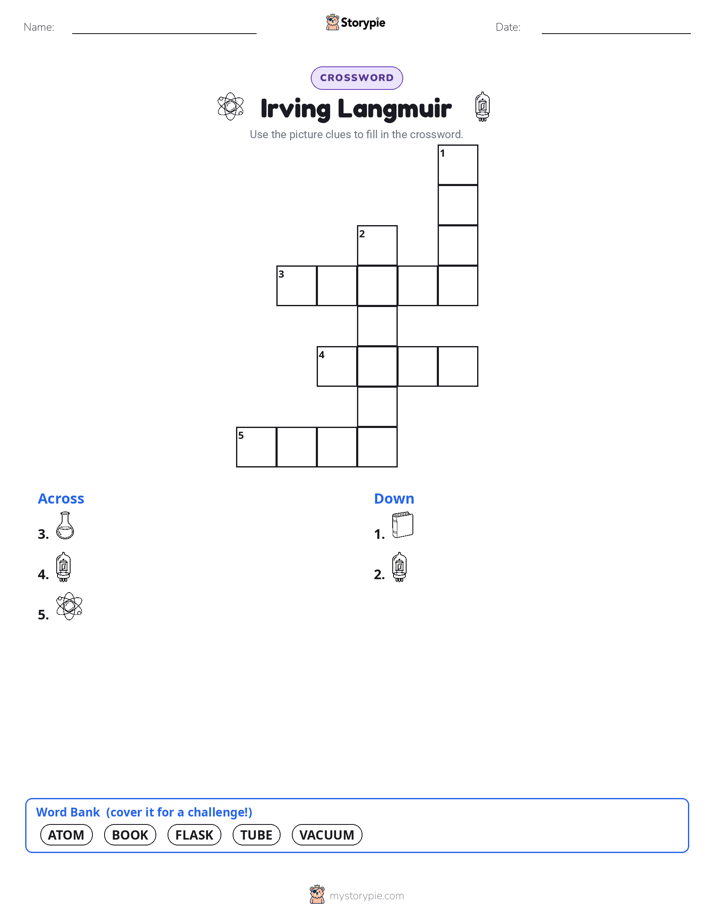
Print & create
Answer keys·No prep·Free with an account
28 worksheets · answer keys · full story · quiz · Ages 6-8 · CEFR A2
Plus adds 244,000+ more stories in 27 languages, audio for every one, and printables for all of them.
Just want Irving Langmuir?
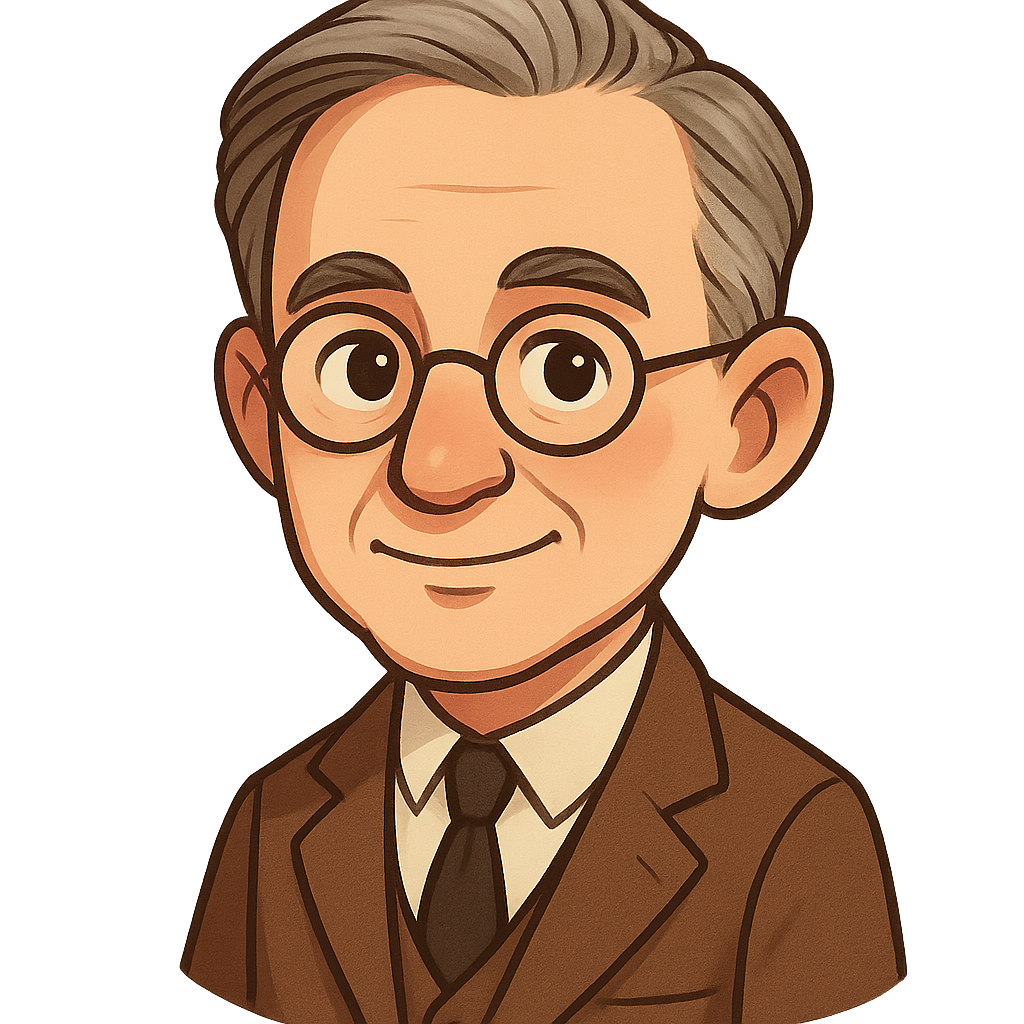
Hello! My name is Irving Langmuir. I was born in a big city called Brooklyn, New York, on January 31st, 1881. Even as a boy, I loved exploring. My favorite thing to do was climb mountains! I also loved asking questions. My older brother, Arthur, was a chemist, and he showed me how exciting science could be. He helped me set up my very own laboratory in a corner of my bedroom, where my curiosity could run wild.
My love for asking 'why?' and 'how?' led me to study science in college. I even traveled all the way to Germany to learn more, and in 1906, I earned a special degree called a Ph.D. in chemistry. A few years later, in 1909, I got a job that would change my life. I started working as a scientist at the General Electric Research Laboratory. It was like the biggest playground for a curious mind like mine!
At General Electric, I worked on a big problem. The light bulbs back then didn't last very long and their glass would turn dark. I thought, 'There must be a better way!'. After many experiments, around 1913, I discovered that if I filled the glass bulb with a special gas, the little wire inside, called a filament, would glow brightly for much, much longer. My invention made light bulbs work better, and it's a big reason why we have the bright lights we use in our homes today.
I didn't just work on light bulbs. I was fascinated by how tiny things called molecules and atoms acted on surfaces. I figured out how they could spread out in a single, neat layer, almost like butter on a piece of toast. This field of study is called surface chemistry. For my discoveries, I was given a very special award in 1932—the Nobel Prize in Chemistry! It was one of the proudest moments of my life.
Irving Langmuir: A Life of Curiosity
Hello! My name is Irving Langmuir. I was born in a big city called Brooklyn, New York, on January 31st, 1881. Even as a boy, I loved exploring. My favorite thing to do was climb mountains! I also loved asking questions. My older brother, Arthur, was a chemist, and he showed me how exciting science could be. He helped me set up my very own laboratory in a corner of my bedroom, where my curiosity could run wild.
My love for asking 'why?' and 'how?' led me to study science in college. I even traveled all the way to Germany to learn more, and in 1906, I earned a special degree called a Ph.D. in chemistry. A few years later, in 1909, I got a job that would change my life. I started working as a scientist at the General Electric Research Laboratory. It was like the biggest playground for a curious mind like mine!
At General Electric, I worked on a big problem. The light bulbs back then didn't last very long and their glass would turn dark. I thought, 'There must be a better way!'. After many experiments, around 1913, I discovered that if I filled the glass bulb with a special gas, the little wire inside, called a filament, would glow brightly for much, much longer. My invention made light bulbs work better, and it's a big reason why we have the bright lights we use in our homes today.
I didn't just work on light bulbs. I was fascinated by how tiny things called molecules and atoms acted on surfaces. I figured out how they could spread out in a single, neat layer, almost like butter on a piece of toast. This field of study is called surface chemistry. For my discoveries, I was given a very special award in 1932—the Nobel Prize in Chemistry! It was one of the proudest moments of my life.
I spent my whole life asking questions and searching for answers. I lived to be 76 years old, and my days were full of exciting discoveries. People remember me for making light bulbs last longer, but I hope you also remember me for being curious. My work in surface chemistry is still used by scientists today to invent new and amazing things, all because I never stopped wondering 'what if?'.
Wow facts
About
Irving Langmuir was an American chemist and physicist who won the 1932 Nobel Prize in Chemistry for his work in surface chemistry. He made significant contributions to the development of the incandescent light bulb, inventing the gas-filled tungsten lamp.
Take a Quiz
Question 1 of 4
Why did Irving's brother, Arthur, help him set up a laboratory?
Explore next





Want to do even more?
Go beyond exploring. Unlock tools that turn every story into real learning.

Storypie Plus for families
Full stories, quizzes, and printables. Nights and car rides, sorted.
- Unlimited audio stories
- Create Mode: your child stars in the story
- Offline downloads
- Printable worksheets & coloring pages

Why Storypie for Schools
Students engaged. Prep in seconds. Evenings back to you.
- Worksheets & Quizzes
- Classroom Management
- Formative Assessment
- Custom Curriculum & Lesson Plans
- 27 Languages

Why Storypie for Homeschool
Curriculum done. They'll ask for more. Hours back in your day.
- Worksheet Generator
- First-Person Audio Stories
- Built-in Comprehension Quizzes
- Custom Curriculum & Lesson Plans
- Print & Go Activities