English

Irving Langmuir
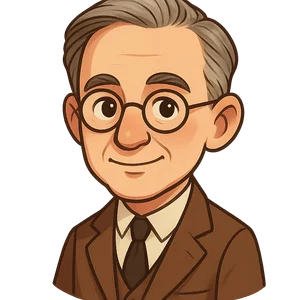
Irving Langmuir was an American chemist and physicist who won the 1932 Nobel Prize in Chemistry for his work…
Reads at Grades 6–8 Listens at Grades 4–8
Print & create
Answer keys·No prep·Free with an account
28 worksheets · answer keys · full story · quiz · Ages 10-12 · CEFR B2
Plus adds 244,000+ more stories in 27 languages, audio for every one, and printables for all of them.
Just want Irving Langmuir?
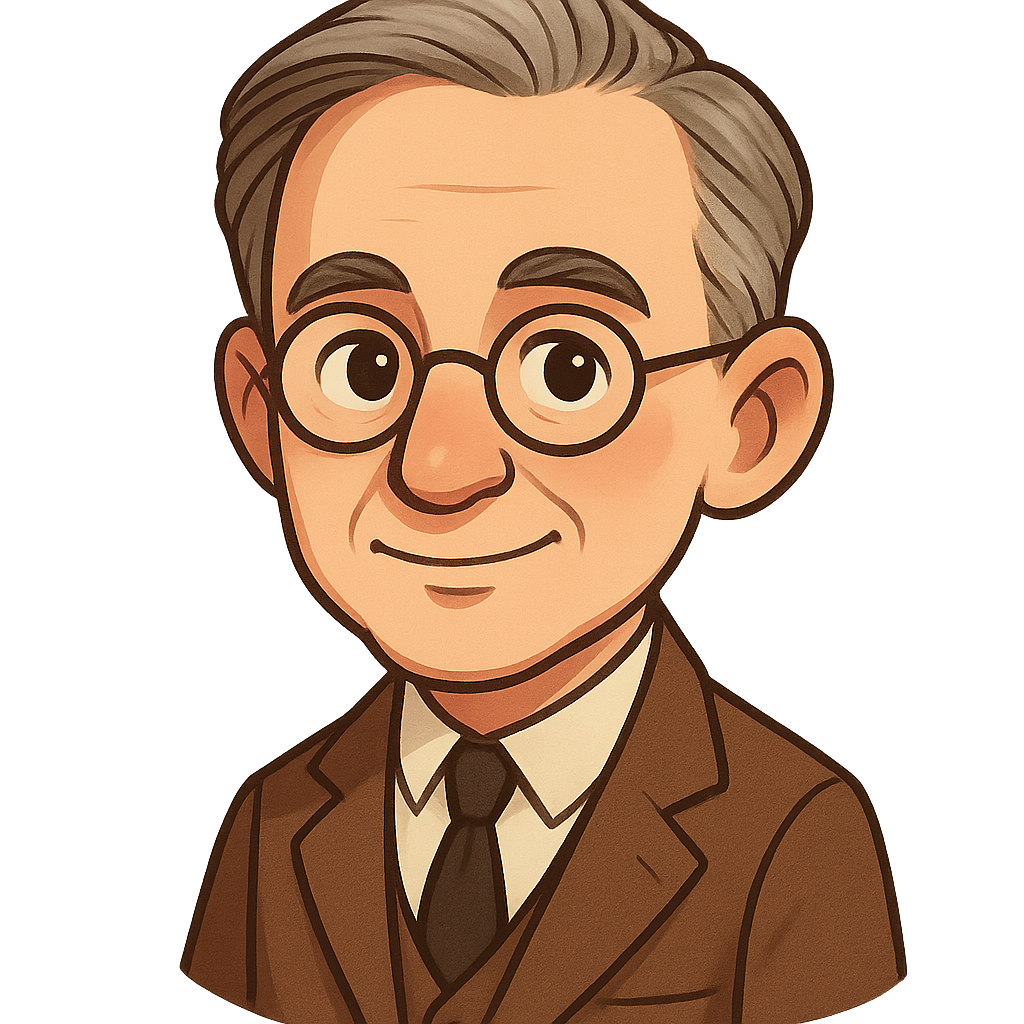
Hello, my name is Irving Langmuir. I was born in Brooklyn, New York, on January 31st, 1881. From my earliest days, I was filled with a deep curiosity about the world. I loved exploring the outdoors, especially climbing mountains, and my mind was always buzzing with questions about how things worked. I was lucky to have an older brother, Arthur, who was a chemist. He saw my fascination with science and encouraged it from a very young age. He would answer my questions and share his knowledge, which helped set me on a lifelong path of investigation and discovery. That early encouragement was like a spark, lighting the way for the scientific journey I was about to begin.
My formal journey into science began when I enrolled at Columbia University to study metallurgical engineering, which is the science of metals. I graduated in 1903 with a strong foundation, but I knew my education was far from over. My quest for knowledge took me all the way to Germany, a place buzzing with scientific excitement. There, I attended the University of Göttingen and had the incredible opportunity to study under the famous chemist Walther Nernst. In 1906, I proudly earned my Ph.D. It was a thrilling time to be a scientist. Discoveries in chemistry and physics were changing how we understood the universe, and I felt like I was standing at the very edge of a new frontier, ready to contribute my own ideas to this incredible era of innovation.
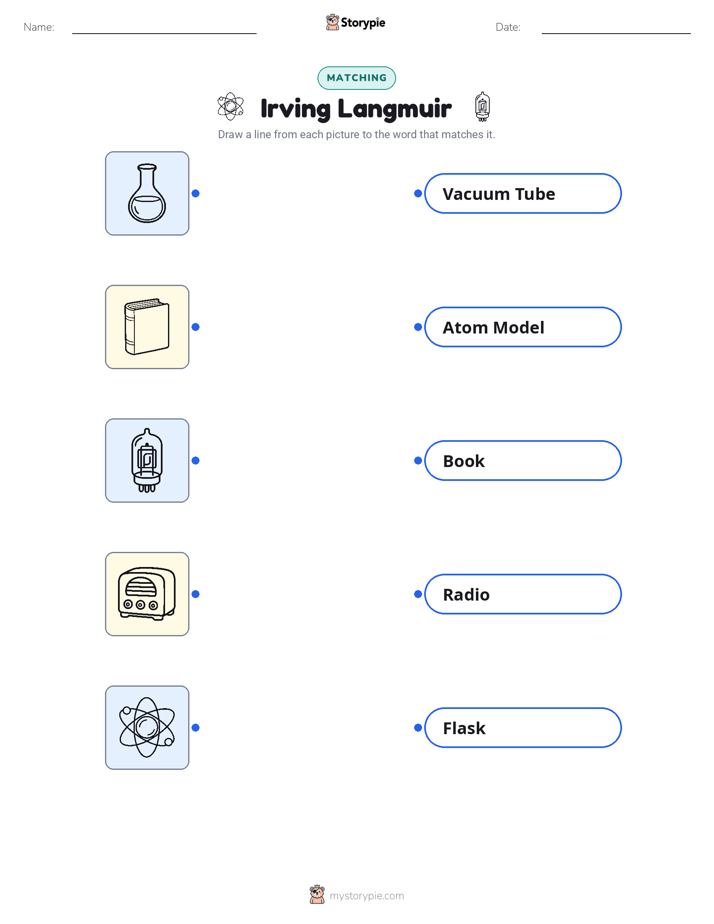
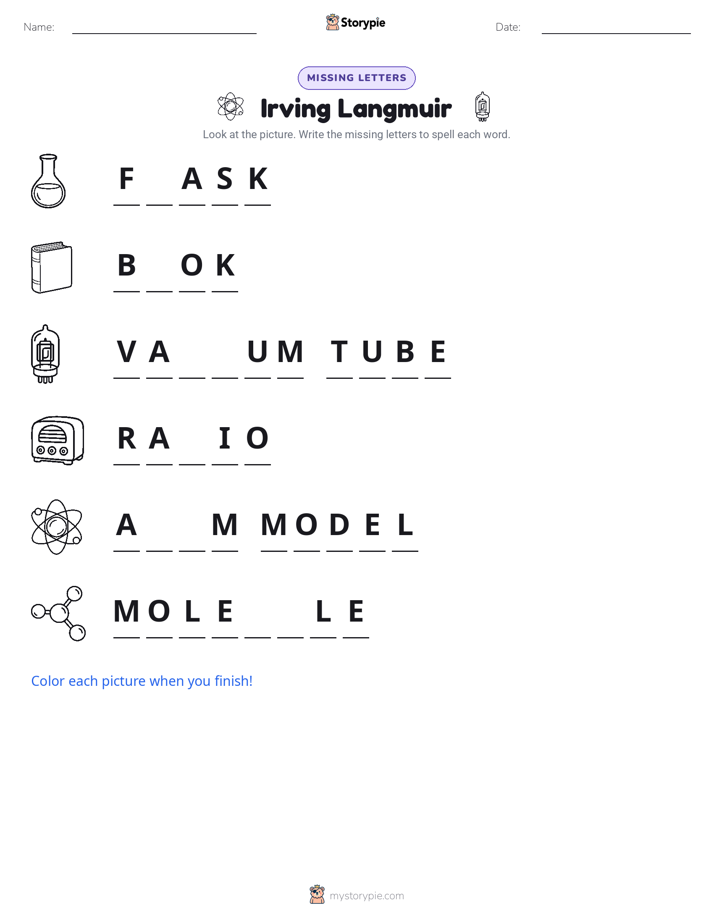
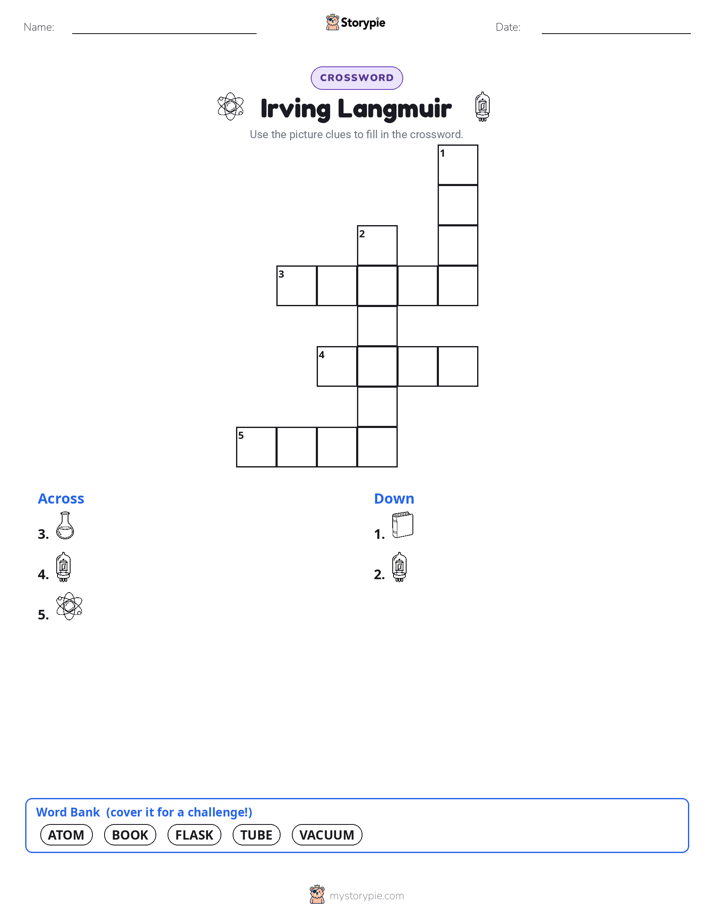
In 1909, I began my professional career at the General Electric research laboratory, a place filled with brilliant minds trying to solve big problems. The most pressing challenge at the time was the electric light bulb. Early light bulbs were not very practical because their filaments, the tiny wires that glow, would burn out very quickly. I spent years experimenting with different materials and designs to find a solution. Around 1913, I had a breakthrough. I discovered that by coiling the tungsten filament and, most importantly, filling the glass bulb with a non-reactive, or inert, gas, the filament would last much, much longer. This new design was not only more durable, but it also produced a brighter light. My invention completely changed how we light our world, making electric light more affordable and reliable for everyone. During my time at GE, I also worked on improving vacuum tubes, which were essential components that made modern radio technology possible.
Irving Langmuir: A Life of Light and Discovery
Hello, my name is Irving Langmuir. I was born in Brooklyn, New York, on January 31st, 1881. From my earliest days, I was filled with a deep curiosity about the world. I loved exploring the outdoors, especially climbing mountains, and my mind was always buzzing with questions about how things worked. I was lucky to have an older brother, Arthur, who was a chemist. He saw my fascination with science and encouraged it from a very young age. He would answer my questions and share his knowledge, which helped set me on a lifelong path of investigation and discovery. That early encouragement was like a spark, lighting the way for the scientific journey I was about to begin.
My formal journey into science began when I enrolled at Columbia University to study metallurgical engineering, which is the science of metals. I graduated in 1903 with a strong foundation, but I knew my education was far from over. My quest for knowledge took me all the way to Germany, a place buzzing with scientific excitement. There, I attended the University of Göttingen and had the incredible opportunity to study under the famous chemist Walther Nernst. In 1906, I proudly earned my Ph.D. It was a thrilling time to be a scientist. Discoveries in chemistry and physics were changing how we understood the universe, and I felt like I was standing at the very edge of a new frontier, ready to contribute my own ideas to this incredible era of innovation.
In 1909, I began my professional career at the General Electric research laboratory, a place filled with brilliant minds trying to solve big problems. The most pressing challenge at the time was the electric light bulb. Early light bulbs were not very practical because their filaments, the tiny wires that glow, would burn out very quickly. I spent years experimenting with different materials and designs to find a solution. Around 1913, I had a breakthrough. I discovered that by coiling the tungsten filament and, most importantly, filling the glass bulb with a non-reactive, or inert, gas, the filament would last much, much longer. This new design was not only more durable, but it also produced a brighter light. My invention completely changed how we light our world, making electric light more affordable and reliable for everyone. During my time at GE, I also worked on improving vacuum tubes, which were essential components that made modern radio technology possible.
While my work on the light bulb was very practical, my greatest passion was for more theoretical research. I became fascinated with a field that is now called 'surface chemistry.' In simple terms, I wanted to understand what happens at the very surface of materials, specifically how single layers of molecules arrange themselves and behave. This might sound small, but it holds the key to understanding many chemical reactions. In 1919, I published a paper that outlined my ideas about how electrons were arranged within atoms. This model helped other scientists finally understand how atoms bond together to form molecules, the building blocks of everything around us. Of all my contributions, I was most proud of this work because it helped build a fundamental understanding of the chemical world.
For my work in surface chemistry, I received the highest honor a scientist can achieve. In 1932, I was awarded the Nobel Prize in Chemistry. It was an incredible moment, and I was especially proud because I was the first industrial chemist—someone who works for a company rather than a university—to ever win this prestigious award. It showed that important scientific discoveries could happen anywhere. Science wasn't my only passion, though. I loved adventure and the natural world. I spent much of my free time hiking in the mountains, and I even learned to fly my own airplane, soaring through the skies. Later in my career, my curiosity turned toward the weather. I began studying how clouds form and even experimented with a process called 'cloud seeding,' where we tried to see if we could make it rain by introducing tiny particles into clouds.
I lived a long and fulfilling life dedicated to curiosity and discovery. I lived to be 76 years old, and when I look back, I see how a simple question about how something works can lead to incredible places. My work is remembered every time you flip a switch and a bright, long-lasting light bulb fills a room with light. It lives on in the foundations of modern electronics that power our radios and so many other devices. And it continues in the scientific field of surface chemistry, where researchers today are still exploring the tiny, amazing world of atoms and molecules that I found so fascinating.
Wow facts
About
Irving Langmuir was an American chemist and physicist who won the 1932 Nobel Prize in Chemistry for his work in surface chemistry. He made significant contributions to the development of the incandescent light bulb, inventing the gas-filled tungsten lamp.
Take a Quiz
Question 1 of 5
In your own words, retell the main events of Irving Langmuir's scientific career, from his work at General Electric to winning the Nobel Prize.
Explore next





Want to do even more?
Go beyond exploring. Unlock tools that turn every story into real learning.

Storypie Plus for families
Full stories, quizzes, and printables. Nights and car rides, sorted.
- Unlimited audio stories
- Create Mode: your child stars in the story
- Offline downloads
- Printable worksheets & coloring pages

Why Storypie for Schools
Students engaged. Prep in seconds. Evenings back to you.
- Worksheets & Quizzes
- Classroom Management
- Formative Assessment
- Custom Curriculum & Lesson Plans
- 27 Languages

Why Storypie for Homeschool
Curriculum done. They'll ask for more. Hours back in your day.
- Worksheet Generator
- First-Person Audio Stories
- Built-in Comprehension Quizzes
- Custom Curriculum & Lesson Plans
- Print & Go Activities