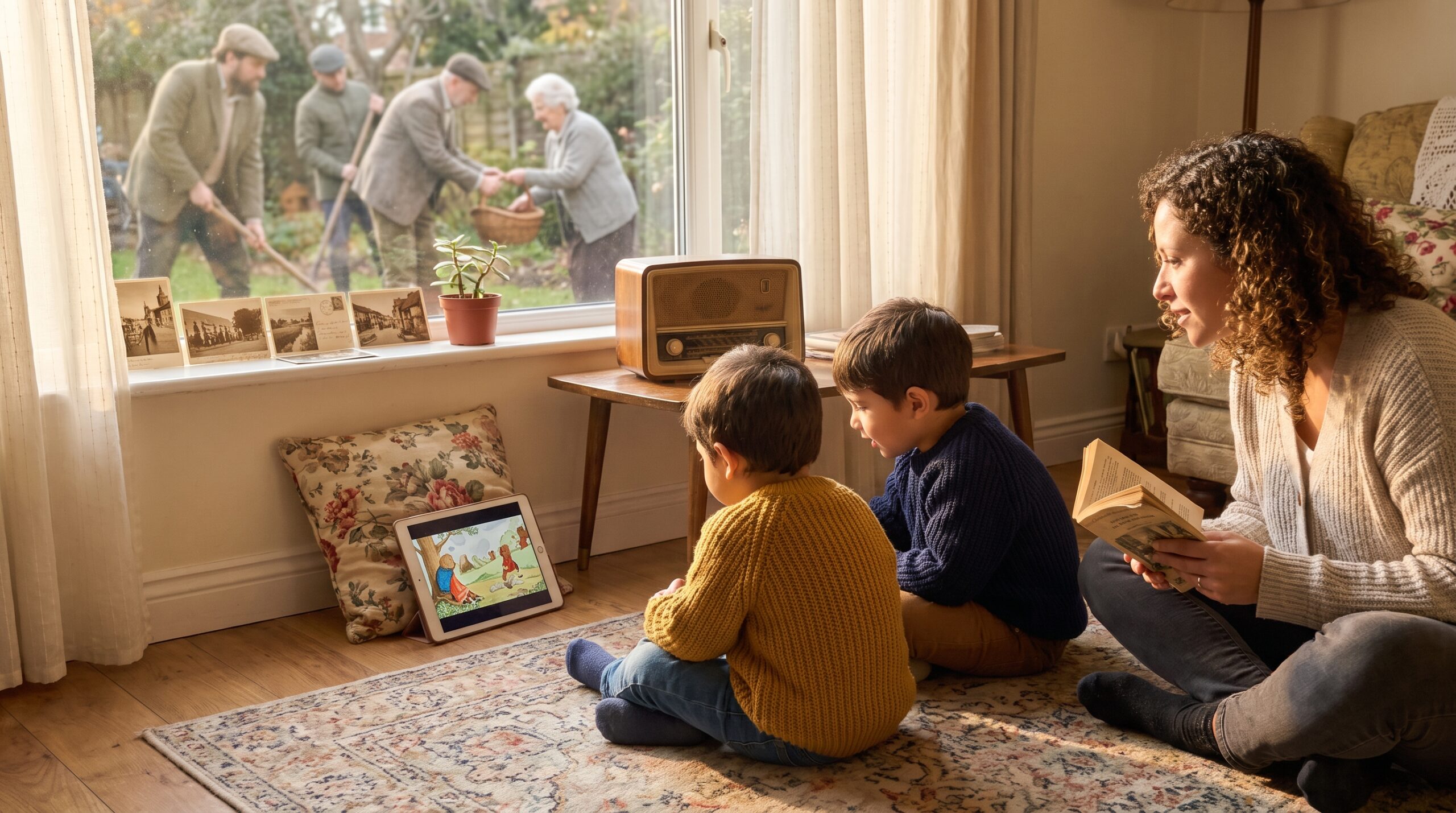
Great Depression for families is how I tell simple history at Storypie. I speak softly on an autumn morning. I tell a short tale about the Roaring Twenties and the stock market crash of 1929. Then I describe neighbors rebuilding hope. That quiet act sparked a big talk about generosity with my kids.
Great Depression for families: what to share tonight
The Great Depression started after the U.S. stock market crash in October 1929. Black Thursday and Black Tuesday marked the turning point when confidence slipped. Banks failed and many people lost jobs. Between 1929 and 1933, approximately one-third of all U.S. banks failed—about 11,000 out of some 25,000 banks—leading to a severe financial crisis. Unemployment rose from about 3 percent in 1929 to nearly 25 percent by 1933, leaving approximately 12.83 million Americans jobless. Real GDP fell about 29 percent, highlighting the economic contraction during this difficult time. Farms struggled and the Dust Bowl forced many families to move.
Causes and a simple timeline
Think of a town store where shoppers suddenly stop buying. With less demand, shops close and workers lose pay. That chain helps explain falling demand, bank runs, heavy household debt, and a global trade slump after tariffs like Smoot Hawley. The early 1930s were the hardest years. Then Franklin D. Roosevelt took office in 1933 and launched the New Deal. Recovery began in the mid and late 1930s. Later, World War II sped full recovery.
How families lived and helped
Life tightened for most people. Breadlines and soup kitchens grew common. People lived in makeshift shantytowns called Hoovervilles. Children often helped and school attendance sometimes fell. Families coped by bartering, sharing meals, and taking in boarders. Local churches and charities organized relief. Those neighborly acts kept communities going. I remember a neighbor who fed traveling workers for a week. That small kindness stuck with my children and became a family memory.
Government fixes that mattered
The New Deal created jobs and safety nets. Programs like the CCC and WPA put people to work on conservation and public projects. The TVA developed whole regions. Financial reforms like the FDIC and the SEC protected deposits and regulated markets. Social Security began pensions and unemployment help. These changes shaped later policy and made everyday life safer for many families.
Sharing the story tonight with kids
Keep sentences short and facts bright. Then tell a small story of resilience. Also, play a short audio clip or show a Dorothea Lange photo for context. Ask a simple question after listening. For example, ask which job in the story a child would try. Try a tiny activity like drawing a timeline or role-playing a family budget. Finally, celebrate the small sparks of hope you find together.
Read or listen to a story about The Great Depression now: Read or listen to a story about The Great Depression now: For 3-5 year olds, For 6-8 year olds, For 8-10 year olds, and For 10-12 year olds.
Visit Storypie for more cozy history moments and kid-friendly content.
After you listen, ask your child this warm question. Can you think of one way neighbors helped each other during the Great Depression? Then celebrate the tiny spark of hope you just lit. Share the story tonight.