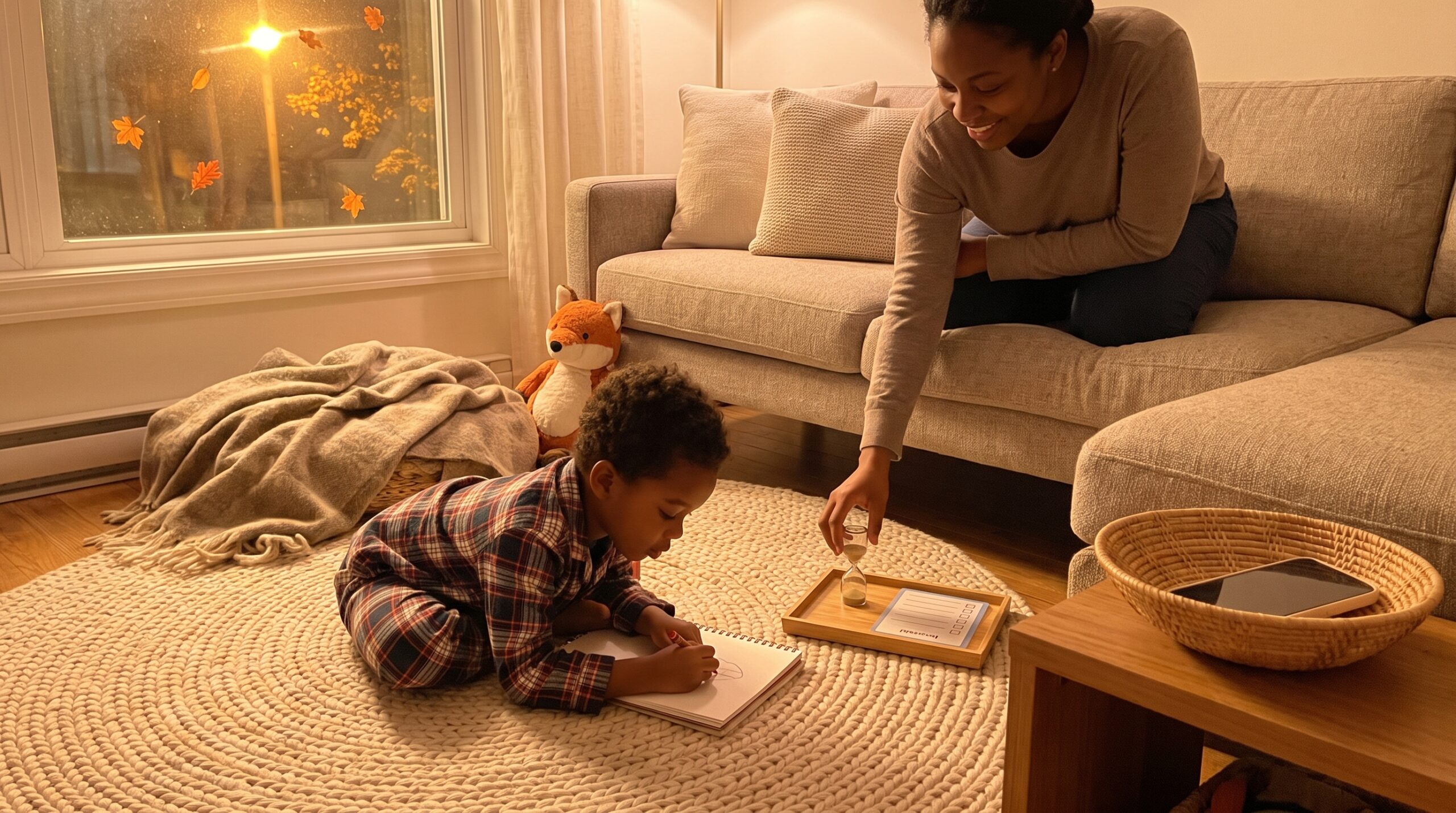
quiet time routine for kids brings a short, cozy pause to a busy day. A warm lamp. A child tucked under a blanket. A small book and a soft timer. Together they create a tiny superpower that helps children breathe and settle. Parents and teachers find it calming and reliable.
What quiet time routine for kids is and why it matters
Quiet Time is a short, predictable period for calm, mostly screen-free activities. For preschool and early school age children, a 10 to 15 minute session usually works well. Toddlers may start with shorter moments. Older children can stretch the time as they grow more independent. In fact, a 2023 controlled study found that children participating in a Quiet Time program showed fewer emotional and behavioral difficulties, highlighting the importance of quiet moments for emotional well-being.
Benefits you will notice
Try a few sessions and look for steady changes. You may spot these improvements.
- Emotional regulation: Quiet Time helps children learn to self-soothe. Over time, you will see fewer evening meltdowns.
- Attention and creativity: Low stimulation supports focus, problem solving, and imaginative play. Research shows that designated quiet periods can significantly enhance focus, as seen in various settings, including hospitals where quiet time reduced overall noise levels, fostering a more restful environment. A systematic review found that quiet time interventions in intensive care units led to a mean sound-level reduction of 11 dBA during the day.
- Sleep preparation: A calm pre-bed routine lowers arousal and eases the move to sleep. In neonatal intensive care units, infants exposed to quiet time experienced a quieter environment, with 30% fewer words spoken compared to non-quiet times, which can contribute to better sleep outcomes.
Simple setup that really works
First, create a cozy nook with soft lighting and a cushion or small chair. Next, add a small Quiet Time box with rotated materials. Use a visual timer or sand timer so the child sees progress. Keep screens off; audiobooks or gentle music work when used with intention.
Offer a short menu of activities. For example:
- A chunky crayon and paper
- A felt book or small puzzle
- A sensory bin with safe items
- A short guided breathing or listening moment
Read or listen to a story about Quiet Time now: For 3-5 year olds, For 6-8 year olds, For 8-10 year olds, and For 10-12 year olds. Also explore Storypie for more prompts and gentle audio.
Introducing the routine
Use a consistent cue like a special song or turning on a lamp. Start small. Try five minutes the first week and add one or two minutes each week. Model the habit with a family quiet moment. Praise attempts with a quiet high-five or a tiny sticker.
Troubleshooting and adaptations
If a child resists, offer two approved choices. For short attention spans, split Quiet Time into two brief windows. For sensory needs, add supports such as a weighted lap pad or calming headphones. Never use Quiet Time as a nap substitute for infants. Instead, supervise young children and avoid small loose parts.
Measuring success
Measure gentle wins. Look for easier transitions, fewer meltdowns, more independent play, and smoother bedtimes. Remember that small steady improvements are successes. Notably, studies conducted in various settings, including medical-surgical units, have shown that patients often report feeling more restful during quiet time, indicating its universal benefits. For instance, one study revealed that 70% of patients felt a one-hour quiet time intervention was effective for noise reduction.
Practical tips and seasonal touch
For cozy fall evenings, try warm lighting and autumnal books. Keep a dedicated timer and rotate Quiet Time items. Also use a short social story to explain the routine. Finally, adapt ideas to your child rather than forcing a single method.
Final thought
Quiet time routine for kids gives children a safe space to pause and practice calm. A tiny, calm routine can change how an evening feels. If you want tools and stories, visit Storypie to explore prompts, gentle audio, and story options that fit your family rhythm. Learn more at Read or listen to a story about Quiet Time now or get the app at Storypie.