
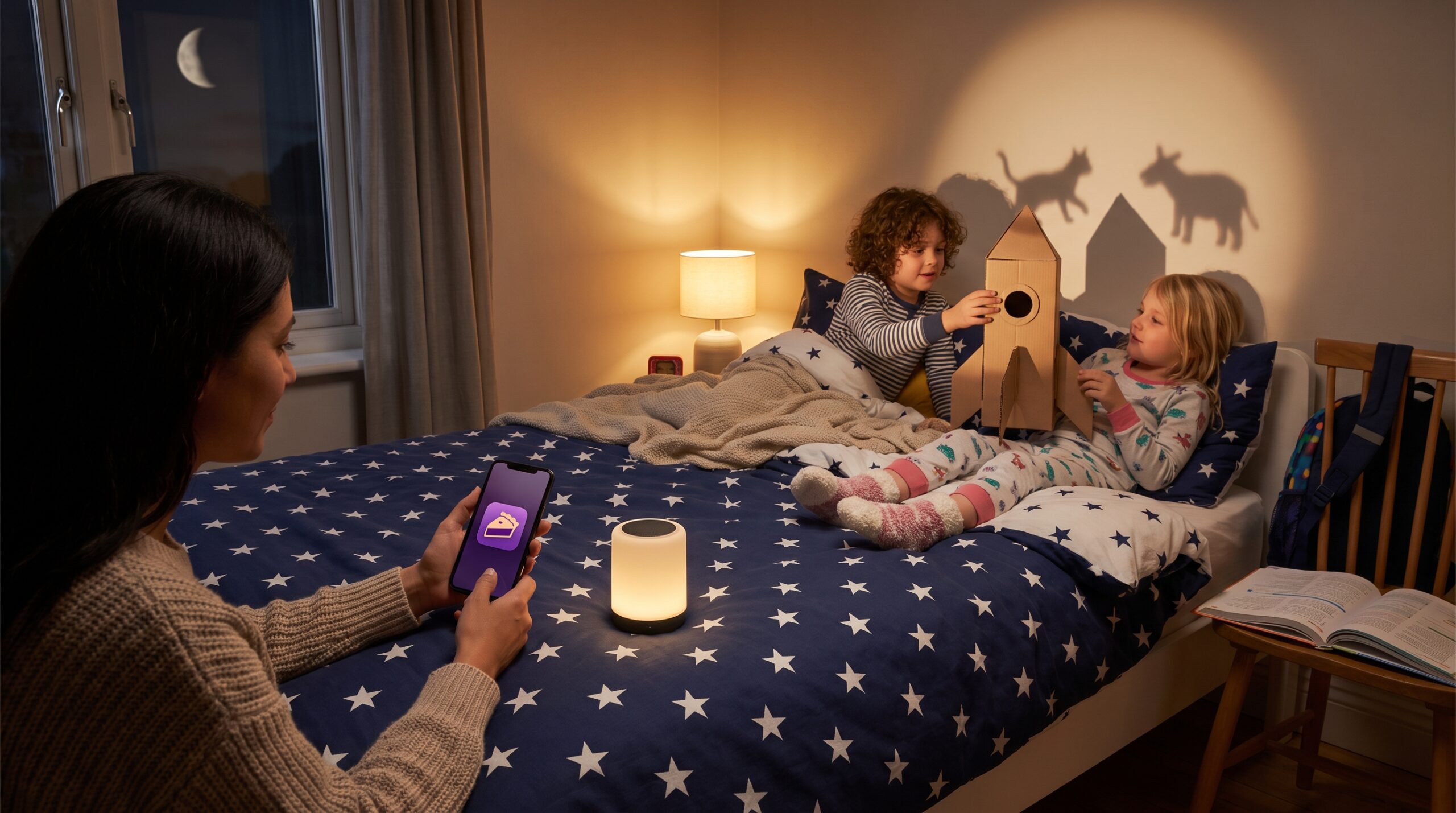
Audio-first storytelling gives children room to imagine. It reduces visual clutter and frees mental space so story and meaning take center stage. In short, audio-first storytelling helps a child build vivid scenes inside their head.
Why audio-first lowers cognitive load
Working memory is small. When screens, text and pictures compete for attention, children use too much mental energy. Audio relies on the phonological loop of working memory. Therefore spoken words hold the plot while the child quietly creates mental pictures. A 2024 study found that viewers reported significantly higher cognitive load when watching subtitled videos without sound, highlighting the cognitive load differences between audio and visual content.
Research linked to Baddeley shows that modality matters. For example, the modality effect says sound can avoid split attention. Also neuroimaging finds that listening to rich descriptions lights up visual brain regions. In other words, the brain paints pictures without pictures present. A 2006 study found that enhanced learning by imagining rather than studying was facilitated only when instructions were delivered via audio/visual modality, underscoring the benefits of audio for imagination.
How listening frees imagination
With no fixed image, imagination gets to run wild. A single line about a fox can become a full forest in a child’s mind. That open space invites personal detail and private magic. Over time, this builds attention, richer vocabulary, and stronger story sense. A theoretical neuroscience-based framework estimates that 70–83% of cortical resources are devoted to visual processing, suggesting that when visual input is absent, cognitive load may be substantially reduced. This is why an audio-first approach can be so effective.
Moreover, audio sparks creative play. After a short Storypie tale, a child might turn cushions into a pirate ship or draw a dragon in their own colors. Those moments show audio did more than entertain. It inspired. Research from 2023 indicates that auditory demands impact listening effort, reinforcing how audio processing requires significant cognitive resources, but also highlights its unique capacity to ignite imagination.
Storypie product design principles
Storypie treats audio as the main canvas. We follow clear, testable principles to keep stories calm and imaginative. Here are the facts we rely on:
- Age-fit length and language. Short and simple for preschoolers, longer arcs for school-age listeners.
- Calming tempos and warm voices to support bedtime routines and reduce arousal.
- Limited sonic layers so meaning stays clear and not crowded.
- Episodes sized for 10 to 20 minutes to respect attention and sleep routines.
- Built-in accessibility so children with visual or reading differences get the same rich story.
Everyday moments that matter
A tiny scene: soft light, a parent taps play, and ten minutes later the house is quiet. The child drifts to sleep with an image of purple balloons over a moonlit field. That is the most calming, imagination-sparking ten minutes you can give.
Try a short Storypie story before bed and notice the change. It calms the mind and often leads to playful scenes the next day. For more on our approach, see About Storypie audio design. If you want to try it, gently tap to get the Storypie app.
Why this matters for families
Audio-first is simple and generous. It removes barriers and welcomes different learners. It supports peaceful routines without screens. Above all, it encourages children to imagine, which is the soil of creativity. In fact, a 2024 report from Edison Research revealed that 47% of the U.S. population aged 12 and older had listened to a podcast in the past month, highlighting the growing popularity of audio formats.
Small rituals help. A soft light. A familiar voice. One short story. Design is not what it looks like; it is how easily a child returns to wonder.