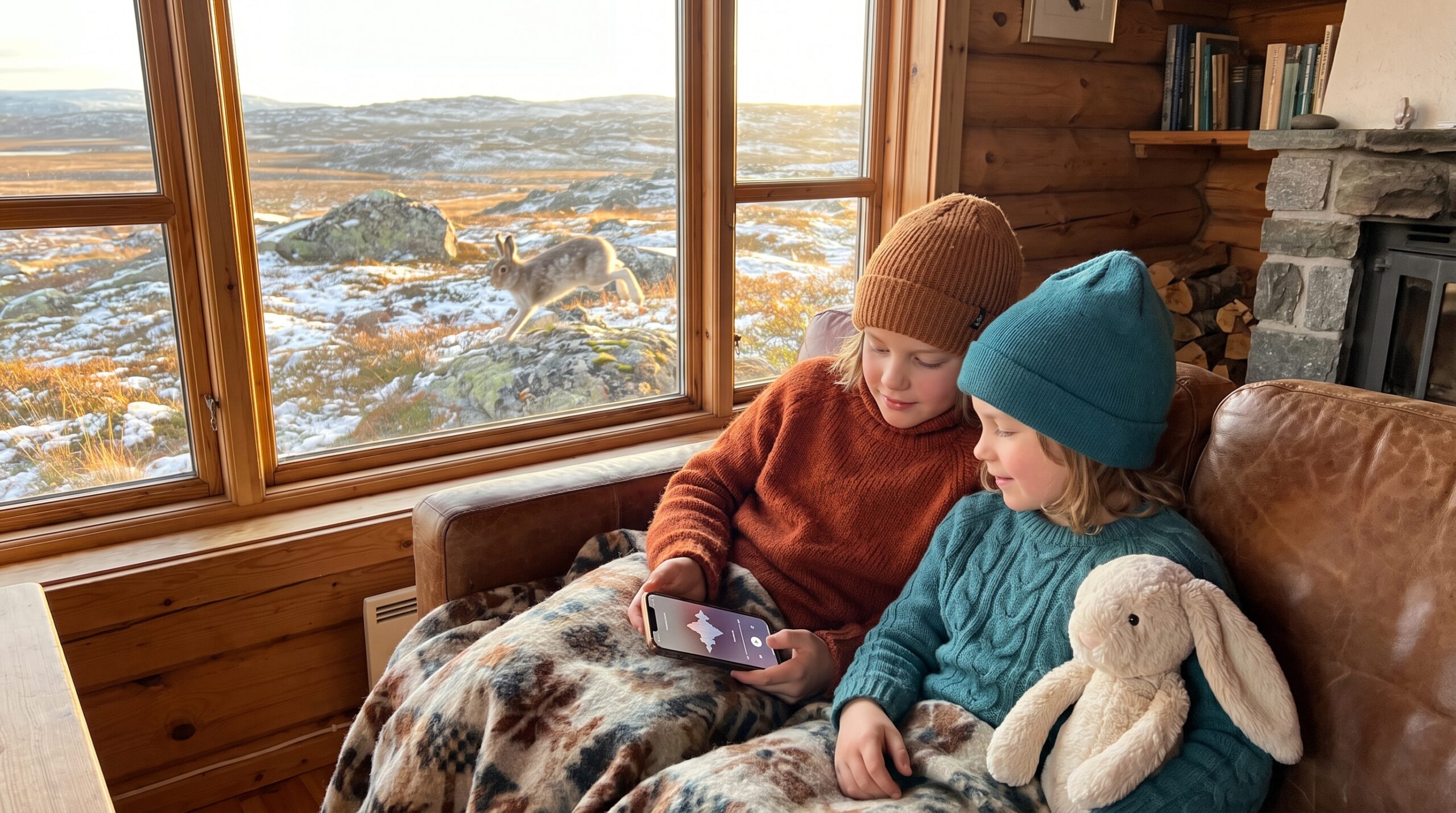
Arctic hare facts for families begin with a friendly, surprising animal. The Arctic hare, Lepus arcticus, lives in the high Arctic of North America and Greenland. Say the name aloud and picture a flurry of white fur melting into summer gray-brown. It is an excellent subject for quiet curiosity and family nature time.
Taxonomy and range of Arctic hare facts
The Arctic hare belongs to the order Lagomorpha and the family Leporidae. You will find it on tundra and rocky islands across northern Canada and Greenland. Sometimes it reaches the edges of Labrador. Arctic hares have been observed with summer home ranges averaging 10.4 km² in size based on telemetry studies. A simple map and a good photo help kids place this traveler on the planet.
What the Arctic hare looks like
Adults are large for hares. They measure about 45 to 70 cm long and often weigh between 2.5 and 5.5 kg (5 lb 8 oz to 12 lb 2 oz), with some exceptional individuals weighing up to 7 kg. Their ears are short compared with other hares. This helps reduce heat loss. Thick fur and a compact body add insulation. In addition, their heavily furred feet act like natural snowshoes. In summer the coat turns brownish gray for camouflage among rocks and plants. In winter they molt to a dense white coat to blend with snow. Molting follows daylight and temperature cues.
Clever cold-weather features
The Arctic hare survives where it is very cold because of layered fur and small ears. Also, furry soles help it walk on snow. They dig hollows in snow or shelter in rock crevices to escape wind. Their strong hind legs let them hop and sprint away from danger, reaching speeds of up to 60 kilometers per hour (37 miles per hour) in short bursts. Often they burst into surprisingly fast sprints.
Food and digestion
Arctic hares are herbivores. In summer they nibble grasses, leaves, herbs and berries. In winter they switch to woody foods like twigs, buds, lichens and mosses. They will dig through snow to reach food. Like other lagomorphs, they produce soft nutrient-rich droppings called cecotropes. Then they re-eat those droppings to absorb more nutrients.
Behavior and babies
Arctic hares are often solitary or live in small groups. However, they may gather in larger groups during severe weather. Breeding happens in spring and early summer. A study in Newfoundland found that the mean date of conception was April 19, with mean parturition occurring on June 8, and the mean litter size was 3.0 young per female per year. Young called leverets are born well furred with eyes open. They can move soon after birth, which is amazing to see.
Role, predators and conservation
Arctic hares are key prey for arctic foxes, wolves, snowy owls and large eagles. They help support the Arctic food web. They are listed as Least Concern overall. Yet local threats exist. Hunting, habitat change and climate-driven mismatches can harm populations. For example, shorter winters can leave white hares exposed on brown ground. Research shows that in southwestern Newfoundland, the adult Arctic hare exhibited an annual survival rate of 0.78 (78%), while the juvenile survival rate was only 0.15 (15%). Indigenous communities have long knowledge of hares for food and fur. Therefore cultural context matters when we discuss conservation.
How families can explore
Look for tracks in snow, droppings, or places where snow has been dug away. Observe from a distance. Do not feed or handle wild hares. Teach children to leave dens and nests alone. Simple family activities keep curiosity gentle and safe. For example:
- Compare photos of summer and winter coats.
- Make paper track rubbings after a snowy walk.
- Use a map to mark the hare range.
Quick glossary and tiny quiz
Glossary: leveret means young hare. Molting means shedding of fur. Tundra means treeless Arctic plain. Cecotrope means nutrient droppings that hares re-eat.
Tiny quiz: What do leverets look like at birth? Why do hares change color? Name one winter food.
Read or listen to a story about Arctic Hare now: Read or listen to a story about Arctic Hare now For 3-5 year olds, For 6-8 year olds, For 8-10 year olds, and For 10-12 year olds.
At Storypie, we love turning a small fact into a cozy conversation. A single image of a white hare in snow can start questions, stories and big wonder. Be curious, be gentle, and let the tundra teach.
Visit Storypie for more animal tales: Storypie.