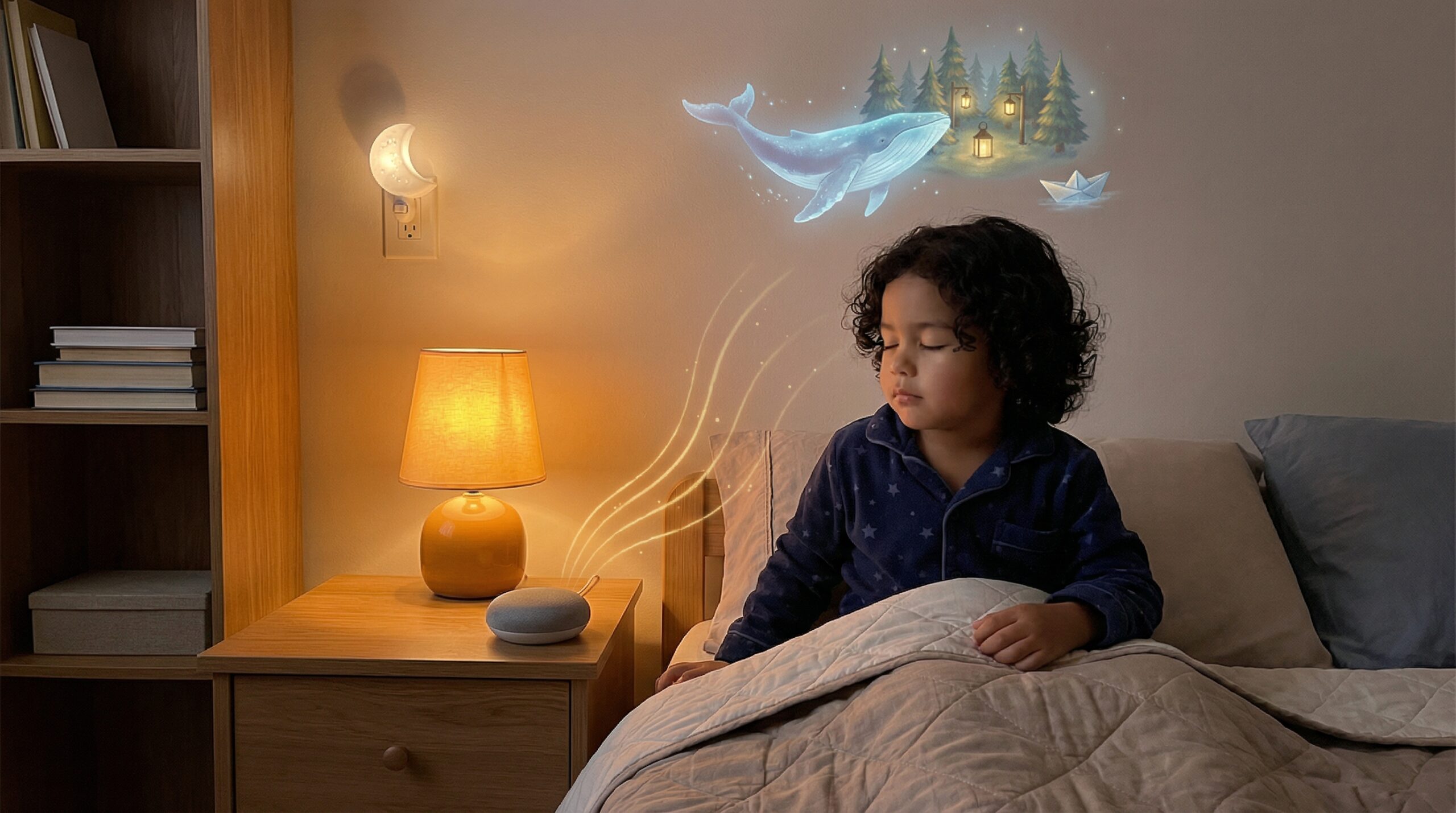
Audio first cognitive load imagination is a simple idea with big effects for children. When sound comes first, kids build rich mental pictures. That frees attention and sparks joyful thinking. In fact, a 2024 report from Edison Research revealed that 47% of the U.S. population aged 12 and older had listened to a podcast in the past month, highlighting the growing popularity of audio formats.
Audio first cognitive load imagination and visual demand
Audio reduces visual processing. Working memory has limited space. Removing a visual channel lowers extra demands. As a result, children keep more mental room for scenes and characters. According to a 2024 mixed-methods study, viewers reported significantly higher cognitive load when sound was turned off while watching subtitled videos, with mean Effort scores of 3.07 (sound ON) vs. 4.84 (sound OFF) on a 1–7 scale (p < .001). This highlights the critical role of audio in reducing cognitive load, supporting the 'audio first' approach.
In short, less to look at means more to imagine. The listening child becomes an active creator. That active work strengthens memory and understanding.
Brain science and long human habits
Neuroscience finds listening engages language areas and visual parts of the brain. In other words, audio can call up vivid images. Oral storytelling, radio plays, and audiobooks show this across history. Also, Dual Coding theory explains why words plus mental images pair well. When children hear a phrase, they form an internal picture. This pairing boosts recall.
Research shows that cognitive load can impair brain functioning during auditory and linguistic stimuli processing, further emphasizing the importance of managing cognitive load to enhance engagement with audio content. A 2024 study demonstrated this effect.
Developmental strengths of audio-first
Audio supports early language growth. Repeated listening helps vocabulary and phonological awareness. It also helps children learn sentence patterns and hold story sequences.
Moreover, calm audio sessions suit preschool and early school ages. Short, soothing stories promote steady attention without visual clutter.
Practical traits: portability and inclusion
Audio-first formats work across many settings. They travel well and fit low light. They also support visually impaired children and family routines.
For bilingual homes, audio provides clear listening practice. For children who need slow sensory input, gentle narration lowers distraction and supports focus.
Notes and cautions
Not every child prefers audio. Some learners do best with visual supports. Also, keep content age appropriate and volume gentle. Avoid noisy or very fast tracks at bedtime.
Finally, balance matters. Audio-first is powerful, but it complements other learning modes. When used thoughtfully, it gives children room to rehearse words and picture actions in their heads. Interestingly, research from 2024 found that increased cognitive demands significantly affected the perception of auditory illusions, suggesting that cognitive load can alter auditory experiences, reinforcing the need for audio-first strategies in learning.
Storypie brings audio-first ideas to life with narration, character voices, and friendly prompts. Learn more at Storypie app or visit the Storypie home for examples.