Asking for help habit starts at home
The asking for help habit begins with simple modeling. I say out loud when I need help. Then my kids copy me. That small habit changed our evenings. It really stuck when I named it aloud. Interestingly, a 2022 study found that people tend to underestimate others’ willingness to help by nearly 50%, predicting only 48% of people will say yes to their requests, while the actual rate is 84%. This misconception can often prevent individuals from reaching out for support.
Why I care about the asking for help habit
I learned this the easy way and the hard way. When I model help-seeking, my kids try it. When I name a problem and say who I will ask, they learn the script. It is small but mighty. Asking for help is a strength, not a weakness. Big wins happen when we normalize it. However, it’s important to recognize that 41% of U.S. adults say they are often uncomfortable asking others for help, which highlights the barriers many face.
A real-life bedtime example
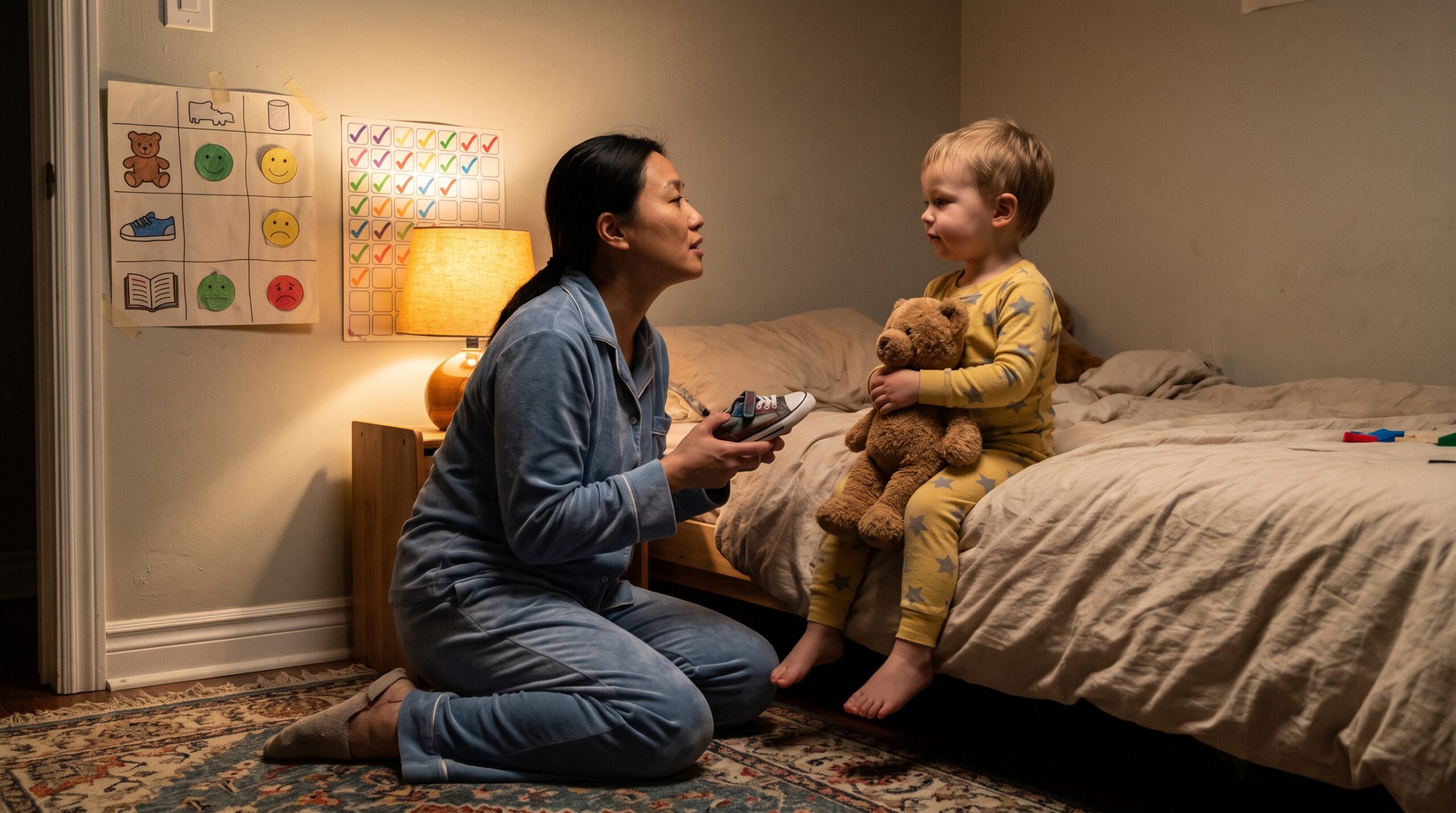
Tonight I said: I burnt the toast. I will ask Dad to help me fix the toaster settings. Then I asked: Who would you ask if you could not fix it? My child tried the phrase and sometimes giggled. Try this tonight. Praise the attempt. That praise trains the muscle.
Simple scripts you can teach
I keep three short lines in my pocket. They are quick, useful, and friendly. Use them aloud and often.
- I don’t understand this. Can you help me?
- I’m stuck and I’d like help with…
- I feel worried. Can we talk?
We practice with role-play. One parent plays the helper. One plays the busy grown up. Short rehearsals remove fear and make asking easier.
Age-aware tips for asking for help habit
I match expectations to age. Toddlers get adults who name feelings and offer choices. Preschoolers learn one or two sentence requests. School-age kids try first, then ask with a brief script. Teens get privacy plus clear rules for emergency help. Also, explain the difference between emotional support, practical help, safety help, and informational help. Make a short list of trusted helpers: parent, teacher, school nurse, family friend. Say when each is appropriate.
Normalize barriers and praise bravery
Kids worry they will be judged or that they are a bother. I say that out loud. I validate the worry, then offer solutions. I praise the asking itself: You were brave to ask. That praise builds resilience and a growth mindset. In fact, among U.S. adults who experienced a mental health crisis, 72.6% reported reaching out for help, with 53.2% contacting a doctor, therapist, or counselor, reinforcing the importance of seeking help.
Safety and boundaries
I teach urgent steps too. Teach your child how to tell an adult if they feel unsafe. Also teach how to respect others’ boundaries when asking for help. Make emergency steps clear and simple.
Practice moments and tiny experiments
Use homework time, play, and bedtime to rehearse. Short role-plays, scripts, and gentle prompts make asking repeatable. It is practice plus praise that turns modeling into habit. Try a tiny experiment tonight. Model one asking phrase. Praise the attempt. See if your child tries it tomorrow. Small steps, big courage.
Read or listen to a story about Asking For Help now: For 3-5 year olds, For 6-8 year olds, For 8-10 year olds, and For 10-12 year olds.
If you want ready prompts and bedtime routines, visit Storypie for gentle nudges and stories. Small steps build lasting courage. Moreover, a 2022 survey revealed that 67% of mothers feel stressed at least five days a week, but 67% also feel like a burden when reaching out to family for help. This illustrates the emotional barriers many face when seeking help, especially among parents.