
Education through storytelling ages 3-12 draws children in with short, irresistible tales. A talking squirrel or a spaghetti eating dragon sparks curiosity. Also, that simple pull becomes a powerful learning tool. In fact, a 2023 study found that children who learned through storytelling retained 70% of the information, compared to just 10% retention when taught via traditional methods.
Education through storytelling ages 3-12: What it means
At its heart, education through storytelling uses characters, events, cause and effect, and feeling to carry facts and values. Stories wrap ideas in a scene, a problem, and a solution. As a result, children get clues about why things happen and how to remember them. A 2025 meta-analysis of 40 U.S.-based studies on narrative interventions for preschool and elementary-aged children found that group-design studies produced moderate effect sizes for both narrative production and comprehension, reinforcing the effectiveness of storytelling as an educational tool.
Why stories stick
Two big reasons explain why narrative lodges in a child s mind. First, stories connect facts to emotion. Emotion lights up memory networks. Second, narrative shows causal links. When kids see why something happened, they organize and retrieve information more easily. For example, studies show better recall when facts live inside a story than when they appear as disconnected statements. A systematic review with meta-analyses published in October 2021 found effect sizes of d = 0.51 for narrative production and d = 0.54 for narrative comprehension in group-design studies aimed at improving narrative language in preschool and elementary-age children.
Developmental fit by age band
Stories fit growing brains in different ways. For preschoolers ages 3 to 5, short concrete tales with strong feelings help pick up new words. Their attention windows are short, so brevity wins. Early primary children ages 6 to 8 start to draw inferences and follow longer sequences. They benefit from repeated story patterns and clear cause and effect. Older primary children ages 9 to 12 can follow multi strand plots and handle abstract themes. They practice moral reasoning and connect facts to bigger ideas. Interestingly, a 2021 study found that storytelling increases literacy rates by 28% in primary school students, highlighting its importance in early education.
Language, memory, and social learning
Shared book reading and storytelling boost vocabulary and listening skills. They also strengthen episodic memory and causal reasoning. Following a character s choices builds theory of mind and empathy. In short, stories teach words and how to be human. Moreover, a 2021 study found that students taught with storytelling scored 33% higher in science tests compared to those taught through lectures, demonstrating the tangible academic benefits of storytelling in specific subjects.
Formats and modern reach
Oral tales, picture books, read alouds, audiobooks, and digital story apps all carry narrative benefits. Digital formats offer repeated listening. As a result, kids pick up incidental vocabulary through repetition. However, adult mediation still matters. A warm read aloud and a short chat after a tale multiply the learning effect.
Quick morning vignette
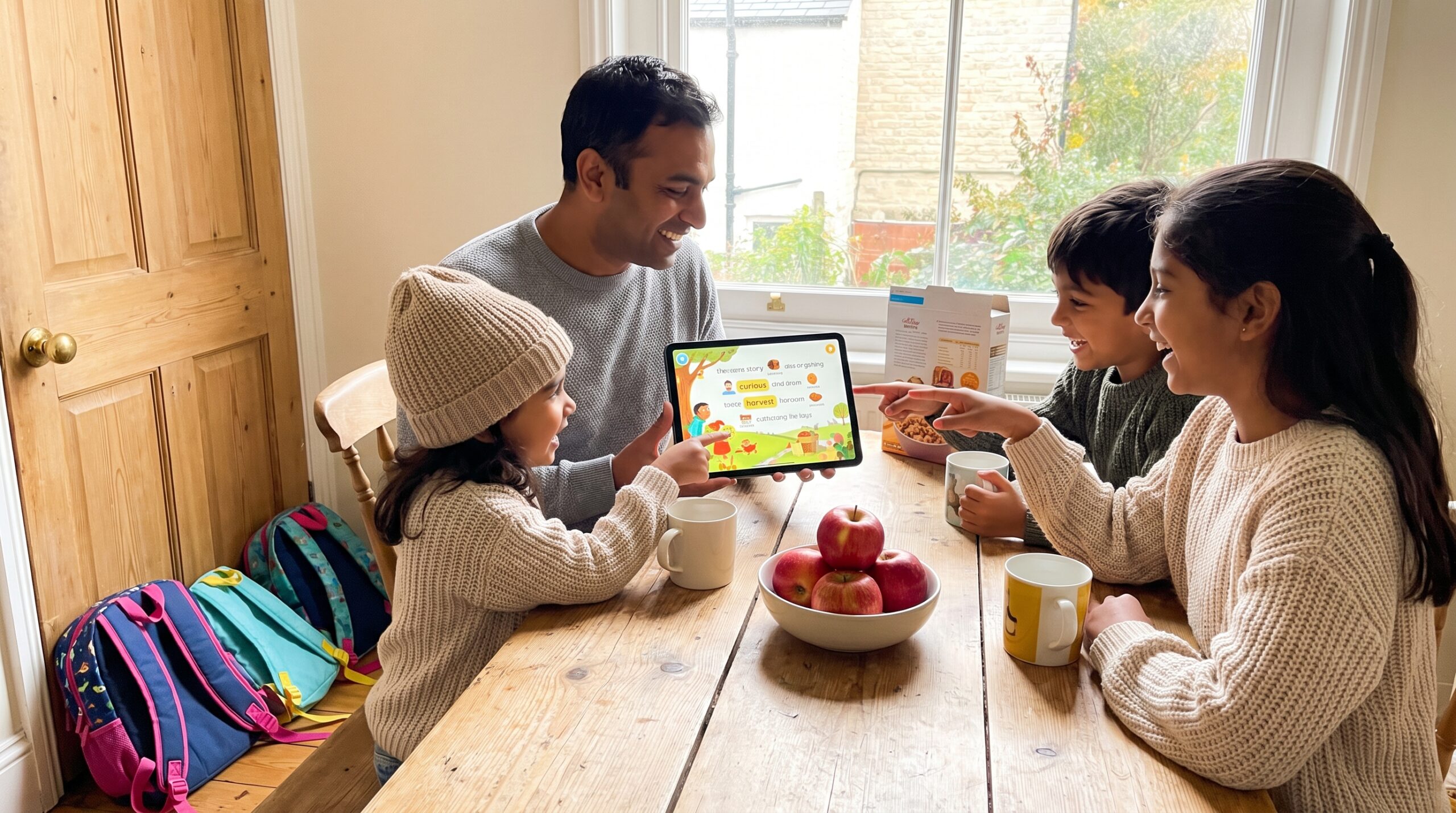
On crisp September mornings, try a 10-minute Storypie tale during breakfast. Watch new words stick like jam on toast. Also, a tiny routine builds vocabulary and signals a predictable learning moment. For prompts, audio, and charming characters, try the Storypie app.
Practical notes and limits
Stories are powerful, but not a cure all. They work best alongside hands on play and clear instruction. Equity matters too. Access to quality stories, cultural relevance, language support, and adaptations for children with special needs deserve attention.
Final thought
Narrative is an ancient and science backed way to teach. For ages 3 to 12, stories link facts to feelings and to reasons. Invite short, lively tales often and watch children remember, reason, and care a whole lot more.