Circle-time listening center use cases give teachers small, high-impact ways to boost vocabulary and oral language. These cozy corners invite children to settle and listen, while educators gather observation data. In fact, according to a U.S. national Qualtrics survey of 276 preschool Montessori teachers across all 50 states, 92% reported having circle time every day or most days, with most sessions lasting 20 minutes or less.
What is a circle-time listening center
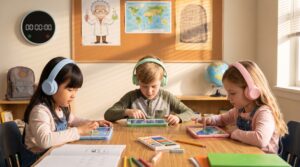
A circle-time listening center pairs audio with a print or picture book. Children sit with child-size headphones and listen. Often teachers use tablets or simple audio players. Also, centers make whole-group lessons feel more hands on.
circle-time listening center use cases in practice
Teachers use listening centers in several easy ways. First, use whole-group modeling to preview listening strategies and new words. Next, run small-group rotations so one adult leads discussions and another manages the center. Finally, allow independent center time for repeated listening and picture prompts. Understanding engagement during these sessions is crucial; a study of 22 preschool classrooms found that child engagement during circle time began at an average of 84% one minute into the session, dropping to 77% halfway through, and reaching 72% one minute before the end, with an overall average engagement of 78% according to The Elementary School Journal.
Simple setup that works
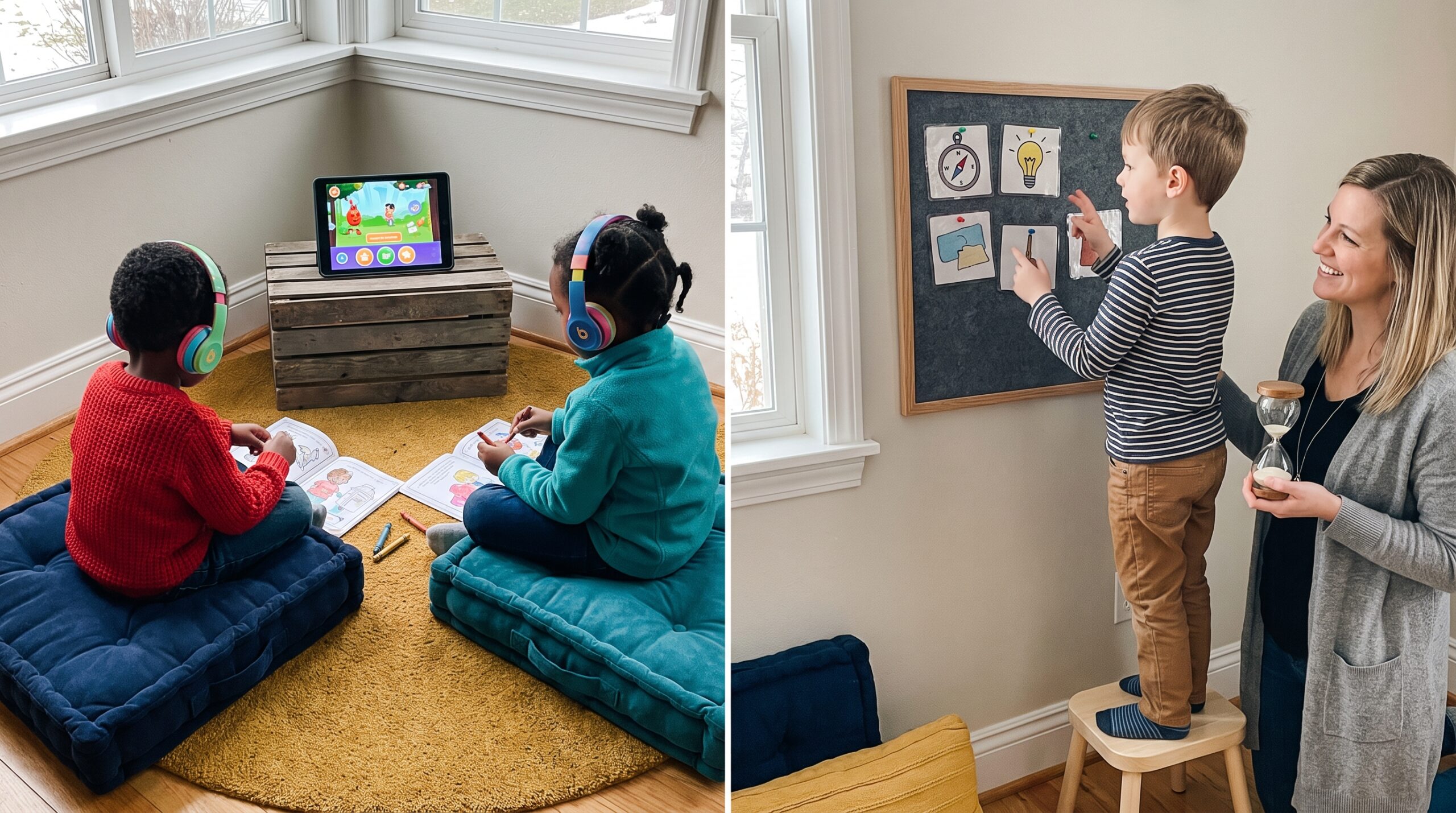
Keep the space child-sized and simple. You need an audio source, volume-limited headphones, a paired book, and comfy seating. Also add clear labels and a visible timer to speed transitions. Practical extras include sanitizer wipes, chargers, and a storage bin for headphone sets.
Quick supply checklist
- Tablet or dedicated audio player
- Child-safe headphones with volume limit
- Paired books or printable cards
- Timer, labels, and a storage bin
Educator use cases
Use centers to teach listening strategies and vocabulary. For example, teachers preview vocabulary during whole-group time. Then children rotate to the center to hear the book again. Also, centers help differentiate learning with leveled audio or bilingual tracks. A 2024 randomized listening-comprehension intervention found that children who received embodied or simulation listening training showed significantly higher listening-comprehension performance than controls, highlighting the effectiveness of targeted listening interventions relevant for enhancing circle-time activities from Storypie.
Assessment and documentation
Listening centers double as observation labs. Use short retells or a one to three minute story-share to document vocabulary and sequencing. Keep a quick checklist for stamina, comprehension strategies, and expressive language. Rotate who shares so assessment feels natural. In some urban, high-poverty school districts, child engagement has dropped to low levels in about 40% of classrooms during circle time, suggesting a need for strategies to improve participation according to The Elementary School Journal.
Accessibility and inclusion
Choose audio with transcripts or captions when possible. Pair tactile books and picture supports for multisensory access. Also, use volume-limited headphones and confirm compatibility with assistive devices. Small adaptations create big differences for diverse learners.
Health, safety, and privacy
Wipe headphones between users or offer individual sets. Store cords to avoid tangles and keep devices charged. Finally, verify licensing for classroom audio and review app privacy details to stay compliant with laws such as COPPA.
Practical classroom scenarios
Try a 20 to 30 minute circle-time block with three short rotations. Start with teacher modeling, move to the listening center, and finish with a quick vocabulary activity. A study found that circle time lasted an average of 21 minutes and 20 seconds, with only three sessions exceeding 30 minutes and three lasting fewer than 15 minutes, providing insight into effective session planning from The Elementary School Journal. Visual timers and rotation charts keep the flow smooth and joyful.
Home adaptation and gentle next steps
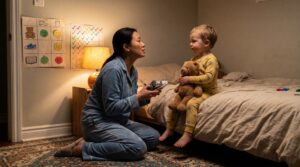
Encourage families to build a small listening nook with a tablet, cushion, and paired book. Suggest a ten-minute story-share at dinner to transfer classroom gains to home. Also, invite parents to explore curated audio options through Storypie for easy setup.
Circle-time listening center use cases are low tech and very high impact. Try one rotation this week and watch oral language bloom.
Learn more about curated audio and paired materials on Storypie: Storypie app.