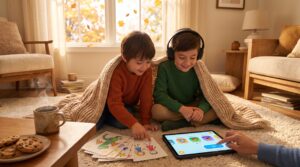
Audio-first storytelling and cognitive load changes how children meet stories. Spoken word leads. Voices, pauses, and sound build a stage instead of a picture. That simple swap matters. It lowers visual clutter and gives children more brainpower back. In fact, a 2024 study found that viewers reported significantly higher cognitive load when sound was turned off while watching subtitled videos, illustrating the direct impact of audio on cognitive load.
Why audio-first storytelling and cognitive load matter
Working memory is small. Cognitive load theory explains this plainly. When a child sees many visual details, the brain must juggle images and words at once. Audio-first removes that competition. Therefore the auditory channel can carry language while the mind paints images. In fact, listeners often form richer scenes when words drive the picture. The Cognitive Theory of Multimedia Learning emphasizes the importance of managing cognitive load when combining audio and visual content, reinforcing the article’s focus on cognitive efficiency. Additionally, a recent systematic review found that visual working memory capacity is tightly limited—roughly 3–4 items—supporting the benefits of audio-first strategies in reducing cognitive overload.
How the brain responds
Listening lights language networks and visual imagery centers. Neuroimaging finds vivid narration activates areas used for seeing. So children make their own pictures even with eyes closed. That practice strengthens creativity and memory for plot. In addition, it helps children follow sequence and cause. Experimental evidence shows that listening can drive stronger physiological engagement tied to mental imagery. A 2025 Psychophysiology study found that participants showed a significant heart-rate increase when listening to audio compared to video, suggesting that audio narratives evoke additional imagery-related cognitive and emotional effort in listeners.
Learning, attention, and language
Audio-first supports vocabulary, grammar, and phonological awareness. Hearing expressive sentences helps kids map sounds to meaning. Over time, that scaffolds decoding and later reading. Also, focused listening trains sustained attention. A short story asks for sequential memory. As a result, executive function grows quietly with each listen.
Social life, routines, and calm
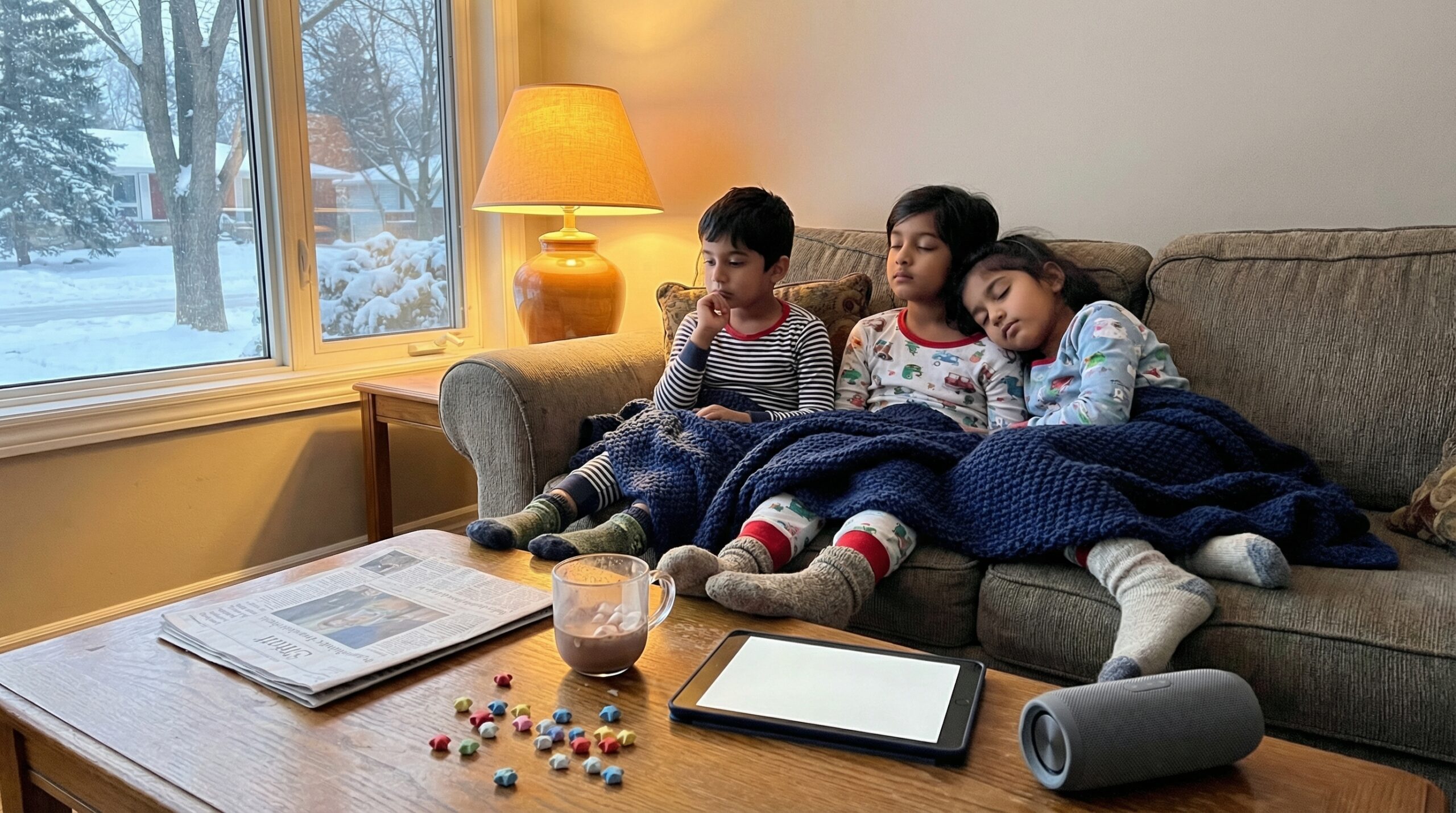
Co-listening is simple and powerful. When a parent and child listen together, they build joint attention. Pause, ask one gentle question, and let the mind turn the page. Nighttime listening lowers arousal better than screen light. Thus it makes a calming ritual: dim the lamp, press play, breathe out. A little wonder returns when ears lead the way.
Accessibility and balance
Audio-first is inclusive. Children with low vision or dyslexia access the same tales as their peers. However, audio is a tool not a rule. Some learners need pictures for new concepts. So use images as scaffolds when needed. Keep sessions short for little ones. Five to fifteen minutes works depending on age.
Practical checklist
- Try a 10-minute ritual. Dim lights, sit close, and listen together.
- Keep volume safe. Prefer a speaker or low-volume over-ear set for toddlers.
- Co-listen when possible. Ask one simple question after the story.
- Balance modes. Add a picture or short summary for new words.
Tip: start small and watch private pictures appear. Storypie supports persistent audio playback so stories follow you through the app. Try a short Storypie story tonight to see the change.
Practical, calming, and surprisingly spacious, audio-first storytelling hands the stage to the child. Less to look at means more to imagine. It is simple design for the mind.
Explore Storypie stories to try this at home: Explore short Storypie stories. Learn more about Storypie features here: Storypie home.