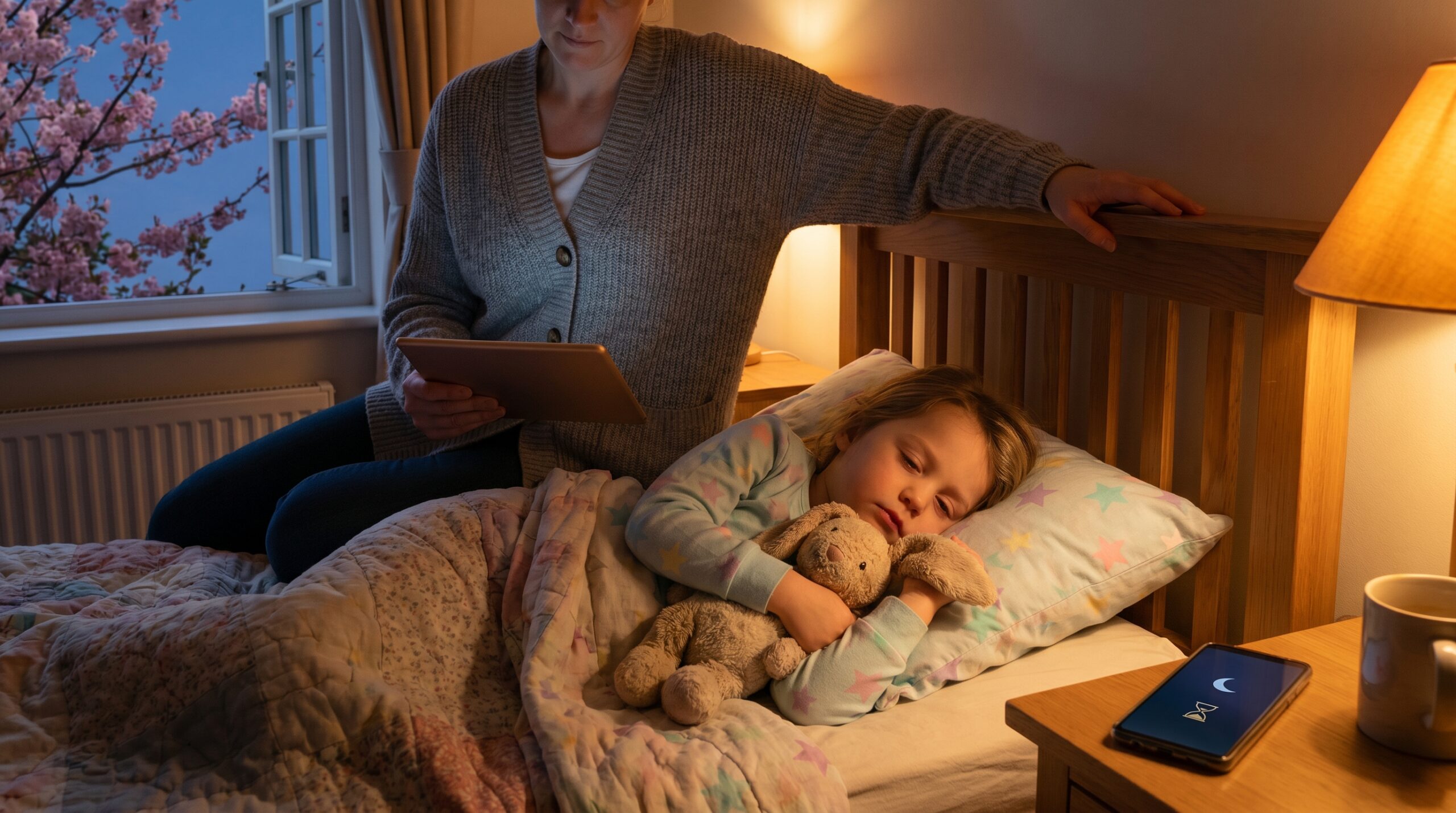
At Storypie, the bedtime mini story ritual helps busy minds unwind in five minutes. I build products and tell bedtime stories for a living. A tiny ritual can change an evening. On spring nights, a short, predictable tale signals that sleep is next. The child hears the same rhythm and learns the cue. That little sigh is pure magic.
What is a bedtime mini story ritual and why it helps
A bedtime mini story ritual is a short, repeatable activity. Typically it lasts three to ten minutes. Also, it sits about ten to thirty minutes before lights-out. I keep it to five minutes most nights. In fact, in 2024, about 85.6% of U.S. children ages 2–17 had a regular bedtime “most days or every day,” underscoring the importance of establishing bedtime routines, which can include mini story rituals.
Predictability matters. Low lights, a quiet voice, and calm content reduce arousal and cue the brain toward sleep. Studies show consistent bedtime routines help children fall asleep faster, sleep longer, and wake less at night. A 2023 systematic review found that greater consistency in bedtime routines predicted better sleep outcomes, with bedtime-routine consistency at 18 months associated with increased sleep duration at 24 months (r = 0.19, p < 0.001). In addition, reading aloud builds vocabulary and early literacy. Tiny ritual, big payoff.
Step-by-step bedtime mini story ritual
- First, ten minutes before lights-out: bath or teeth.
- Next, dim the lamp or switch to a bedside night light.
- Then, settle into the same spot. I use the same chair every night.
- Read or play a short calming tale. For toddlers, use three to five sentences. For preschoolers, use five to ten. For early school-age, try a short chapter or calm audio.
- Finally, end with a one-line goodnight cue like, “Sleep well, see you in the morning.” Then lights out.
A simple real moment
One spring night I had a preschool meltdown in play clothes. I dimmed the light and read two soft lines about a sleepy fox. After the cue, my child exhaled and tucked the blanket. I tried it again the next week and got the same magic. That tiny habit really works.
Age adaptations that work
- Infants (0 to 12 months): very brief rhymes or a quiet lullaby. One or two repeated lines.
- Toddlers (1 to 3 years): three to five minutes. Use familiar characters and repetition.
- Preschoolers (3 to 5 years): five to ten minutes. Choose picture-book rhythm and calm plots.
- Early school-age (6 to 8 years): a short chapter or calm audio episode. Avoid action-packed scenes.
Quick checklist
- Predictable time and place.
- Dim lights, low volume.
- Calm content, low action.
- Repeatable cue line to end.
- Use audio-only if you need to leave the room.
Tech tips and safety
Avoid bright screens before bed. If you use an app, set night mode and an auto-off timer. Also, use audio-only playback when possible. Keep volume low and notifications off. If a story seems to spark energy instead of calm, shorten it.
Connection, culture, and a gentle invite
Storytelling is an ancient ritual. When I read, I am sharing a quiet moment, not lecturing. That closeness lowers bedtime anxiety and strengthens attachment. Over many small evenings, language grows and relationships deepen. A 2023 report found that 58.1% of parents nationally say they sing songs or tell stories to their infants/toddlers every day, illustrating the prevalence of storytelling as a common practice among parents.
If you want a ready-made five-minute calm tale, try our Storypie short calm tales. Visit our app page to find gentler nights: Storypie short calm tales. Also, explore other calming collections in the app for more mini story rituals. Notably, a 2025 survey indicated that 90% of parents of 1–6-year-olds reported having a bedtime routine for their child, with 67% including reading bedtime stories, emphasizing how widely accepted bedtime stories are as part of children’s bedtime rituals, validating their importance.