
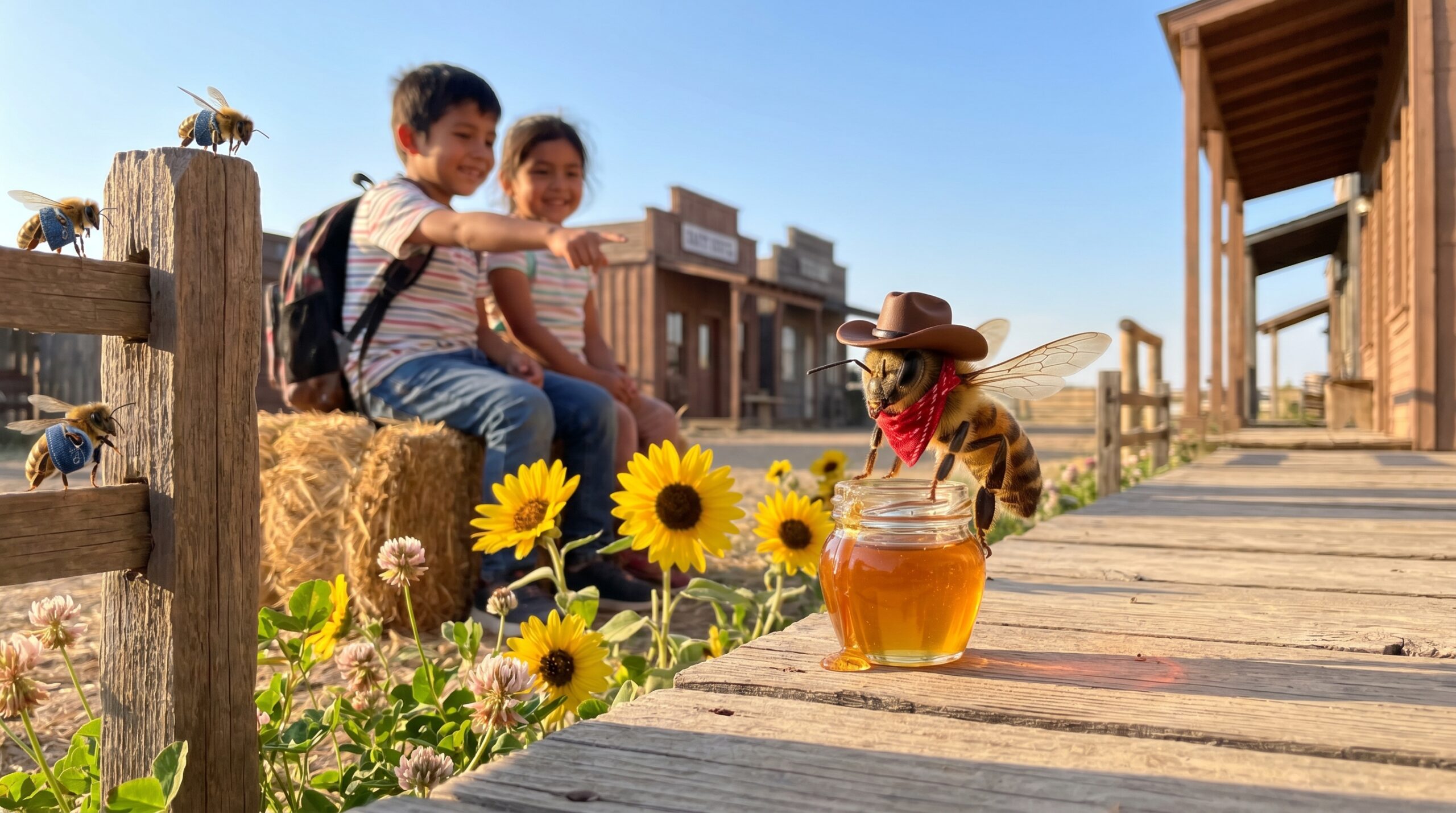
The western honey bee for kids introduces Apis mellifera in a warm, simple way. These bees built much of our food system and brighten backyard flowers. Colonies hold 20,000 to 60,000 bees at peak season. People moved them from Africa and Europe long ago, so they live almost everywhere people plant fruit and flowers. As of January 1, 2024, the United States had 2.71 million honey bee colonies managed by operations with five or more colonies, a 1% decrease from the previous year.
Who is the Western Honey Bee?
The western honey bee is Apis mellifera. She looks fluffy and moves with purpose. Each colony centers on one queen who lays eggs. Workers are sterile females. They forage, care for brood, build comb, guard, and clean. Drones are males. Their job is to mate with new queens.
Development and seasons
Worker bees develop in about 21 days from egg to adult. Queens grow faster, about 16 days. Drones take around 24 days. In spring the colony grows fast and may swarm. Swarming is how a new colony forms. Summer brings peak foraging and honey making.
Daily life inside the hive
Hive life stays tidy and organized. Foragers collect nectar and pollen for food. Nurse bees feed larvae and care for the brood. Some bees fan to cool the nest. Others shiver to warm it. Therefore the colony keeps a steady temperature and protects its young.
How bees talk
Bees use the waggle dance to share directions. A forager returns to the comb and waggles toward the sun. The dance direction points to the flower patch. The waggle length tells distance. Young children love to mimic this dance, and it sparks curiosity about nature.
What bees make and use
Bees transform nectar into honey. They add enzymes and dry nectar until the water falls below 18 percent. Workers secrete wax to build comb. Propolis is a sticky resin. The colony uses it like glue and medicine. These materials keep the hive safe and food secure. In 2024, the United States produced 134 million pounds of honey, a 4% decrease from 2023, with an average yield of 51.7 pounds per colony.
Threats and human care
Threats to western honey bees are real and many. Varroa mites, viruses, bacterial infections, pesticides, and habitat loss all stress colonies. In fact, Varroa mites were identified as the primary stressor for honey bee colonies in the U.S. during all quarters of 2023, affecting up to 52% of colonies in the April–June period. Beekeepers check hives seasonally and treat pests when needed. They also feed colonies in lean times. Common hive types include Langstroth, National, and top bar designs. Alarmingly, between April 2024 and April 2025, U.S. beekeepers experienced a record-high loss of 55.6% of managed honey bee colonies, marking the second consecutive year of increased losses.
Safety and family activities
Teach calm around bees. If a bee lands, stay still and let her go. Cover sweet foods outdoors and avoid bright floral clothing near hives. If anyone is allergic, keep away and carry medical advice.
Try two simple garden steps together:
- Plant a tiny pollinator patch with lavender, marigold, and borage.
- Make a shallow water dish with stones for landing. Then watch from a respectful distance.
Kid-friendly tray test
Place two small bowls of sugar water three metres apart. Count which flowers visiting bees prefer over ten minutes. Record results. Ask which colour or scent won. The experiment builds observation skills and wonder.
Quick glossary for kids
- Hive: bee home.
- Queen: egg layer.
- Worker: helper.
- Drone: male.
- Waggle dance: bee directions.
- Pollen: plant protein.
- Nectar: sugary drink.
- Propolis: sticky seal.
- Brood: baby bees.
Read or listen to a story about Western Honey Bee now: For 3-5 year olds, For 6-8 year olds, For 8-10 year olds, and For 10-12 year olds. Also visit Read or listen to a story about Western Honey Bee now for more.
If you want to do more, support local beekeepers, plant season-long blooms, and cut pesticide use. Small acts add up and make a big, buzzy difference. For a gentle app experience, explore Storypie.