English

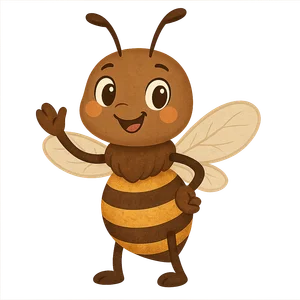
Western Honey Bee
The Western Honey Bee, or Apis mellifera, is the most common species of honey bee worldwide.
Reads at Grades 6–8 Listens at Grades 4–8
Print & create
Answer keys·No prep·Free with an account
28 worksheets · answer keys · full story · quiz · Ages 10-12 · CEFR B2
Plus adds 244,000+ more stories in 27 languages, audio for every one, and printables for all of them.
Just want Western Honey Bee?
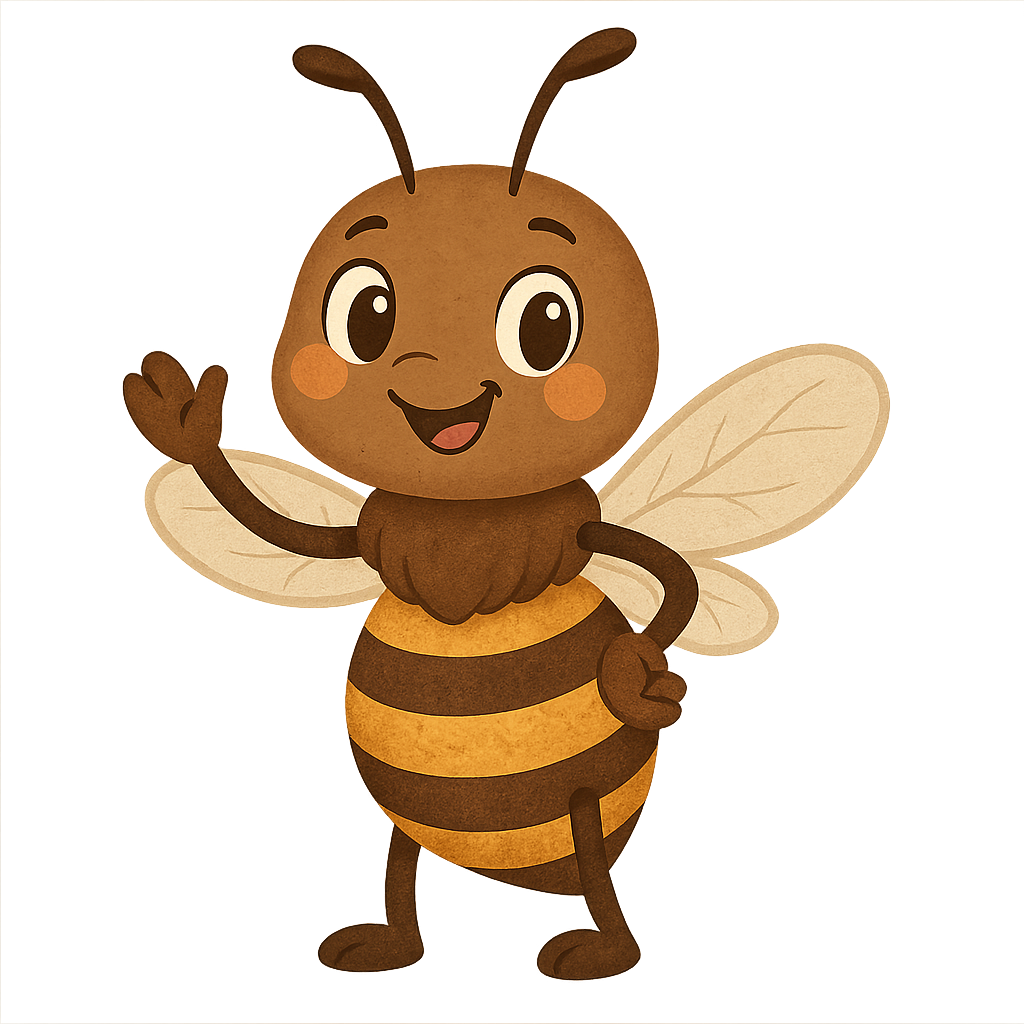
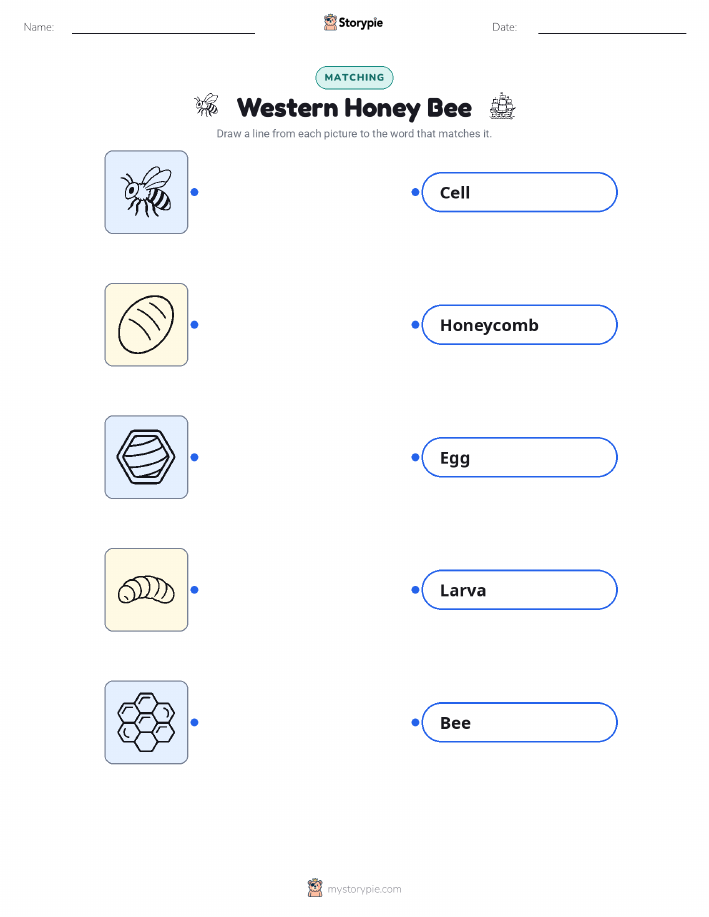
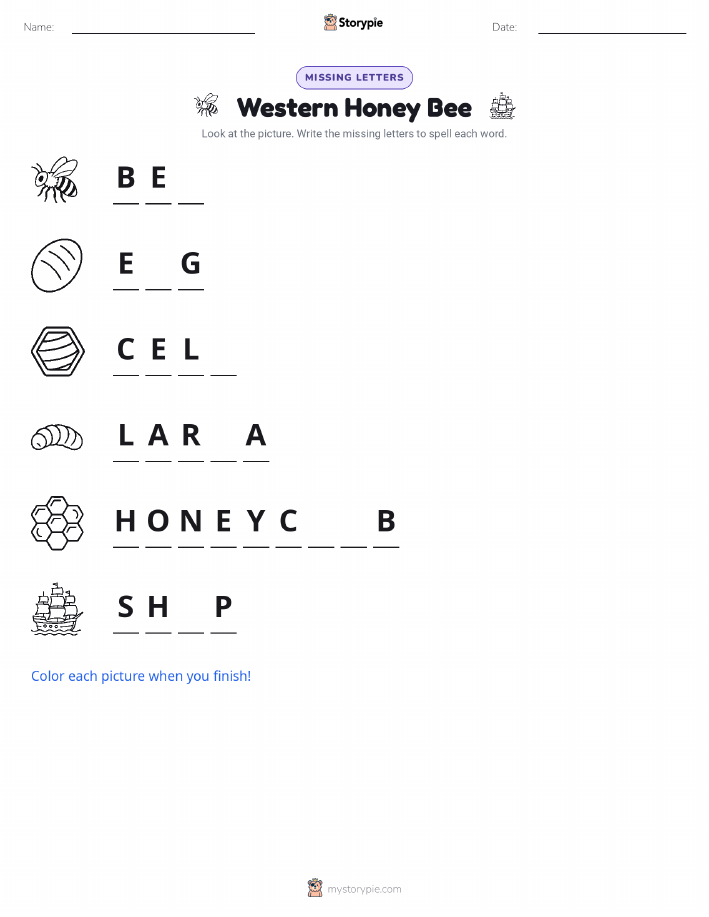
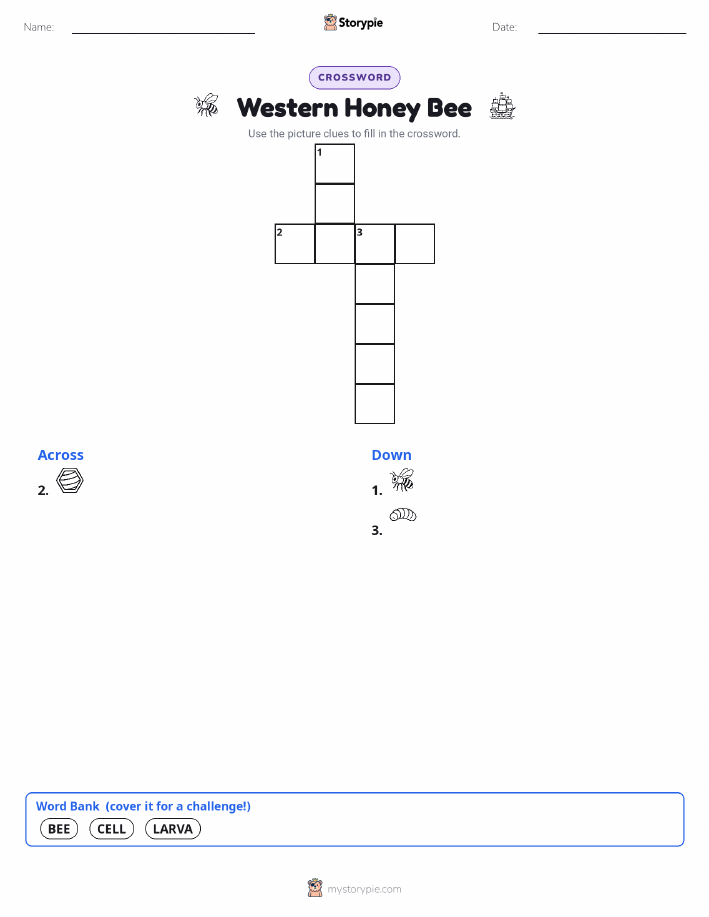
Hello. I am a Western Honey Bee, and my scientific name is *Apis mellifera*. My life began as a tiny egg, laid by my mother, the Queen, in a perfect, six-sided cell made of beeswax. When I hatched, I was a small larva in the warm, humming darkness of my hive. I was never alone; I was surrounded by thousands of my sisters, all working together. As a young worker bee, my duties were all inside our bustling home. I was part of the nursery crew, responsible for cleaning the cells where new bees would grow. I carefully fed the baby larvae, making sure they had everything they needed to become strong. My body had a special job, too. I could produce wax, which I used with my sisters to build new honeycomb, expanding our home one perfect cell at a time.
While I was born in this hive, my family has a long and incredible history of travel. My most ancient ancestors likely originated in Asia and later expanded into Africa and Europe. We didn't always live in North America. Our journey here began in the year 1622, when European colonists carefully transported some of my ancestors across the vast Atlantic Ocean. It was a long trip, but we were brought to a new world. Once we arrived, we thrived. We spread across the continent, finding new flowers and climates to call home. As we moved, we performed a vital service, pollinating the new crops the colonists had planted. It wasn't until 1758 that the famous scientist Carl Linnaeus gave my species its official name, *Apis mellifera*. He called us this because it means 'honey-carrier,' a name that honors our skill at turning sweet nectar into delicious honey.
The Waggle Dance of a Worker Bee
Hello. I am a Western Honey Bee, and my scientific name is Apis mellifera. My life began as a tiny egg, laid by my mother, the Queen, in a perfect, six-sided cell made of beeswax. When I hatched, I was a small larva in the warm, humming darkness of my hive. I was never alone; I was surrounded by thousands of my sisters, all working together. As a young worker bee, my duties were all inside our bustling home. I was part of the nursery crew, responsible for cleaning the cells where new bees would grow. I carefully fed the baby larvae, making sure they had everything they needed to become strong. My body had a special job, too. I could produce wax, which I used with my sisters to build new honeycomb, expanding our home one perfect cell at a time.
While I was born in this hive, my family has a long and incredible history of travel. My most ancient ancestors likely originated in Asia and later expanded into Africa and Europe. We didn't always live in North America. Our journey here began in the year 1622, when European colonists carefully transported some of my ancestors across the vast Atlantic Ocean. It was a long trip, but we were brought to a new world. Once we arrived, we thrived. We spread across the continent, finding new flowers and climates to call home. As we moved, we performed a vital service, pollinating the new crops the colonists had planted. It wasn't until 1758 that the famous scientist Carl Linnaeus gave my species its official name, Apis mellifera. He called us this because it means 'honey-carrier,' a name that honors our skill at turning sweet nectar into delicious honey.
After spending my youth working inside, the day came for me to graduate to a forager bee. My first flight outside the hive was an overwhelming experience. The world burst open with light, color, and sound. I saw a field of wildflowers, a breathtaking tapestry of purple, yellow, and white from my perspective. My new job was to fly out and collect sweet nectar from these flowers to bring back to the colony. But just finding the food wasn't enough; I had to share its location with my sisters. I did this through a special communication known as the 'waggle dance.' Back in the hive, I would move in a special pattern. The angle of my dance told my sisters the direction of the flowers in relation to the sun, and the length of the 'waggle' part of my dance told them the exact distance. It took a brilliant human scientist, Karl von Frisch, years of study to decode our language. His incredible work was recognized in 1973 when he was awarded a Nobel Prize for his discovery.
Making honey is very important work. It provides the food our entire colony needs to survive the cold winter months when no flowers are in bloom. However, my most important purpose, the job that affects the entire world, is pollination. As I travel from flower to flower sipping nectar, something amazing happens. Tiny grains of pollen from the flowers stick all over my fuzzy body. When I visit the next flower, some of that pollen rubs off. This transfer of pollen is what allows plants to produce fruits, vegetables, and seeds. It's a simple act, but it is essential for life. Think about the food you eat. It is estimated that about one-third of all the food that humans consume depends on the work of pollinators like me. We are tiny but essential partners in the ecosystem, keeping the world green and ensuring there is food for everyone.
In recent times, my species has faced new and difficult challenges. Around the year 2006, beekeepers and scientists began to notice a mysterious problem they named Colony Collapse Disorder. Many of my relatives would fly out from their hives and simply vanish, leaving their colonies to struggle. This is not the only difficulty we face. We are often challenged by pesky parasites, like the Varroa mite, which can attach to us and make us sick. Another growing problem is finding enough food. As humans build more cities and roads, the wild habitats full of the flowers we depend on begin to shrink. These are serious challenges, but we are not facing them alone. We are working hard to overcome these struggles, often with the help of our human friends who understand how important we are.
My individual life as a worker bee during the busy summer is short, lasting only about six weeks. But my work contributes to something much larger that will last long after I am gone. The legacy of my colony, and all honey bees, lives on in many fruits that grow and many flowers that bloom. We are a vital thread in the great web of life. Today, I see hopeful signs everywhere. People are helping us by planting gardens full of flowers that provide us with nectar and pollen. They are working to protect wild spaces and supporting beekeepers who care for our hives. My story is a reminder that even the smallest creatures have a huge role to play in our world. By working together, we can all help keep our planet healthy, beautiful, and full of sweet things.
Wow facts
About
The Western Honey Bee, or Apis mellifera, is the most common species of honey bee worldwide. It is a highly social insect known for living in large colonies, producing honey, and serving as one of the most important pollinators for agriculture and ecosystems.
Take a Quiz
Question 1 of 5
What is the main lesson the story teaches about the role of small creatures in the world?
Explore next




Want to do even more?
Go beyond exploring. Unlock tools that turn every story into real learning.

Storypie Plus for families
Full stories, quizzes, and printables. Nights and car rides, sorted.
- Unlimited audio stories
- Create Mode: your child stars in the story
- Offline downloads
- Printable worksheets & coloring pages

Why Storypie for Schools
Students engaged. Prep in seconds. Evenings back to you.
- Worksheets & Quizzes
- Classroom Management
- Formative Assessment
- Custom Curriculum & Lesson Plans
- 27 Languages

Why Storypie for Homeschool
Curriculum done. They'll ask for more. Hours back in your day.
- Worksheet Generator
- First-Person Audio Stories
- Built-in Comprehension Quizzes
- Custom Curriculum & Lesson Plans
- Print & Go Activities